Malpai Borderlands Group
Introduction
The Malpai Borderlands Group (MBG) is located near the Mexican border in the endmost corners of southeastern Arizona and southwestern New Mexico. The borderlands region totals one million acres and includes approximately 30 privately-owned ranches and two small wildlife preserves. Roughly half of this land is privately owned with the remainder owned by the US Forest Service (USFS) and the Bureau of land Management (BLM). Years of climate change, overgrazing, and drought have made ranching in this area a difficult task and many ranches neighboring the borderlands area have been sold and turned into subdivisions. Furthermore, with the continual passage of new land regulations and the growing animosity towards grazing on federal land, ranchers in the Malpai Borderlands area were becoming increasingly concerned over their future and maintaining their way of life. Some of the ranchers in the borderland area began meeting regularly to discuss issues such as federal fire management, decreasing open spaces, the growing opposition towards ranching, and how to improve communication with policy makers. After years of attending meetings with no solutions produced, the ranchers were ready to try a different approach.
This new approach came from two local ranchers, Drummond Hadley, who had already implemented innovative practices on his ranch in the Guadalupe Canyon to help protect riparian areas, and Bill McDonald, who helped instill confidence in his neighbors to try something new. In 1991, these men organized two meetings with environmentalists and ranchers to discuss fire issues and to see if common ground existed between them. The meetings, held on the Malpai Ranch as well as the Gray Ranch, surprised both ranchers and environmentalists who found they had similar interests in preserving open spaces and similar concerns over the loss of desert grassland to cacti and woody shrubs. Calling themselves the Malpai Group, the ranchers continued to meet with environmentalists and scientist Ray Turner for the next two years discussing such issues as decrease in productivity and lack of ecological diversity on their lands. Eventually the Malpai Group invited federal agencies and environmental groups to further discuss the issues. Again, during the meeting the Malpai group found common ground with the federal agencies and agreed to work together.
The Group
In 1994 the MBG officially became a non-profit organization with a nine member Board of Directors made up of eight ranchers and one scientist. This grassroots community-led group offers help to ranchers in the borderlands area but only if ranchers desire that help. Not all the ranchers in the borderlands region are involved with the MBG with some still waiting to see how things progress. The MBG stresses they will not do anything to anyone and will only do things with someone if requested. The goal of the MBG is:
"To restore and maintain the natural processes that create and protect a healthy, unfragmented landscape to support a diverse, flourishing community of human, plant, and animal like in our borderlands region. Together, we will accomplish this by working to encourage profitable ranching and other traditional livelihoods which will sustain the open space nature of our land for generations to come."
To help accomplish this goal, the MBG has many cooperators including, the USFS, BLM, Fish and Wildlife Service, New Mexico State Land Office, the Arizona State Land Department, The Nature Conservancy, The Desert Lab at the University of Arizona and the Animas Foundation. Along with the cooperators, the MGB also relies heavily on volunteers and advisors to help carry out their programs.
Programs
The MBG has embarked on a number of programs to help accomplish their goals. One of these programs, grassbanking, was made possible when the Animas Foundation (created by the Hadley Family) purchased a 320,000 acre ranch (Gray Ranch) in the borderlands area from the Nature Conservancy. The Animas Foundation allows ranchers in the borderlands region to rest their land by allowing their cattle to graze on Gray Ranch. In exchange for grazing privileges on the Gray Ranch, the ranchers sell conservation easements on their land to the MBG who in return pays for the grass used by the cattle. Conservation easements are contracts placed by landowners that limit future land use while retaining ownership and control over their property. Currently the MBG holds five conservation easements from ranchers in the borderlands area.
Another important program of the MBG is fire management. MBG members believes the suppression of fire is a major reason for the loss of desert grass and the encroachment of woody shrubs, along with being an unnecessary expenditure for federal agencies. With help of Geographic Information System mapping of the area (provided by the Animas Foundation), the MBG produced a regional fire map indicating areas where naturally occurring fires should be allowed to burn and areas where prescribed fires should be burned. Because fires cross property lines and jurisdictions, months of coordination between the MBG, ranchers, and federal agencies took place before the first prescribed fire was set. Two prescribed fires have occurred since 1994, the Baker Burn and the Maverick Burn. Both were extremely successful in bringing an increase in desert grass to the area.
The Ranchers' Endangered Species Program is an MBG program that depends heavily on the participation of private landowners. The MBG supports ranchers in protecting endangered species on their land including such species as the Chiricahua Leopard Frog and the Cochise Pincushion Cactus. Efforts by the Magoffin family have saved a group of Chiricahua Leopard Frogs who reside on their ranch. In the summer of 1994, the Magoffin family hauled over 1,000 gallons of water weekly to the stock pond where one of the two frog populations on their ranch is located. With funds raised by the MBG, the Magoffin family has been able to put in a well and pump needed to build a permanent water source for the Chiricahua Leopard Frogs. The MBG also invited the Arizona Game and Fish Department and herpetologists who helped in creating the new water source. The monitoring of the Cochise Pincushion Cactus by a MBG rancher and a botanist is another example of the Rancher's Endangered Species Program. Along with protecting the cacti from poachers, the exchange of information between scientist and rancher allows for a better understanding of the cacti survival needs.
The Jaguar
On March 7, 1996, Warner Glenn (co-owner of the Malpai Ranch with his wife Wendy Glenn) in the middle of a mountain lion hunt in the Peloncillo Mountains, spotted a jaguar. Instead of reaching for his gun, Warner Glenn grabbed his camera and took a photograph of a jaguar in the wild for the first time on US soil. Long thought to be eliminated from the US, the Arizona jaguar has been sighted only 64 times this century and 62 of those Jaguars were killed. After Warner Glenn took his photographs, the MBG held a meeting with the Arizona and New Mexico Game and Fish Departments, BLM, USFS, and the US Fish and Wildlife Service to discuss the sighting and its implications. As a result of this meeting, a Jaguar Fund was established by the MBG to help compensate ranchers for livestock killed by jaguars. Warner Glenn published his photographs and story in a book entitled Eyes of Fire. Part of the proceeds from the book are donated to the Jaguar Fund. For more information on the Eyes of Fire, please visit the web page
www.jaguarbook.com.To help with surveillance of the jaguar, the Arizona Game and Fish Department has set up "Trip cameras" in the Peloncillo Mountains. These cameras are located along game trails and are triggered to take a picture if an animal should interfere with a beam of light shining across the trails. Since the Trip cameras have been set up, they have shown no evidence of the jaguar's return to the Peloncillo Mountains. In addition to the Trip cameras, a Jaguar Conservation Team has been established to help coordinate sightings of the jaguar. Although no new sightings have occurred in the MBG borderlands area, two new sightings have been recorded south of Tucson, Arizona in August of 1996 in the Baboquivari Mountains and in November of 1997 in the Cerro Colorado Mountains.
Science Advisory Committee
The MBG has a voluntary group of scientists who help in advising and coordinating research and monitoring programs in the borderlands region. Some monitoring programs that will serve as future baseline studies include studying the species who live in grassbank areas, prescribed fire areas, and "grass patch" areas that have recently been fenced off and seeded with native grasses. Much of the research in this area centers on the encroachment of woody shrubs. The MBG realizes more research is required to help solve this problem that has been caused by overgrazing, drought, fire suppression, and change in climate. In addition to these research and monitoring projects, there are many independent studies and surveys occurring in the borderlands area. The Science Advisory Committee tracks these studies and the information is made available to ranchers.
Funding
Funding for the MBG is provided through public and private contributions. Each year the MBG sends out its Annual Appeal to solicit donations from private citizens. In addition, MBG receives grant funding provided by foundations.
Awards
A year after the MBG became an official non-profit organization, the group and people working with MBG began receiving awards and recognition for all their hard and ground breaking work.
Since 1995 the MBG received the following awards and recognition:
Outstanding Achievement Award for Innovative Resource Management from Coronado Resource Conservation and Development Area, Inc.;
Conservation Organization of the Year from the Arizona Game and Fish Department;
National Chief's Award for Range Management from the US Forest Service;
Course of the Future Award from the US Forest Service; and
Distinguished Achievement Award from the Society for Conservation Biology.
People associated with MBG have received the following awards and recognition:
Bill McDonald, Wildlife Habitat Stewardship Award from the Arizona Game and Fish Department, and Genius Grand Award of $285,000 from the John D. and Catherine T. MacArthur Foundation;
Larry Allen, Award for Ecosystem Management from the US Forest Service;
Ben Brown, Rangeman of the Year from the New Mexico Society of Range Management;
Ron Bemis and Larry Allen, Technical Assistant of the Year from the Arizona Society of Range Management;
Ron Bemis and Larry Allen, Environmental Protection Awards from the US Department of Agriculture Secretary's 50th Honor Awards;
Ray Turner, Emil Haury Award from the Southwest Parks and Monument Association;
Josiah and Valer Austin & Warner and Wendy Glenn, 1997 Award of Excellence from the Arizona Game and Fish Department;
Josiah and Valer Austin, W.R. Chapline Land Stewardship Award from Society for Range Management;
Matt Magoffin, Employee of the Year from the U.S. Fish and Wildlife Service;
Reese Woodling, Rangeman of the Year from the Society of Range Management; and
Malpai Borderlands Group, Governor's Award -- 1998 from the State of Arizona.
MBG as of June 1999
The MBG has become a successful example of a grassroots organization that uses collaboration to help achieve their goals of community-based ecosystem protection. Working together with environmental groups, federal and state agencies, and ranchers in the borderlands area, the MBG has been able to come up with new ideas which will help towards sustainable ranching. The MBG is also continually working on outreach to people outside the borderlands area. This is achieved partly by inviting several national and regional environmental groups to attend a tour of their region and their projects. The MBG has also put on a "Ranching Today" workshop in conjunction with the Nature Conservancy Ranch Working Group. This workshop allowed ranchers from California, Colorado, and Canada a more in depth look at the projects and accomplishments of MBG and how the MBG worked collaboratively with groups like the Nature Conservancy and federal agencies. The MBG just completed another successful ranch workshop in May and are working on plans for the next ranch workshop scheduled for September of 1999.
MBG as of January 2002
The MBG continues to address problems facing ranching through education, and by collaborating with a variety of local, state, and federal agencies, universities, and environmental organizations. The MBG is still reaching a growing audience through "Ranching Today Workshops," with attendees at the fifth workshop in May 2001 from Arizona, New Mexico, California, Kansas, Texas, Nevada, Colorado, Montana, and Sonora Mexico. The MBG also holds "Monitoring Workshops" and "Science Meetings" to teach people how and why vegetation is monitored, the effects of fire within the ecosystem, land management techniques, and research activities. The workshops continue to be a success and a great way for ranchers to share ideas. Future "Ranching Today Workshops," are scheduled for May and August 2002.
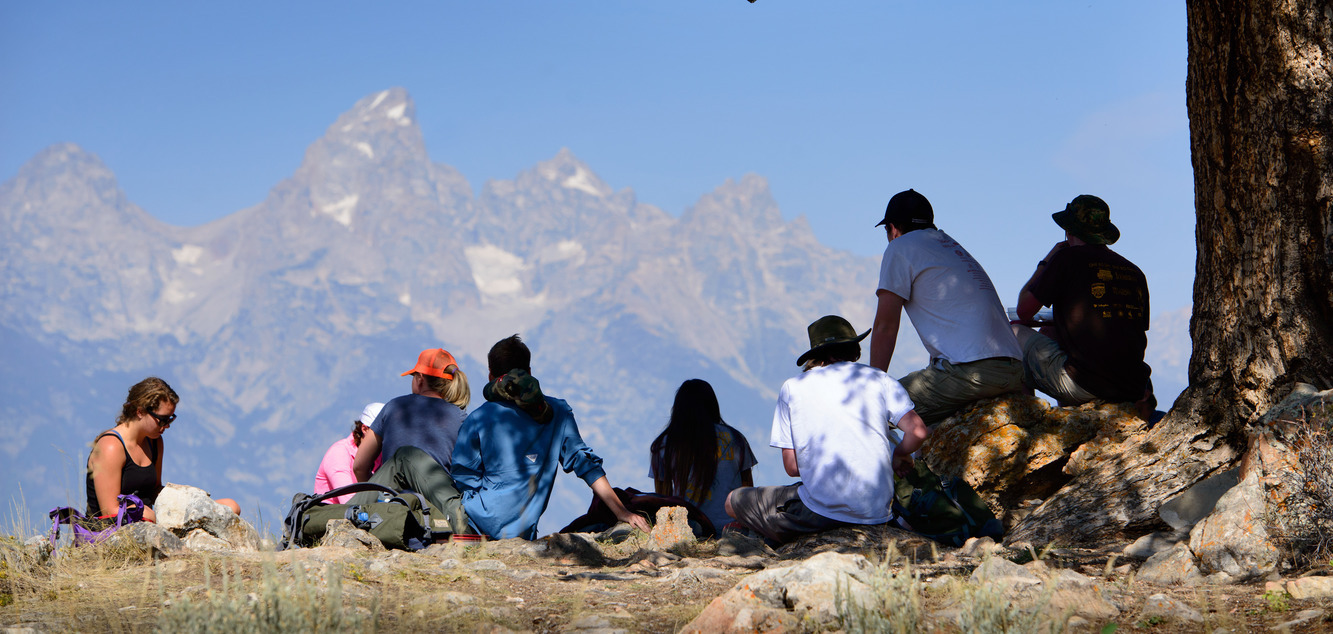
Along with educating through workshops, the MBG started an innovative internship program that is now entering its fourth year. The Malpai Science Internship program allows college and local high school students the opportunity to participate in research, restoration, and the overall collaborative process in the borderlands. The students work closely with a variety of researchers, ranchers, and conservationists to help conduct studies and discover new ways to preserve open space. Any high school or college student interested in participating in the program should contact the MBG office.
Since 1994, the MBG has been a part of seven different conservation easements. Three of those easements were purchased for outright cash, and the other four easements were obtained by trading for access to grass on the Gray Ranch. The seven transactions included approximately 35,000 acres. The ranchers involved in the conservation easements sought out the MBG, and the terms of the easement were agreed upon by both parties to meet joint objectives. The MBG has not accepted easements outside the borderlands area, but has helped ranchers find other appropriate easement holders.
Consultation for the Peloncillo Programmatic Fire Plan began in November of 2000. Currently, the Peloncillo Fire Plan will permit the use of prescribed fires for resource revitalization and ecosystem restoration. A variety of studies are being conducted in collaboration with the USDA Rocky Mountain Research Station, Natural Resources Conservation Service, and local ranchers to further understand the role fire plays in oak woodland and savanna ecosystems. There have been no prescribed fires since the Baker Burn and the Maverick Burn in 1994.
The MBG Frog Project is doing well. The Magoffin family, herpetologist Phil Rosen, and Dr. Cecil Schwalbe continue to work together to preserve the Chiricahua Leopard Frog and its habitat. Students from Douglas High School participate by raising tadpoles to be released. The USFWS has proposed that the Chiricahua Leopard Frog be considered for addition to the threatened species list under the Endangered Species Act of 1973.
The Mexican Jaguar continues to generate a lot of interest in the Malpai Borderlands area. The Denver Zoo and the MBG study the jaguar in Sonora, Mexico by observing family movements across the Mexican/U.S. border. Currently, trip cameras are being used in several locations to help monitor movements. Carlos Lopez Gonzalez can be contacted by email at cats4mex@aol.com with any questions regarding the study of the Mexican Jaguar.
The MBG continues to be an interesting example of a community-based organization using collaboration to address problems faced by ranching today. MBG Board members and advisors travel to meetings around the country sharing ideas with ranchers, environmentalists, and government officials. Last May, the MBG was included in an International Conference on Biodiversity and Society held in New York City. The group was one of nine case studies chosen worldwide, and was the only project not supported by the United Nations in attendance at the meetings. The MBG was chosen to attend the conference because the group demonstrates the effectiveness of collaboration when a community gets involved with resource management.
Contacts
Wendy Glenn, Coordinator
Malpai Borderlands Group
Phone: 520-558-2470
Fax: 520-558-2314
Sources
Cash, Kelly. "Get along Little Froggy". The Nature Conservancy. March/ April 1995: 6.
Cheater, Mark. "Good Guys in the Badlands." The Nature Conservancy. July/August 1995: 16+.
Klinkenborg, Verlyn. "Crossing Borders." Audubon. Sept./Oct. 1995: 34+.
Malpai Borderlands Group. Malpai Borderlands Group. No. 1. Newsletter, June 1994.
Malpai Borderlands Group. Malpai Borderlands Group. No. 2. Newsletter, July 1995.
Malpai Borderlands Group. Malpai Borderlands Group. No. 3. Newsletter, July 1996.
Malpai Borderlands Group. Malpai Borderlands Group. No. 4. Newsletter, Oct. 1997.
Malpai Borderlands Group. Malpai Borderlands Group. No. 5. Newsletter, Oct. 1998
McDonald, Bill. The Malpai Borderlands Group, Ecosystem Management in Action. Spring 1996.
Page, Jake. "Ranchers form a 'Radical Center' to Protect Wide-Open Spaces." Smithsonian. June 1997: 50+.
Wabnik, Alisa.
Douglas rancher-Conservationist earns MacArthur 'Genius' Prize. StarNet Archive. 1998. (12 Dec. 1998).Conservation Easements. Community Stewardship Exchange. 1998. (14 Dec. 1998)
Revised January, 2002