This site will look much better in a browser that supports web standards, but it is accessible to any browser or Internet device.

Skip Navigation skip menu and banner
University of Wyoming


University of Wyoming Research Facilities


The University of Wyoming, a Carnegie Foundation Research II and land-grant institution, has developed outstanding facilities that strengthen its position as a leader in the field of environmental and natural resource research and teaching.

State-of-the-art instrumentation is found in many individual departments, including the Departments of Botany, Chemical and Petroleum Engineering, Chemistry, Computer Science, Electrical Engineering, Geology and Geophysics, Mechanical Engineering, Molecular Biology, Physics and Astronomy, and Zoology and Physiology. There also are exceptional research laboratories and support facilities, some that are truly unique, that strengthen the interdisciplinary nature of the Institute. They include:

Agricultural Experiment Stations
Four research and extension centers play a key role in conducting ecosystem studies as well as research for technology transfer on crop and forage issues, insect control and land and water resource system management. Contact: Jim Jacobs, Director, Agricultural Experiment Stations, Room 151, Ag C Building, Laramie, WY 82071-3354; telephone (307)766-3667; email aes@uwyo.edu

American Heritage Center
Research holdings include 4,500 manuscript and book collections on Wyoming and the West, 300 original ranch records, files of the Wyoming Wool Growers Association and the National Cattleman's Association, economic geology records (including the Anaconda Mining Company collection from 1895 to 1985), more than 700 petroleum collections and 610 mining collections, 830 conservation collections, and 650 water resources collections. Contact: Mark Greene, Director, P.O. Box 3924, Laramie, WY 82071; telephone (307)766-4114;; e-mail ahc@uwyo.edu

Elk Mountain Atmospheric Science Observatory
Located at 10,850 feet above sea level, the Elk Mountain Observatory is well suited for cloud physics, cloud chemistry, long-term atmospheric monitoring and atmospheric chemistry studies. Contact: Jefferson Snider, Department of Atmospheric Science, Engineering Building, Laramie, WY 82071-3038; telephone (307)766-2637; email jsnider@uwyo.edu.

Environmental Simulation Laboratory (ESL)
This unique large-scale environmental chamber is designed to replicate a variety of environmental conditions in a wide range of ecosystems. The chamber can simulate rainfall of up to 5 inches per hour, produce rapid changes in temperature ranging from -20 to 120 degrees Fahrenheit, regulate relative humidity, and control light for plant growth and study. ESL has recently been used to study solid waste disposal problems related to spent oil shale. Contact: Quentin Skinner, Department of Renewable Resources, Agriculture Building, Laramie, WY 82071-3354; telephone (307)766-4139; e-mail qskinner@uwyo.edu

High Altitude Balloon Launch Facility
Since 1969, UW scientists have conducted more than 1,200 scientific balloon flights for atmospheric research on aerosols and ozone as well as for studies on balloon launch procedures. UW is the only university in the United States to own such a facility. Contact: Terry Deshler, Department of Atmospheric Science, Room 6034, Engineering Building, Laramie, WY 82071-3038; telephone (307)766-2006; e-mail deshler@uwyo.edu

Institute for Scientific Computation
This institute is a multidisciplinary organization devoted to the advancement of scientific computing. It involves faculty members from a variety of departments, including Mathematics, Computer Science, Geology and Geophysics, Physics and Astronomy and Petroleum Engineering. Applications include development of numerical techniques for solving the differential equations governing fluid flows in oil reservoirs and groundwater aquifers and analysis of geographical distributions of natural and cultural resources using geographical information systems. Contact: Benito Chen, Director, Institute for Scientific Computation, Room 227 Ross Hall, Laramie, WY 82071; telephone (307)766-6546; e-mail bchen@uwyo.edu

Raytheon King Air 200T
Instrumented for a variety of atmospheric measurements, this twin-turboprop aircraft is equipped with an interactive, computerized data system for research on icing, downdrafts, turbulence, hailstorms, mountain storms, tornadoes, lightning, windshear, hurricanes, ozone air quality standards, and the physical and chemical nature of air pollutants and the potential for long range pollutant transport. This facility is available to all scientists on a competitive basis. Contact: Al Rodi, Department of Atmospheric Science, Engineering Building, Laramie, WY 82071-3038; telephone (307)766-4945; e-mail rodi@uwyo.edu

Red Buttes Environmental Biology Laboratory
Equipped for research on aquatic and terrestrial vertebrates, Red Buttes supports studies on wildlife physiology, disease, nutrition and habitat ecology; pollution effects on fish and other aquatic organisms; hazardous waste mitigation; and water quality regulation. Research applications include game and fish biology and management, energy and environmental research, and wetlands construction and management. Contact: Graham Mitchell, Head, Department of Zoology and Physiology, 428 Biological Sciences Building.  Telephone (307) 766-4207.

Rocky Mountain Herbarium
Founded in 1893, the herbarium contains the largest collection of Rocky Mountain plants and fungi in existence, as well as a good representation of the floras from other parts of the Northern Hemisphere. Much of the research involves documentation and identification of species in need of protection or those already considered endangered or threatened. Contact: Ron Hartman, Department of Botany, Room 304, Aven Nelson Building, Laramie, WY 82071; telephone (307)766-2236; e-mail rhartman@uwyo.edu

Insect Museum
This laboratory, housed in the Agriculture Building, comprises the core of the University of Wyoming's insect collection. The collection, which was started around 1890 with the donation of the Nieswander collection, was moved into this new facility in the mid-1980s. Mainly it serves as a research and teaching resource for UW faculty and students, and as a state collection for general reference. It also provides research materials to scientists around the globe. It is the largest insect collection in Wyoming, currently with approximately 250,000 insect specimens. Most of the insects are from Wyoming and Colorado, but a significant proportion (20%) are from tropical areas. Contact: Scott Shaw, Curator, Department of Renewable Resources, Room 4016 Agriculture Building, Laramie, WY 82071; telephone (307)766-5338; e-mail braconid@uwyo.edu

University of Wyoming - National Park Service Research Center
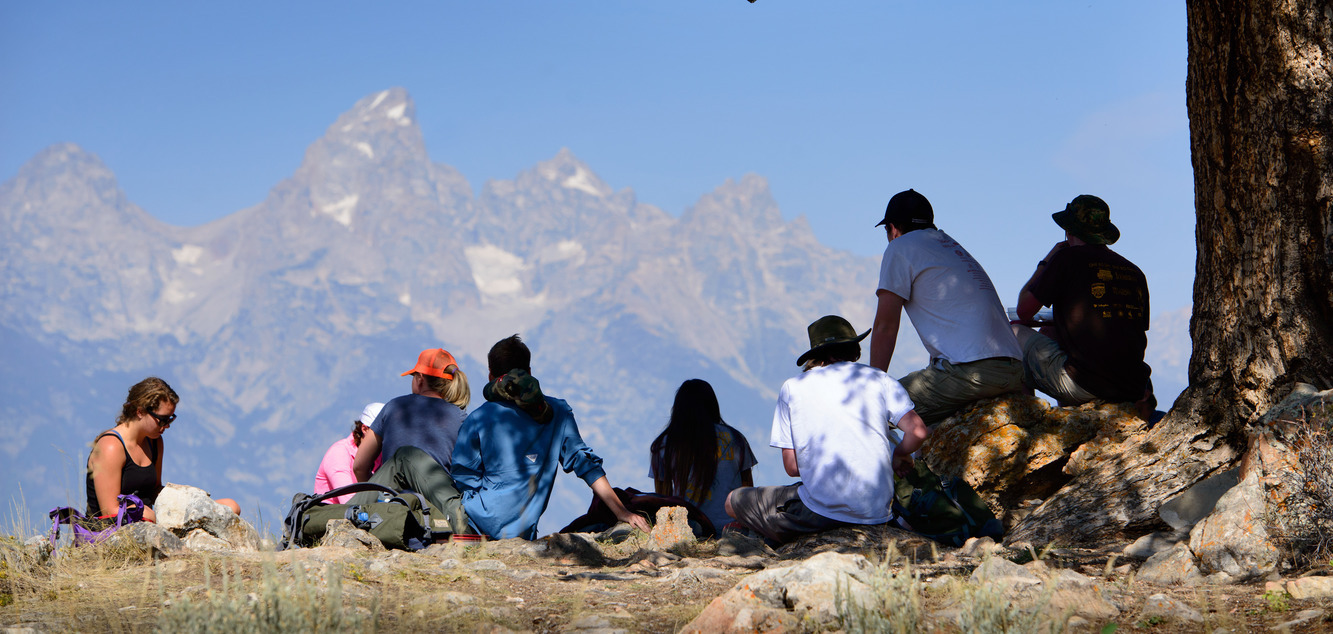
This center supports research involving aquatic and terrestrial environments at its field research station in Grand Teton National Park. Research ranges from bird population densities to tree disease control and management. Center personnel also conduct research at 41 national parks, monuments and recreational areas in Wyoming, Montana, North Dakota, South Dakota, Colorado and Utah. Contact: Hank Harlow, Director, UW-NPS Research Center, Department of Zoology and Physiology, Room 314F Biological Sciences Building, Laramie, WY 82071-3166; Telephone (307)766-4227; e-mail hharlow@uwyo.edu

W.G. Solheim Mycological Herbarium
This herbarium contains a large collection of fungi located in the Rocky Mountain region and other parts of the Northern Hemisphere. It is commonly used by specialists interested in plant diseases. Contact: Steven Miller, Department of Botany, Aven Nelson Building, Laramie, WY 82071; telephone (307)766-2834; e-mail fungi@uwyo.edu

Western Research Institute (WRI)
An independent, nonprofit research and development affiliate of the University of Wyoming, personnel at WRI conduct energy and environmental research in a multidisciplinary approach to developing innovative solutions. Research specialties have included asphalt and fuel processing development; fossil energy extraction process evaluation; hazardous waste analysis, site characterization and monitoring; industrial waste management studies; mineral resource evaluation; process and environmental modeling; regulatory consultation; and wastewater studies. Contact Western Research Institute, 365 N. 9th St., Laramie, WY 82072; telephone (307)721-2011.

Williams Botany Conservatory
Dedicated in fall 1994, the conservatory uses versatile computer-controlled climate systems to simulate temperature, humidity and light conditions found in desert, mountain and tropical environments. Contact: Greg Brown, Chair, Department of Botany, Room 114 Aven Nelson Building, Laramie, WY 82071-3165; telephone (307)766-2380; e-mail gkbrown@uwyo.edu

Wyoming Cooperative Fishery and Wildlife Research Unit
Established in 1977, this research unit addresses fish and wildlife habitat needs in the face of changes resulting from mineral extraction, oil and gas development, water development, biodiversity, community and population issues. Research efforts include studies of watershed management on public lands; ecosystem management; threatened, endangered and sensitive species; and water-related issues such as in-stream flow, stream habitat inventory and monitoring techniques, aquatic macroinvertebrates, and fish habitat management. Contact: Wayne Hubert, Unit Leader, Wyoming Cooperative Fishery & Wildlife Research Unit, Room 419, Biological Sciences Building, Laramie, WY 82071; telephone (307)766-5415.

Wyoming Geographic Information Science Center (WyGISC)
WyGISC advances the use of geographic information science at the University of Wyoming by furthering GISci education and training at all academic levels, by pursuing basic and applied research in GISci, and by using GISci technologies for problem-solving within the University and throughout the State and region.  Contact Jeff Hamerlinck, Director, (307)766-2736.

Wyoming State Veterinary Laboratory
The Wyoming State Veterinary Laboratory is researching disease agents in livestock, integrated methods of parasite control for improved livestock production, animal disease investigations and diagnostic techniques, and improving food and water safety through discovery and control of natural and induced toxicants and agents. Contact: Donal O'Toole, Director, Wyoming State Veterinary Laboratory, 1174 Snowy Range Road, Laramie, WY 82070; telephone 307-742-6638; email dot@uwyo.edu

Wyoming Technology Transfer Center
The center provides design and construction information, technological advancement materials and training to assist agencies in maintaining, repairing and building transportation systems. Contact: Khaled Ksaibati, Director, Wyoming Technology Transfer Center; telephone (307)766-6230 or 1-800-231-2815 (Wyoming only).