
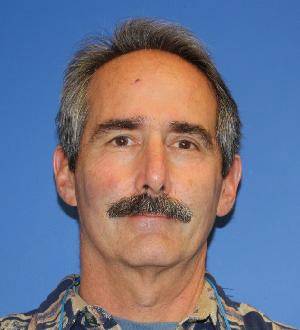
There is much discussion today about the way technology has infiltrated every aspect of human existence in the developed world, and whether we should be worried about it. In fact, humans started down that road more than three million years ago. In this talk, I examine the evidence for how human ancestors gradually transitioned from being occasional and opportunistic users of simple artifacts, to a species which could not exist without technological assistance. The evidence suggests that our ancestors had become dependent on various technologies for survival over much of their range by around 300,000 years ago. Since then, technology and its products have come to play a role in almost every facet of human life. The story of humanity’s long relationship with technology has implications for the human experience today, and for the ways we think about the next technological revolution.
Sponsored By:

As a public service, the Institute, along with the Wyoming Association of Professional Archaeologists and the State Historic Preservation office sponsors a public lecture each fall near the end of September in conjunction with the fall board meeting. These lectures are given by a prominent archaeologist, but are aimed at a general audience. The lectures are free and open to the public.
Some recent lectures:
2025: Dr. Ben Porter, University of Alaska, Beringian Archaeology & the Peopling of the Americas
2024: Dr. Jesse Casana, Dartmouth College, Lost Landscapes and Looted sites: Archaeological
investigations using declassified spy satellite imagery.
2023: Dr. Calegero Santoro, Universdad de Tarapacá, Is the Atacama Desert an Imperfect
Human Artifact?
2022: Dr. Barbara Mills, The University of Arizona, From Frontier to Center Place:
The Dynamic Trajectory of the Chaco World
2021: Dr. Jessi Halligan, Florida State University, Dark Waters and Murky Models:
Perspectives on the Peopling of the Americas from Page-Ladson
2019: Dr. John Verano, Tulane University, Human Sacrifice in Ancient Peru.
2018: Dr. Stuart Fiedel, Louis Berger Group, Native American Origins.
2017: Dr. Charles Stanish, University of California at Los Angeles, New Insights on
the Nazca Lines of Ancient Peru.
2016 Dr. Bonnie Pitblado, University of Oklahoma, The Role of the Rocky Mountains
in the Peopling of the Americas.
2015 Dr. Stephen H. Lekson, University of Colorado, Boulder, A Millennium on the
Meridian: One Thousand Years of Political and Ritual Power in the Ancient American
Southwest.
2014 Dr. Jon McVey Erlandson, University of Oregon, From Coast to Coast: New Insights
into the First Peopling of the Americas.
2013 Dr. Vance Holliday, University of Arizona, Hunting Gomphotheres at the End
of the World: El Fin Del Mundo (Sonora, Mexico) and Clovis Archaeology in the Greater
Southwest
2012 Dr. Curtis Marean, Arizona State University, Survivors on the Edge of Land
and Sea: Modern Human Origins and How Coastal Life Helped Make Us Unique.
2011 Dr. Mary Stiner, University of Arizona, Hunters of the European Late Lower
Paleolithic.
2010 Dr. Ted Goebel, Texas A&M University, The Beringian Origins of the First Americans:
Do Genes, Bones, and Stones Tell the Same Story?
2009 Dr. Janine Gasco, California State University at Dominguez Hills, Cacao Production
and the economic and social role of chocolate in Mesoamerica.
2008 Dr. Gustavo Politis, University of La Plata, Argentina.
2007 Dr. Mark Aldenderfer, Arizona State University, high altitude adaptations
in Tibet.
2006 Dr. Gary Haynes, University of Nevada, Reno, Clovis as a colonizing population.
2005 Dr. Margaret Conkey, University of California Berkeley
2004 Dr. David Meltzer, Southern Methodist University
2003 Dr. Dena Dincauze, University of Massachusetts

The University of Wyoming has earned its Research Level 1 (R1) status from the Carnegie Classification of Institutions of Higher Education, placing Wyoming's only four-year university with the top research universities in the United States.