
UW’s Seidel Named to DOE’s 21-Member Office of Science Advisory Committee
Published February 05, 2026
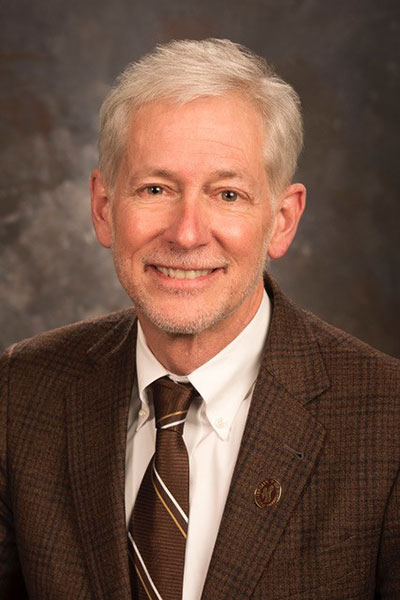
Ed Seidel
While a rancher may not be thinking about Einstein’s theory of relativity when using
GPS to guide his tractor through a field or the proud owner of a new iPhone may not
dwell over quantum mechanics, University of Wyoming President Ed Seidel recognizes
the best science -- essential to the function of these common devices -- leads to
innovation that impacts the lives of everyday citizens.
To that end, Seidel hopes to make a state, regional and national impact on science
as a recently appointed member of the U.S. Department of Energy’s (DOE) Office of
Science Advisory Committee (SCAC).
The DOE announced the chair and members of the SCAC Feb. 4. The 21-member group is
a unified advisory body that will provide independent advice on complex scientific
and technical challenges across the Department’s Office of Science. Each member will
serve a two-year term through January 2028.
SCAC members, appointed by DOE Under Secretary for Science Darío Gil, represent the
full breadth of Office of Science research, drawing expertise from leaders across
academia, industry, science philanthropy and DOE’s national laboratories. The committee
will help the Office of Science adapt to a rapidly evolving research landscape and
address interdisciplinary challenges in a streamlined and flexible manner. It also
will provide advice on initiatives that are priorities for the entire Office of Science,
including the Genesis Mission, scientific discovery, fusion energy and quantum science.
For a full list of committee members, go here.
“It is quite an honor to be asked to be among a group of national leaders to support science at the highest level in the U.S. The Office of Science is the nation’s largest supporter of basic research in energy, the physical sciences, scientific computing and its applications, and many other areas,” Seidel says. “It oversees 10 national labs, the world’s leading computing facilities and many programs that help make the U.S. the world’s leader in science. Being a member of this advisory committee means that I will be able to bring both an international and Wyoming perspective to the DOE, and to support the strengthening of our own programs that impact our students and our state -- the ‘energy state.’”
Seidel has worked for decades in numerous areas of science, including basic research in physics and computing; managing large science portfolios in computing and mathematical and physical sciences at the National Science Foundation (NSF); and advising universities and funding agencies around the world.
“It is very important to recognize that every mobile phone, every television, every laptop and every modern automobile is packed with technology that would not be possible without the kind of science that is done by agencies such as DOE, NSF and others,” Seidel says. “Artificial intelligence (AI) is transforming society and the future economy. All of these developments are the direct result of the kind of basic research supported by the DOE. It will be a thrill to participate in the future of science in this way.”
According to a DOE press release, the SCAC appointments advance the DOE’s implementation
of President Trump’s Executive Order Restoring Gold Standard Science as the cornerstone of federal research -- ensuring that the Department and its National
Laboratory systems’ science is collaborative, transparent and guided by evidence to
rebuild public trust in science. As DOE modernizes and strengthens its scientific
enterprise, the SCAC will provide expert input to help inform priorities, improve
coordination and address cross-cutting research challenges across the Office of Science.
“I do think the U.S. does set the gold standard in science, from our review processes
to identifying areas of investment that will be important for the future of the nation
and, of course, our state,” Seidel says. “I am sure that everyone on this committee
will be committed to supporting and strengthening that.”
“The establishment of SCAC underscores the Department’s commitment to scientific integrity
and the power of partnership,” Gil says. “By bringing together leading minds from
diverse institutions, we’re forging a collaborative framework that will not only enhance
our scientific endeavors but also accelerate the translation of fundamental research
into tangible benefits for the American people. This committee exemplifies how shared
vision and collective expertise are essential for navigating the complex scientific
landscape of today and tomorrow.”
The DOE established SCAC last September and finalized its membership last month. The
committee will adopt the core functions of the Office of Science’s six former discretionary
advisory committees. Any current charged responsibilities of these former committees
will transfer to SCAC, providing a single, coordinated source of independent expert
advice. SCAC will be chaired by Persis Drell, professor of materials science and engineering
and physics at Stanford University; provost emerita of Stanford; and director emerita
of SLAC National Accelerator Laboratory.
“Serving on this committee will give me a bird’s eye view of the national scientific enterprise,” Seidel says. “I will bring back this view to UW to advise on trends in important areas of science and engineering; on hiring that would help UW stay competitive; and on new opportunities for funding that will impact the students, university and state.”

The University of Wyoming has earned its Research Level 1 (R1) status from the Carnegie Classification of Institutions of Higher Education, placing Wyoming's only four-year university with the top research universities in the United States.