
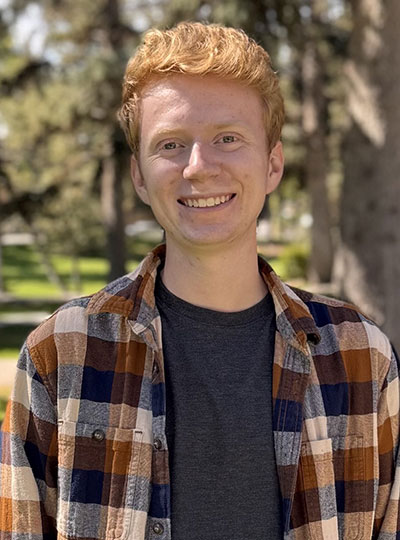
Alex Kurtt
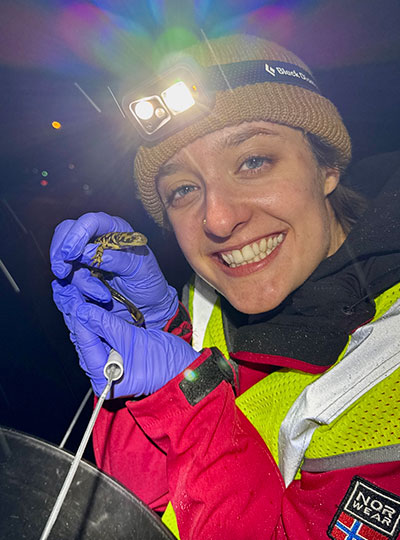
Lena Wigger

Josephine Walton
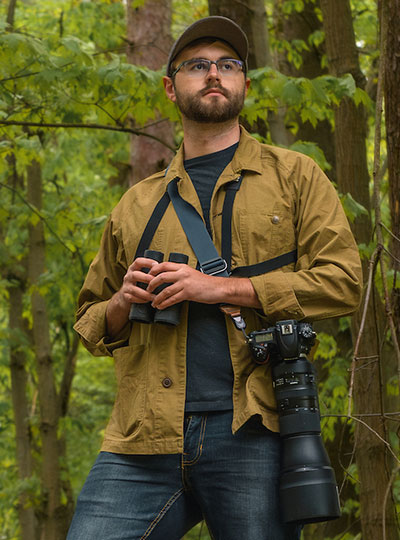
Collin Porter
Four University of Wyoming graduate students have been awarded prestigious National Science Foundation (NSF) Graduate Research Fellowships.
Alex Kurtt, Collin Porter and Lena Wigger, all graduate students in the UW Department of Zoology and Physiology; and Josephine Walton, a UW undergraduate student in molecular biology, will each receive one of the nation’s most highly competitive awards for graduate studies. The fellowships are awarded to graduate students who are pursuing research-based degrees in science, technology, engineering and mathematics (STEM).
The NSF Graduate Research Fellowship offers, among other things, three years of financial support (within a five-year period) with an annual $37,000 stipend; a $16,000 cost-of-education allowance payment to cover all tuition and mandatory fees during each fellowship year; international research and professional development opportunities; and the freedom to conduct research at any accredited U.S. institution of graduate education that recipients choose. For the 2025 competition, NSF received nearly 14,000 applications nationwide and made 2,500 award offers.
-- Kurtt, a first-year Ph.D. student in zoology and physiology in Professor Michael Dillon’s lab, is studying insect ecophysiology.
His fellowship research will focus on exploring how the abiotic factors associated with changes in altitude affect the physiology of insects, looking at morphology, wing kinematics and metabolism. Kurtt says this work will provide a better understanding of how pollinators and insects are potentially limited in montane dispersion.
“This fellowship is invaluable both personally and professionally. I am tremendously grateful to my colleagues, friends and family who encouraged me to pursue my passions in this field and provided feedback along the way,” says Kurtt, who is from West Des Moines, Iowa. “Earning this fellowship has helped boost my confidence as an early-career scientist and will provide me with resources to make a meaningful contribution to the field of entomology.”
After he finishes his current fellowship with WyldTech -- UW’s Center for Wildlife, Technology and Computing, and a division within UW’s Science Initiative -- Kurtt says he will transition to his NSF Graduate Research Fellowship in fall 2027.
-- Wigger, a first-year UW master’s student in the lab of Asssistant Professor Gabe Barrile in the Department of Zoology and Physiology, will study how habitat characteristics and host behavior drive disease dynamics of the amphibian disease chytridiomycosis.
“My research focuses on boreal toads in western Wyoming, where I investigate how changes in beaver pond habitat influence disease prevalence and transmission dynamics within toad populations,” says Wigger, of Houston, Texas.
“Given the severe threat of emerging diseases to wildlife, coupled with rapid shifts in global disturbance regimes, linking disturbance-induced habitat loss with host demography and infection rates is both timely and critical for understanding how environmental change influences wildlife disease dynamics,” Barrile says “Lena’s research links multiple fields by combining habitat loss, animal behavior, population distribution and disease dynamics into one overarching framework to improve understanding of host-pathogen interactions in the face of rapid environmental change.”
The fellowship will allow Wigger to pursue a Ph.D., which she says will open doors to future career opportunities as a research biologist.
“I’m excited to continue to grow as a science communicator and pursue meaningful research that contributes to wildlife conservation,” she says. “I will begin using my GRFP funds as an extension of my existing Master of Science funding, likely beginning in the fall.”
“Lena truly stands out as an exceptionally talented and independent researcher. She also stands out as a wonderful and kind human being,” Barrile says. “I am excited for Lena to carry out her graduate studies. There is no doubt she will emerge as a leader in ecological research.”
-- Walton, of Sheridan, is a UW senior majoring in biology and chemistry, and is in the Wyoming Research Scholars Program. She also is a Wyoming Space Grant Consortium Fellow, an INBRE Transition Fellow and will be an INBRE Summer Fellow this May through July. This fall, Walton will transition to a Ph.D. program in the lab of Thomas Boothby, a UW associate professor of molecular biology.
“My research explores how microbial communities enable survival in extreme environments, focusing on how the tardigrade microbiome contributes to resilience during desiccation,” Walton says. “By linking host biology with microbiome function, my work aims to uncover general principles of how life persists under conditions that would otherwise be lethal.”
“This research is important, since the microbiome of organisms, including humans, can have profound impacts on health and disease,” Boothby says. “By using tardigrades as a model for extreme stress tolerance, Josie’s research promises to not only inform on the ability of these fascinating animals to tolerate harsh conditions, but also could provide insights into how microbes contribute to human physiology.”
Walton describes receiving the NSF Graduate Research Fellowship as “an incredible honor.”
“It gives me the opportunity to pursue my passion for research and answer questions about how life survives at its limits with questions that have implications not only for basic biology, but for understanding resilience more broadly,” she says. “The support allows me to fully commit to that work and continue building my career through research.”
-- Porter, a first-year Ph.D. student in the Program in Ecology and Evolution in the UW Department of Zoology and Physiology, will begin his fellowship this fall.
He says he fellowship will support his research on migratory habits, localized adaptation and physiology among different populations of gray-crowned rosy-finch. This type of finch is a hardy North American songbird that breeds in high-elevation alpine environments and migrates across both latitude and elevation.
“Being awarded this fellowship is a significant academic accomplishment and source of support that reflects substantial time and effort put toward formulating my Ph.D. project, identifying broad impacts of my research and reflecting on the experiences that have shaped my trajectory in science -- all with invaluable guidance from my adviser, Dr. Jessie Williamson,” says Porter, of Williamsport, Pa. “It’s also a personally fulfilling success after receiving an honorable mention from the GRFP in 2025, and I’m grateful for the opportunity to represent my field and interests on a national level because of it.”
“Collin’s Ph.D. research tackles key questions in evolutionary ecology, examining how seasonal movements of alpine birds shape flexibility in blood traits and gene expression, and how populations breeding and wintering at different latitudes and elevations differ in their signatures of local adaptation,” says Williamson, a UW assistant professor of zoology and physiology. “By integrating movement tracking, physiology and genomics, his work will link environmental variation to mechanisms of adaptation and resilience. Receiving an NSF Graduate Research Fellowship is a huge honor that recognizes both the strength of his research and its potential to predict how high-elevation species will respond to climate change.”
Honorable mention
Additionally, two UW students received honorable mention nods for NSF Graduate Research Fellowships.
-- Garrett Higgins, a first-year Ph.D. student from Gorham, Maine, is studying zoology and physiology. He works in Associate Professor Corey Tarwater’s Avian Ecology and Behavior Lab.
Higgins studies avian ecology, seed dispersal and novel species interactions on Oahu, an island in Hawaii. His NSF Graduate Research Fellowship proposal outlines a research project that would consider the mechanisms and effects of temporal species fluctuations of avian dispersers and fruiting plants. The research seeks to further uncover how these drivers influence ecosystem stability and provide management-relevant conclusions.
-- Kira Welch, a senior from Shreveport, La., majoring in zoology, has been studying the hybridization of two milk snake lineages in a hybrid zone in eastern Kansas using whole genomic data. Her research primarily focuses on characterizing the hybrid zone and looking for genes under selection using bioinformatics and population genetics.
For two years, Welch has been in the Wyoming Research Scholars Program and the INBRE (IDeA Networks for Biomedical Research Excellence) Data Science Core.
About the NSF Graduate Research Fellowship
The NSF Graduate Research Fellowship Program is a vital part of NSF efforts to foster and promote excellence in U.S. STEM by recognizing talent broadly from across the nation and U.S. territories. The awards are provided to individuals who have demonstrated their potential for significant research achievements.
Launched in 1952 shortly after Congress established NSF, the Graduate Research Fellowship Program represents the nation’s oldest continuous investment in the U.S. STEM workforce. Since its inception, the Graduate Research Fellowship Program has supported more than 70,000 graduate research fellows, many of whom have gone on to become leaders in research and innovation.
By recruiting and supporting outstanding students with exceptional potential for leadership in STEM, the program has spurred scientific breakthroughs and economically significant innovations, with more than 40 former fellows having received Nobel Prizes.

The University of Wyoming has earned its Research Level 1 (R1) status from the Carnegie Classification of Institutions of Higher Education, placing Wyoming's only four-year university with the top research universities in the United States.