
UW Releases Community Information Guides on Nuclear Energy in Wyoming
Published April 21, 2026

Scarlett Forrest
The University of Wyoming School of Energy Resources (SER) has released a set of community
information guides addressing topics related to nuclear energy in Wyoming.
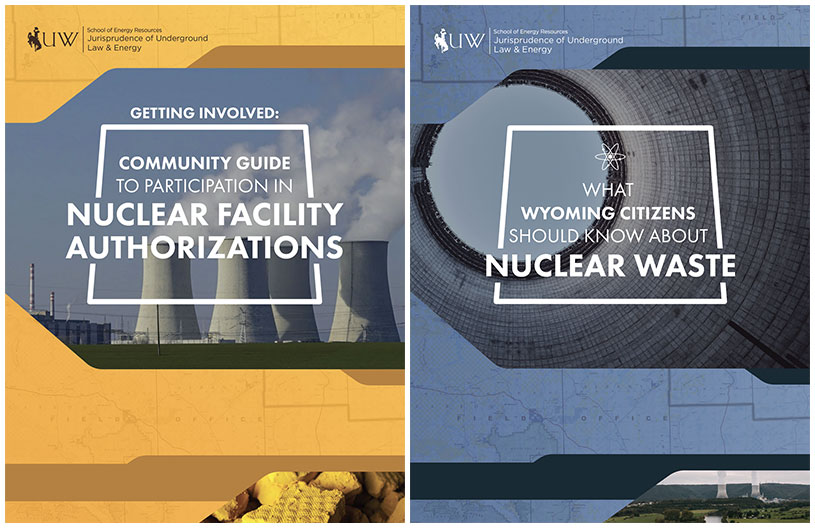
Publications in this series include “What Every Wyoming Citizen Should Know About
Nuclear Waste” and its companion guide, “Getting Involved: Community Guide to Participation
in Nuclear Facility Authorizations,” which seek to answer some of the most frequently
asked questions surrounding the emergence of a nuclear industry in Wyoming.
Written by Scarlett Forrest, an assistant research scientist in SER’s Jurisprudence
of Underground Law and Energy (JOULE) Research Group -- with support from Tara Righetti,
JOULE director, SER professor of law and co-director of SER’s Nuclear Energy Research
Center (NERC) -- the guides were developed in response to a county commissioner’s
request for public materials related to nuclear facilities and waste.
The first guide specifically addressing nuclear waste aims to demystify spent nuclear
fuel in the nuclear sector by providing clear, credible and locally relevant information
about nuclear waste and its management in Wyoming.
The second guide provides a broader context by answering the most common inquiries
about the establishment and management of nuclear facilities, helping Wyoming citizens
navigate nuclear developments in the state, and includes recommendations for staying
informed and involved.
“The management of spent nuclear fuel remains one of the most significant technical,
regulatory and sociopolitical hurdles for the industry, and communities proposed to
host spent-fuel-generating projects deserve clear and credible information to evaluate
a project’s risks and rewards,” Forrest says. “We developed these guides to demystify
the state and federal licensing processes and explain how nuclear waste is handled
and regulated. Our goal is to ensure that Wyoming residents are not just heard but
also equipped with the knowledge to participate meaningfully in discussions with policymakers
regarding the authorization and siting of nuclear projects. By providing accessible,
science-based information, we empower local stakeholders to advocate for their interests
in the state’s energy management.”
SER is playing a central role in preparing Wyoming for a nuclear future by building
the state’s research capacity, workforce and regulatory understanding. At the heart
of these efforts is NERC, an interdisciplinary hub that coordinates faculty research
across campus on topics ranging from the nuclear fuel cycle and uranium extraction
to the socio-economic impacts of siting reactors in Wyoming communities.
To ensure the state is technically and legally ready for projects, including the TerraPower
Natrium reactor in Kemmerer, SER has funded numerous seed projects, including the
development of a nuclear chemistry core facility and white papers on microreactor
regulatory frameworks.
Beyond research, the school is active in public engagement, co-hosting major events,
such as the Nuclear Energy Emerging Issue Forum with the Haub School of Environment
and Natural Resources, to foster dialogue among industry leaders, policymakers and
local residents.
“A focus of my efforts as the co-director of NERC has been to address stakeholder
appetite for accessible information about nuclear and projects in the states, through
projects like the emerging issues forum and JOULE community guides,” Righetti says.
“By equipping Wyoming stakeholders with comprehensive, accessible data, these guides
ensure that local leaders and citizens are well-positioned to make informed decisions
regarding the state’s energy future.”
The nuclear guides can be downloaded from the JOULE website along with other energy resources to help Wyoming citizens navigate energy development in the state.

The University of Wyoming has earned its Research Level 1 (R1) status from the Carnegie Classification of Institutions of Higher Education, placing Wyoming's only four-year university with the top research universities in the United States.