
UW Molecular Biologist Wins Prestigious National Institutes of Health Grant
Published May 13, 2026
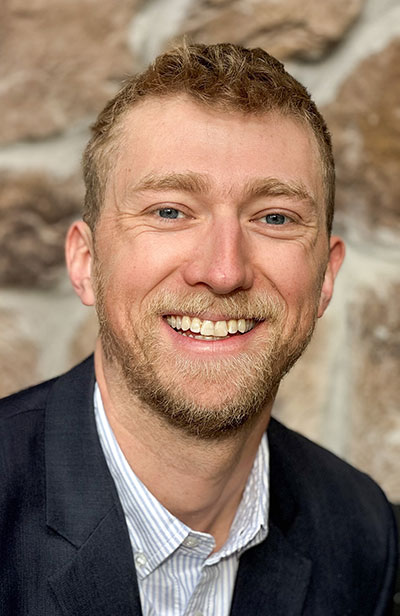
Owen Funk
Owen Funk, a postdoctoral fellow at the University of Wyoming in the Department of
Molecular Biology, recently was awarded a highly competitive National Institutes of
Health (NIH) “Pathway to Independence” grant.
The five-year grant from the NIH’s National Institute of General Medical Sciences
(NIGMS) began in March.
Funk is the first person at UW to receive a NIH Pathway to Independence grant, which
is designed to help promising postdoctoral scientists become tenure-track faculty
members by supporting career development and independent scientific research.
Funk was one of the first six recipients selected by NIGMS in 2026, with fellow awardees
representing Harvard University, Harvard Medical School, Princeton University, the
Salk Institute and Yale University.
“To me, this confirms something many of us at UW have known for a long time -- that
Wyoming is a great place for training talented research scientists at all career stages,”
says David Fay, a professor of molecular biology and one of Funk’s mentors. “Owen
came to the lab with all the right knowledge and skills, so this has turned out to
be a really fun collaboration and a very unique and exciting area for future studies.”
For his research, Funk is studying the microscopic roundworm Caenorhabditis elegans to understand cells with multiple nuclei.
Most animal cells have only one nucleus, which is the control center of the cell and
contains most of the cell’s genetic material. However, sometimes cells fuse together,
creating a cell with multiple nuclei.
In humans, cells with multiple nuclei are critical to muscle, bone and placenta formation.
In C. elegans, these cells control many epidermal functions, including molting.
“Ultimately, figuring out how these fused cells function and how their internal nuclei
communicate in the worm will provide insights into human biology, helping us understand
and treat diseases like muscle disorders or aggressive cancers where cell fusion goes
wrong,” Funk says.
For the first two years of his Pathway to Independence grant, Funk will pursue his
research with mentorship from Fay and Professor Dan Levy.
The second stage of the grant will fund his first three years as a tenure-track faculty
member. He hopes to secure a faculty position at UW if possible.
“We recently became an R1 research university, and I think this is a sign that UW
and (the Department of Molecular Biology) are doing science at a really high level
-- and that you don’t have to go to Harvard or Yale to conduct amazing research,”
Funk says.
Funk earned his Ph.D. from the University of Michigan and received his bachelor’s
degree from Bates College in Lewiston, Maine.
About the UW College of Agriculture, Life Sciences and Natural Resources
UW’s College of Agriculture, Life Sciences and Natural Resources serves students and communities through innovative scholarship, research and outreach. Guided by the land-grant principles of discovery and experiential learning, the college facilitates meaningful educational opportunities in the classroom, laboratory and community. The college offers degrees in the departments of agricultural and applied economics, animal science, botany, ecosystem science and management, family and consumer sciences, molecular biology, plant sciences, veterinary sciences, and zoology and physiology. The college also offers degree programs in agricultural communications, microbiology, and ranch management and agricultural leadership. To learn more, visit www.uwyo.edu/uwag or call (307) 766-4133.

The University of Wyoming has earned its Research Level 1 (R1) status from the Carnegie Classification of Institutions of Higher Education, placing Wyoming's only four-year university with the top research universities in the United States.