
UW Researcher Receives NSF CAREER Award to Advance Robotic Systems
Published July 27, 2026
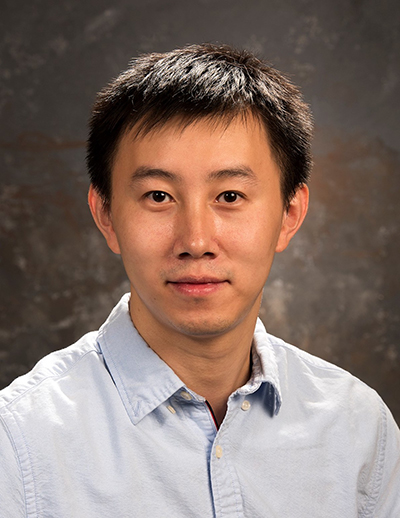
Chao Jiang
Robots are increasingly capable of helping people complete physical tasks, but many current systems are designed to assist with task execution rather than teach people to develop independent motor skills.
Existing robot-assisted training systems can guide movement, provide physical support or improve short-term performance, but these forms of assistance do not fully address how human learners acquire, retain and generalize motor skills over time. A University of Wyoming faculty member aims to address this gap by advancing robotic systems from task-oriented assistants toward instructional robots that systematically foster human motor-skill learning through personalized, adaptive and interactive teaching strategies.
To further that agenda, Chao Jiang, an associate professor in the UW Department of Electrical Engineering and Computer Science, received a $562,580 Faculty Early Career Development (CAREER) Program Award from the National Science Foundation (NSF) for his project titled “CAREER: AI-based Interactive and Adaptive Robotic Teaching Systems for Personalized, Curriculum-Based Human Motor Skill Training.” The five-year grant, awarded through NSF’s Division of Civil, Mechanical and Manufacturing Innovation, begins Tuesday, Sept. 1, and runs through Aug. 31, 2031.
The grant project, through NSF’s Foundational Research in Robotics Program, will develop AI-enabled robotic systems that can learn effective teaching strategies from human experts, generate curriculum-based training activities, assess each learner’s progress and adapt the activities, instructional feedback and physical assistance, accordingly. The goal is to deliver personalized training that helps learners develop skills more effectively, retain those skills over time and apply what they have learned to new tasks and situations, Jiang says.
“At the core of my research is a fundamental question: How can we design autonomous robots not simply to help people complete physical tasks, but to teach them the motor skills needed to perform those tasks independently?” Jiang says. “Although recent advances in artificial intelligence and robotics have enabled systems to perform increasingly complex physical activities, much of the field has focused on automating tasks or augmenting human performance. My research explores a different and underdeveloped frontier: intelligent, interactive robots that help people acquire, retain and generalize motor skills.”
There is a growing need for personalized training in rehabilitation, education and workforce preparation. However, therapists, teachers, coaches and trainers often have limited capacity to provide sustained, individualized instruction to everyone who needs it. Access can be especially challenging in rural and geographically dispersed communities, where specialized training may be costly, difficult to obtain or unavailable, Jiang says.
Robotic teaching systems could help extend the reach of human experts by providing individualized practice, monitoring each learner’s progress and adapting the training to their evolving abilities. For example, in robot-aided rehabilitation, a robot could autonomously adjust exercises and assistance as a patient relearns a movement. In manufacturing and workforce training, a robot could help employees safely practice complex physical skills. Similar systems could support sports training, eldercare, remote robot operation and other settings where people need to acquire and apply motor skills.
“The goal is not to replace therapists, teachers or other experts. It is to translate their expertise into scalable robotic systems that make high-quality, personalized teaching more accessible,” Jiang says. “Just as importantly, the research seeks to ensure that AI strengthens human competence rather than encouraging people to become dependent on automated solutions.”
Jiang will serve as the grant’s sole principal investigator and lead a research team of experts from both UW and other institutions in areas such as psychology, physical therapy and kinesiology to support the project’s human-subject studies. Their expertise will inform experimental design, outcome measures, statistical analysis and assessment of participant experience, Jiang says.
“Ultimately, this work aims to advance AI and robotics beyond assistance and toward teaching -- from helping a person complete a physical task in the moment to helping that person develop the skills and confidence to perform it independently over time,” Jiang says.
The grant will support two UW doctoral students in the Department of Electrical Engineering and Computer Science. It also will support one undergraduate student during the first year. Support for undergraduate students in subsequent project years will be sought through supplemental funding. The students who will participate in the grant are yet to be determined, Jiang says.
Additionally, the NSF grant will include an educational outreach component. According to the project summary, the project will integrate education and workforce training activities through innovative curriculum development centered on robotic and autonomous systems, involving undergraduate students in research, and outreach to K-12 education.
“I want the project to help prepare students and communities to participate in the rapidly growing fields of robotics, autonomous systems and human-centered artificial intelligence,” Jiang says.
To support this goal, he will develop new course materials that engage students in open-ended problems drawn from the research and provide students with hands-on experience in experimental design, algorithm development, data analysis and testing on real robotic systems.
Beyond UW, project outreach will create modular lesson plans and bring guest lectures, mobile robotics demonstrations and learning activities to K-12 schools and community colleges across Wyoming. These efforts will make emerging robotic and AI technologies more accessible to rural students and educators while strengthening pathways to advanced study and careers in intelligent and autonomous systems.
“This research is important because greater automation does not eliminate the need for human knowledge, judgment and physical skill,” Jiang says. “Even as AI and robotic systems become more capable, people must retain the ability to oversee these systems, respond to unfamiliar situations and perform essential physical tasks independently.”
“This CAREER award will help me establish a sustained research program at the intersection of artificial intelligence, robotics and human learning,” Jiang continues. “It supports my broader research agenda focused on developing intelligent robotic systems that adapt to individual needs and enhance human capability, independence and well-being.”

The University of Wyoming has earned its Research Level 1 (R1) status from the Carnegie Classification of Institutions of Higher Education, placing Wyoming's only four-year university with the top research universities in the United States.