
UW’s Shukla Receives Young Investigator Grant to Fund Psychiatric Neuroscience Research
Published August 25, 2026
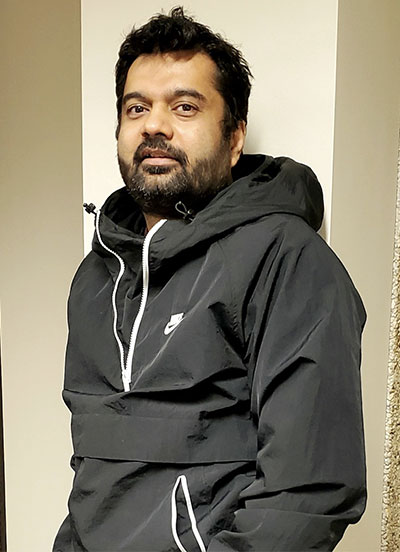
Rammohan Shukla
A University of Wyoming faculty member has received a two-year, $70,000 grant to further
his research in psychiatric neuroscience.
To fund his work, Rammohan Shukla recently received a Young Investigator Grant from
the Brain & Behavior Research Foundation (BBRF) for his project, titled “Translating
Human Gene-Family Molecular Signatures of Suicidality into Behavior Models.” His grant starts Jan. 15, 2027, and runs through Jan. 14, 2029.
“The goal of the project is to understand whether changes in ribosomal protein genes,
which we identified in human brain tissue from individuals with depression and suicide,
contribute to behavioral traits linked to suicide risk,” says Shukla, a UW assistant
professor in the Department of Zoology and Physiology. “Specifically, we will test whether partial downregulation of selected ribosomal
protein genes in the prefrontal cortex alters stress-related impulsive action and
response inhibition in mice.”
The BBRF is a global nonprofit organization focused on improving the understanding,
prevention and treatment of psychiatric and mental illnesses by awarding grants that
will lead to advances and breakthroughs in scientific research. The BBRF Young Investigator
Grant program provides each scientist with up to $35,000 per year for two years --
totaling $70,000 -- to enable promising investigators to either extend research fellowship
training or begin careers as independent research faculty.
The goal of the Young Investigator Grant program is to help researchers launch careers in neuroscience and psychiatry and
gather pilot data to apply for larger federal and university grants. Since 1987, the
BBRF has awarded more than $348 million in Young Investigator Grants around the world.
The grant will support a two-year research project in Shukla’s lab. He says the funds
will be used for partial summer salary support; animal studies; viral and molecular
reagents; behavioral testing and related research supplies needed to test whether
ribosomal protein gene changes contribute to stress-related impulsive behavior.
The grant provides funding for two second-year UW doctoral students -- Anuj Choudhary,
of Delhi, India, and Mrunali Dinesh Dhokne, of Nagpur, India -- in the Neuroscience
Program.
Qian-Quan Sun, a professor in the UW Neuroscience Program and the Sensory Biology
Center, will serve as Shukla’s mentor for this award. Shukla says support from the
Sensory Biology Center, including its Research Project Leader award, played a tremendous
role in helping him generate the preliminary foundation for this successful Young
Investigator Grant.
In 2023, Shukla joined UW as an assistant professor of zoology and physiology.
Shukla received his Ph.D. in biology from the National Institute for Basic Biology
in Okazaki, Japan. According to his UW webpage, his dissertation explored the anatomy
of serotonergic infrastructure, including receptors and transporters across human,
macaque, marmoset and mouse brains.
Intrigued about the role of serotonin and other meaningful monoaminergic systems in
psychiatry, Shukla switched from basic science to translational psychiatric research
for his postdoctoral studies at the University of Toronto.
This transition expanded his research horizons into behavioral, experimental and computational
domains. His present work focuses on understanding the similarities and differences
between psychiatric disorders and their cellular and molecular underpinnings.
“Personally, this award is very meaningful because it recognizes a research direction
I have been developing for several years -- connecting human postmortem brain findings
with mechanistic studies in animal models,” Shukla says. “Professionally, it provides
important support and visibility for my research program and our psychiatric neuroscience
work at UW. Because this is a highly competitive international award, it also brings
broader visibility to the University of Wyoming and highlights the growing strength
of neuroscience research on our campus.”
For more information about Shukla, go to www.uwyo.edu/zoology/people/shukla.html.

The University of Wyoming has earned its Research Level 1 (R1) status from the Carnegie Classification of Institutions of Higher Education, placing Wyoming's only four-year university with the top research universities in the United States.