
Wyoming Teacher Spotlight
Published May 28, 2025
Amanda Lopez (Laramie, WY) was recently published in Science Scope alongside SMTC’s science professional development team members Martha Inouye and Clare Gunshenan. Their article, "Using Local Phenomena to Support Student Learning," shares a local, phenomenon-based instructional sequence centering the Gap Lakes in Medicine Bow National Forest and illustrates how it supported all students in connecting to their place, drawing from their experiences, and pursuing their curiosities to make sense of an intriguing event while learning about science ideas. Check it out!
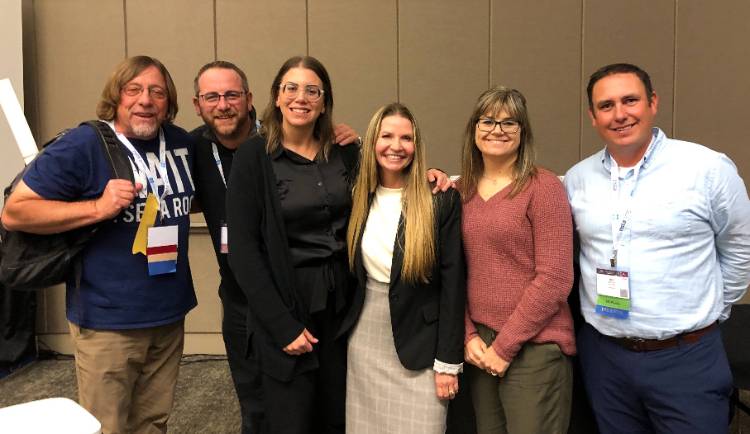
NSTA Kansas City presenters, left to right: Rick Carrol, Assistant Principal Jacob Gantz, Megan Allen, Shawna Mattson, Katie Camis, and Matt Freze
The Sweetwater County School District #2 high school science teachers are at it again! They attended March 2024's National Science Teaching Association national conference in Denver to share more of their work developing learning targets and success criteria that work for science learning. Their presentation, "Making it Fit: Reframing Learning Targets and Success Criteria to Crack the Code on Student Sensemaking," drew another enthusiastic crowd of teachers and administrators who are likewise working to merge learning targets and sensemaking.
Sweetwater County School District #2 teachers presented about their work around science teaching and learning at the National Science Teaching Association’s national conference held in Kansas City, KS in October 2023. The science teachers at Green River High School and Expedition Academy in Green River, Wyoming, have been working together since 2017 to shift their courses to the student-centered, phenomenon-driven, and place-based vision of the Wyoming Science Standards. They’ve made gratifying strides toward supporting student success, including a dramatic increase in student WY-TOPP performance.
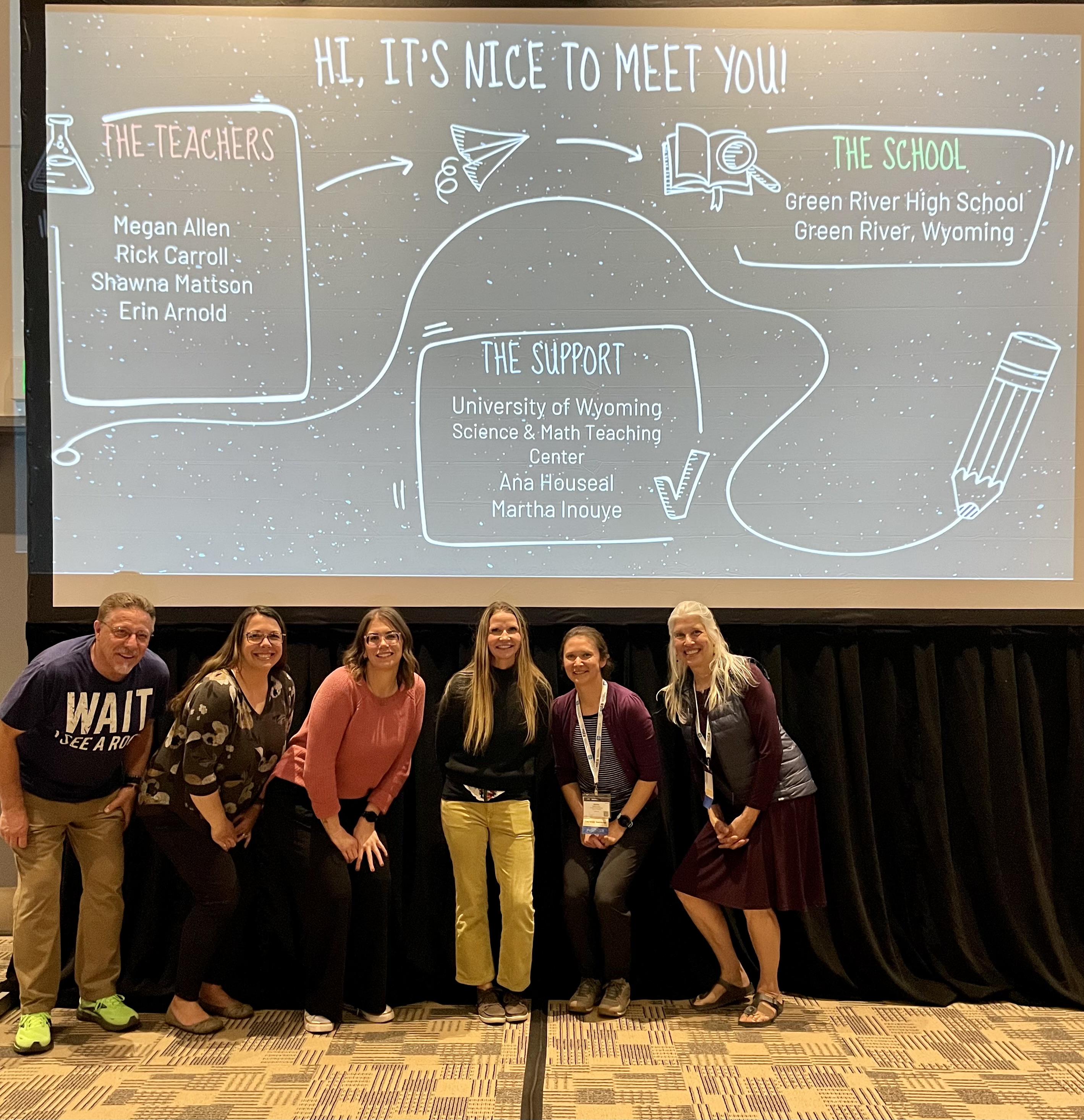
NSTA Denver presenters, left to right: Rick Carrol, Erin Arnold, Megan Allen, Shawna Mattson, Martha Inouye, and Ana Houseal
Most recently, they have turned their attention to writing learning targets and success criteria for their classrooms that preserve opportunities for students to authentically use science practices to figure out science ideas and problems. Like many other teachers and administrators across the nation, these teachers struggled with learning target and success criteria expectations because they are often written in ways that give away the “so what” of students’ investigations and learning. They worked together to reimagine how these targets and criteria could look in the science classroom, and how they could root the statements in the standards to support students’ deep learning. In their Kansas City presentation, titled “Do You Hate Writing Learning Targets? So DID We Until We Made them Work for Science,” the teachers were met with an enthusiastic group of attendees from New York, Arizona, New Jersey, and more states, who expressed gratitude to the Green River for sharing ideas and processes that would help them work through the same problems in their own schools and districts.

The University of Wyoming has earned its Research Level 1 (R1) status from the Carnegie Classification of Institutions of Higher Education, placing Wyoming's only four-year university with the top research universities in the United States.