
Grasshoppers of Wyoming and the West
Entomology
Key to Subfamily Gomphocerinae
Previous Step (F')G Lateral carinae not elevated, well marked by color in females, not marked in males; size medium to large; females green, brown and grey with light markings, occasionally blackish; males black; hind tibiae pink to red; wing bluish; widespread in eastern Colorado but generally not common.
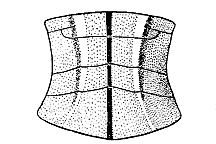
G' Lateral carinae of pronotum moderately elevated, well marked by color; size small.
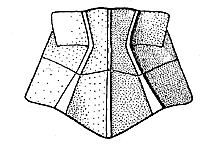 |
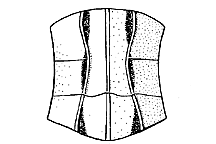 |
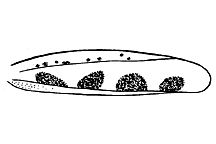
H Face strongly to moderately vertical; tegmina with three or four large, distinct dark spots, often scalloped; hind tibiae tan to red-orange; widespread and common throughout eastern Colorado.
 |
|
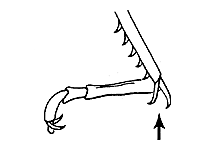 |
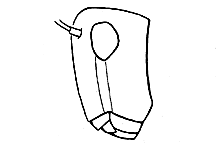
| Head | Top view of pronotum | Internal tibial spurs |
 |
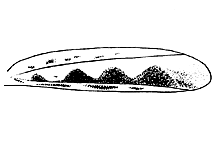 |
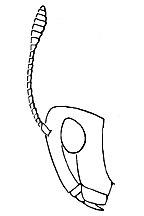
H' Face slanted back; tegmina without large, distinct spots but with dark band running the length of the tegmina, broken by irregular white areas; white streak below the anterior portion of the dark band; hind tibiae tan, sometimes spotted with brown; antennae usually expanded at tip; widespread and common in eastern Colorado.
 |
|
| Head | Top view of pronotum |

The University of Wyoming has earned its Research Level 1 (R1) status from the Carnegie Classification of Institutions of Higher Education, placing Wyoming's only four-year university with the top research universities in the United States.