
CGS Student International Research Funding Awards: Fall 2025
Published December 22, 2025
Nine UW students were awarded funding during the CGS International Research Funding fall 2025 cycle. Funding is provided by the Center for Global Studies through a number of funds, including the Centennial Fund, the CGS Excellence Fund, the Ellbogen Fund, and the Harris Fund.
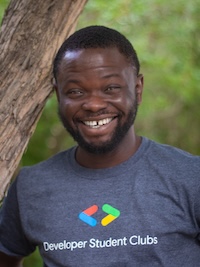
Olatunji Joseph Egungbemi
“Profit and Punishment: The Political Economy of Prisons in the U.S. and Nigeria”
This project examines prisons in the US and Nigeria as places of punishment and profit. Among the drivers of expansion are private prison companies, labor contracts, and profit-making sentencing in the U.S. In Nigeria, chronic underfunding, corruption, exploitative bail practices, and protracted pretrial detention support informal economies. Both systems illustrate how the economics of punishment influence who gets locked up and under which conditions, as well as what type of rehabilitation to expect. Citing political-economy theories, the study shall trace historical and policy trajectories—US corporate lobbying/pleading deals and Nigerian legal crowding/pretrial extension—to link poverty with incarceration.
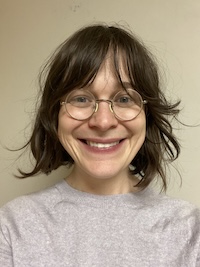
Hosanna Greene
“The Body Forms Beliefs: Study of the Christian Mystics”
Why do we believe what we believe? And what role does our body play in changing our minds? In this research project, I will examine the formation of belief for five mystics: the anonymous author of The Cloud of Unknowing, Julian of Norwich, Jeanne Guyon, Blaise Pascal, Simone Weil. Traveling to Norwich, London, Paris, and Solesmes, I will visit sites central to their mystical experiences and conduct archival research at the British Library and Bibliothèque Nationale de France. This research will offer vital support for my MFA thesis, which explores how belief is conceived within and shaped by the body. At a time of deep ideological fracture, this project will offer insight into the common ground, common material, that we all think with and from—our own bodies.
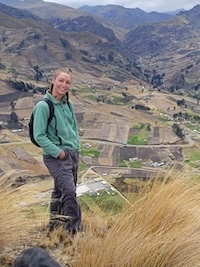
Margaret Hemp
“The effects of temperature and elevation on hummingbird wing morphology over one century of environmental change”
As the climate warms, animal morphology is changing. In birds, we see that body sizes are shrinking as wings grow larger; however, we do not yet know how mountain birds will be affected. I will study how hummingbird wing morphology has been altered across elevational gradients over the past century of climate change. I will collect morphological data from six hummingbird species in the field in Peru, which I will combine with hundreds of measurements from historical museum specimens (1900s–present). Using climate datasets and phylogenetic regression models, I will analyze how climate and oxygen availability have shaped morphology. My project will test long-standing hypotheses in ecology and evolution about morphological change over diverse environmental gradients, with a novel focus on examining elevation in concert with temperature. My results will be important for understanding foraging success, flight performance, competition dynamics, and resilience of hummingbirds in the face of climate change.
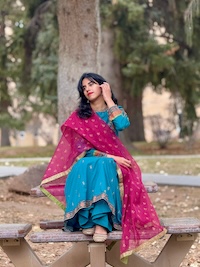
Shifa Ijaz
“Returning to the Metropole: A Pakistani’s journey through England’s Diasporic Archives”
I am currently a first year PhD student in Public Humanities at the University of Wyoming. My proposed project aims to research how South Asian women artists and organizers in Northern England publicly remember and reinterpret industrial-imperial legacies. I focus particularly on community archives and museum spaces to examine how memory practices become accessible public histories. Over two weeks in Manchester with a short comparative day in Leeds/London, I will conduct semi-structured interviews, observe community events, and a small participant-guided storytelling workshop. I plan to collaborate with the Ahmed Iqbal Ullah RACE Centre, Manchester Museum’s South Asia Gallery and South Asian Arts-Uk. The outcomes include a dissertation chapter draft and a public-facing artifact (micro-exhibit) to be shared with the English Department and UW community. This project advances reciprocal, ethically grounded public scholarship by linking colonial industrial afterlives to contemporary diasporic storytelling.
Aqsa Ishaq
“A Story in Transit: The Quiet Citizenship of Art”
My project, “A Story in Transit: The Quiet Citizenship of Art,” explores translation as both a linguistic act and a civic responsibility. As a poet, translator, and educator of American students, I engage a generation fluent in information yet distanced from global literatures, languages, and diverse modes of thought: elements essential to cultivating critical consciousness and reflective subjectivity. Through a creative-critical narrative, I will translate selected Urdu poets from Pakistan, including Faiz Ahmed Faiz, Saleem Kausar, and Kishwar Naheed. To reach my primary audience, young American readers, I will present these ideologically resonant translations within an engaging narrative form suited to Generation Z’s attention economy. To deepen the project’s authenticity, I will travel to Pakistan to connect with Urdu scholars and living poets such as Kishwar Naheed, Zehra Nigah, and Arfa Zehra, and to engage with Lahore and Karachi’s enduring Urdu literary communities that do not exist on the digital landscape. This project seeks to bridge cultures while preserving an endangered linguistic heritage.
Aaron Kersh
“Utilization of carbon isotopes for better comprehension of ruminal fermentation dynamics on composite diets using in vitro incubation trials”
Climate change-induced plant community shifts will influence livestock production in the western United States over the next decades. The abundance of invasive and woody plant species is expected to increase in grazing lands of the northern Great Plains. The objective for my dissertation research is to estimate digestibility and gas emissions of different shrub and herbaceous plant species common in our region. I will travel to Piracicaba, Brazil, to study at the Center for Nuclear Energy in Agriculture - University of São Paulo, where I will work on feed analysis techniques, including in vitro gas production and carbon isotopic fractionation in cool- and warm-season forages. Results should provide a better understanding of the dynamics of feed digestibility when animals consume both grass and woody plants. This project is crucial to my academic advancement by incorporating international experience and gaining more knowledge on topics that I have been working on.
Urusha Lamsal
“Transformative Capacity in Practice: Ground-Truthing a Framework for Community-Led Adaptation”
Climate change impacts are felt especially by intersectionally vulnerable communities. Climate change adaptation in such communities focuses on short-term coping, yet studies show the need for transformative adaptation that addresses root causes of vulnerability. My literature review reveals that current research on transformation centers on urban areas of the Global North, lacking adequate representation of vulnerable communities. This project will address this gap by ground-truthing and refining a transformative capacity evaluation framework that I’m developing as a part of my master’s thesis. Through collaborative workshops and interviews with community partners in Nepal, we will co-define indicators of transformation, ensuring the framework is culturally responsive and practical. The results from the study will be helpful in identifying community-driven pathways for transformation and providing practical tool for tracking progress. The expected outcomes are a validated, community-informed evaluation framework and a thesis chapter contributing to context-sensitive approaches to transformative climate adaptation.
Eric Psonak
“Present Progressive in the Spanish Language”
Relatively few studies have been done to examine how mutual contact changes languages over time. I plan to investigate if English has influenced Spanish through the prevalence of the present progressive tense (I am eating) in Spanish, which is more common in English. In Spanish, the simple present (I eat) can also be used to represent actions currently in progress. I suspect that the present progressive is becoming more common in Spanish due to cross-linguistic contact with English, and I wish to investigate this further to determine whether this is true empirically among native speakers of Spanish, and to do this I must first prove that the present progressive is more common in contemporary Spanish than historical Spanish. My investigation will open the door for future research in linguistics regarding the causes and effects of globalization upon languages. Globalization is here to stay, only making this research more relevant.

Misty Springer
“Preserving Indigenous San Stories”
A January 2026 research trip to South Africa will lay a foundation for my doctoral portfolio in Public Humanities, a project I’ll be developing over the next 18 months. My research plan builds on existing relationships and previous work with the !Xun and Khwe San of Platfontein. It aims to digitally preserve traditional stories and cultural practices and gather specific information for the establishment of a new NGO to serve the community. The !Xun and Khwe, traditionally hunter-gathers, were displaced by war and now inhabit marginalized status on a settlement in the Northern Cape Province. Due to poverty, social stressors, and rising “urban indigeneity” among the youth, their languages and traditional customs are disappearing. Because many tribal members lack access to technology and because transnational/intercultural research requires a deep investment in the host community, it is vital to meet with them in person at each stage of the project.


Global Engagement Office | Center for Global Studies | Education Abroad | International Students & Scholars | English Language Center