
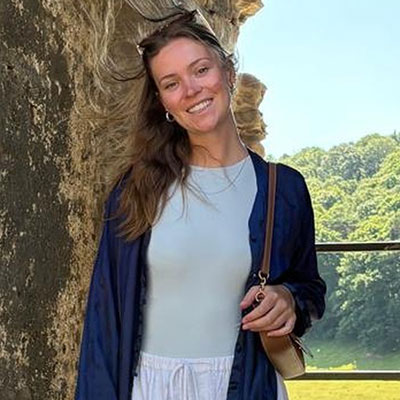
Mary Rocha
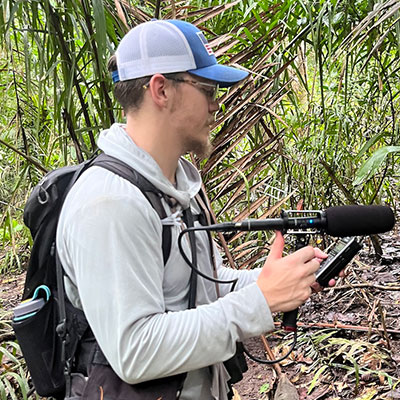
Austin Barth

Misty Springer
Three University of Wyoming students will present during “Looking Locally, Speaking
Globally” as part of the Centennial Speaker Series Wednesday, May 20, from 4:30-6
p.m. in the Centennial Library, located at 27 Second St. in Centennial.
The speaker series, hosted by UW’s Center for Global Studies (CGS) and the Centennial Library, brings international concerns and discussions to
the southeast Wyoming community.
-- Mary Rocha, a master’s student in international studies from Reedsburg, Wis., who
is expected to graduate from UW next weekend, will present “Moving National Security
into the Classroom: A Case Study of the United Kingdom’s Prevent Policy.”
Prevent is the United Kingdom’s flagship anti-radicalization policy that moves national
security away from traditional battlefields and into the classroom. High rates of
childhood radicalization suggest a new approach to combating extremism is necessary.
However, the policy remains controversial for turning classrooms into political places
of surveillance.
“This research examines the Prevent strategy in the Greater Manchester area of the
United Kingdom as a national security policy operating within educational settings,”
Rocha says. “Drawing on interviews, policy analysis, literature review and survey
data, it explores the extent to which Prevent can be understood as a policy outcome
of the securitization of British Muslim identity.”
Using securitization theory and new terrorism theory as its theoretical framework,
the study analyzes how post-9/11 understandings of terrorism and extremism have informed
the design and implementation of Prevent. Focusing on educators, the public and government
actors, the research investigates how Prevent is intended to function; the controversies
surrounding its implementation; and the ways in which it is enacted in classrooms.
-- Austin Barth, a graduating senior from Burns majoring in zoology, will discuss
“Testing Long-Term Memory of Territorial Neighbors in Chestnut-Backed Antbirds (Poliocrania
exsul).”
A common pattern among long-lived territorial bird species is that they respond with
less aggression toward familiar territorial neighbors compared to strangers, something
known as the “dear enemy” effect. Previous research has established the “dear enemy”
effect in many species. However, it remains unclear whether this neighbor-stranger
discrimination is based on cumulative past interactions via memory or recent, within-season
territorial encounters. Some species may maintain long-term memory of previous neighbors
after territories have changed.
“We examined if Poliocrania exsul maintains acoustic memory of previous territorial
neighbors. Working in central Panama with a long-term banded population, we conducted
a field playback experiment to test if territorial songs of previous neighbors --
those dead at least one year -- were perceived as equally threatening as current neighbors,
comparing these to stranger song playbacks,” Barth says. “We predicted that this species
would exhibit neighbor-stranger discrimination, showing the least aggression shown
toward neighbors and most aggression shown towards strangers. Furthermore, we predicted
that, if capacity for long-term memory for neighbors is present, we should see an
intermediate response toward previous neighbors, which would be higher than responses
to stranger intrusion.”
Barth tested these predictions and estimated the causal impact of these treatments
using a novel time-order structural causal model that accounted for patterns of joint
territorial defense -- distance from speaker, songs and calls -- by territorial males
and females. This work is the first-known test of memory related to neighbor-stranger
discrimination in any bird species and has implications for the understanding of long-term
persistence of population structure.
-- Misty Springer, a second-year Ph.D. candidate from Garden Valley, Idaho, studying
public humanities, will present “Creatively Preserving Indigenous San Stories, Culture
and History.”
“My project is rooted in long-standing relationships and collaborative work with the
!Xun and Khwe San communities of Platfontein, South Africa,” Springer says. “Through
this initiative, I will preserve personal/historical narratives and San cultural practices
while also addressing community-identified needs through the development of a nonprofit
organization, SanDPO (San Development and Preservation Organization). This work is
grounded in respect, reciprocity and a commitment to ensuring that cultural knowledge
is honored and sustained for future generations.”
About the Center for Global Studies
The CGS is a core unit of WyoGlobal and is the go-to resource on the UW campus for
global success. CGS supports students, faculty, communities and businesses in generating
internationally engaged research, teaching and program opportunities. With an array
of fellowships, grants, awards, partnerships and events, CGS cultivates effective
collaboration between Wyoming and the world.
For more information, email cgs@uwyo.edu.

The University of Wyoming has earned its Research Level 1 (R1) status from the Carnegie Classification of Institutions of Higher Education, placing Wyoming's only four-year university with the top research universities in the United States.