
Three UW Faculty Members to Present International Research in Centennial July 15
Published July 08, 2026
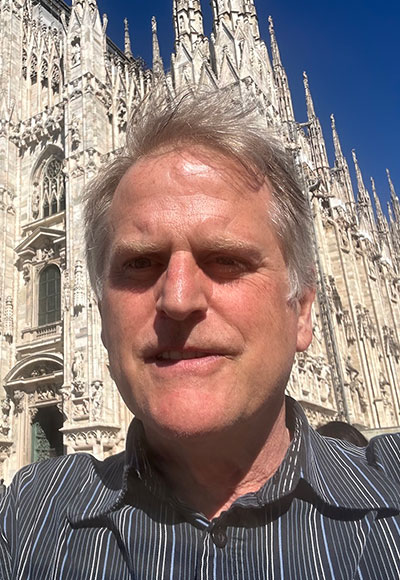
Bernard Steinman
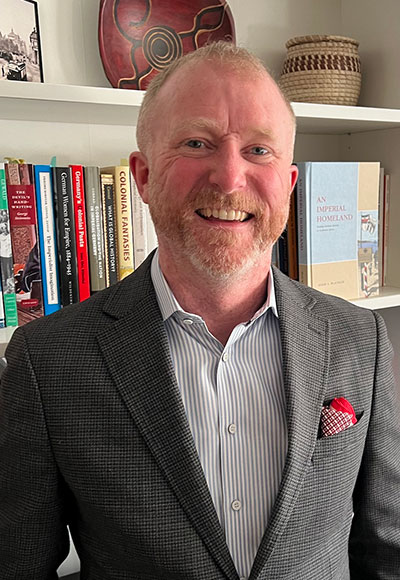
Adam Blackler
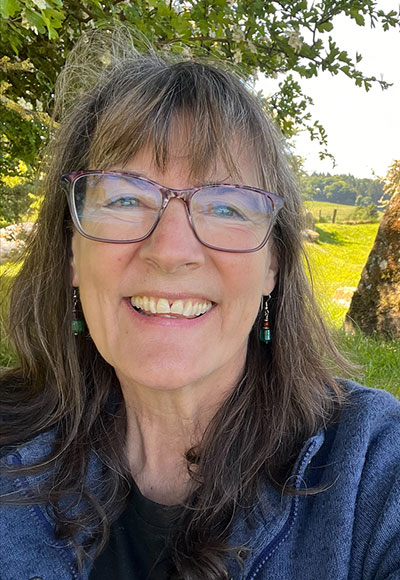
Ricki Klages
Three University of Wyoming faculty members will present research during “Bridging
Global Gaps: Faculty International Research” as part of the Centennial Speaker Series
Wednesday, July 15, from 4:30-6 p.m. in the Centennial Library, located at 27 Second
St. in Centennial.
The speaker series, hosted by UW’s Center for Global Studies (CGS) and the Centennial Library, brings international concerns and discussions to
the southeast Wyoming community.
Speakers and their topics are:
-- Bernard Steinman, an associate professor and program coordinator of the Department
of Family and Consumer Sciences, will present “Aging in Italy.” Steinman will explore
countries around the world that are undergoing a demographic revolution: Lower birth
rates and longer lifespans mean older adults now make up a growing share of the population.
“This shift brings benefits -- more years with family and more time for pursuits --
but also major social and policy challenges,” Steinman says. “Italy, with roughly
one in four citizens aged 65 or older, has one of the oldest populations in the world
(second only to Japan), and must find ways to support healthy, dignified aging for
many more people.”
Steinman, a gerontologist, spent his recent sabbatical at the Italian National Institute
on the Health and Science of Aging in Ancona, Italy. Drawing on research and firsthand
observation, he will explain the concept of “active aging,” as practiced in Italy,
and describe the long-term care systems that help older Italians who need assistance
with daily living. He also will compare Italy’s approaches with those in the United
States, highlighting lessons and contrasts relevant to policymakers, caregivers and
older adults.
As a bonus, Steinman will share photographs of the cathedrals, artworks and landscapes
he encountered during his stay.
-- Adam Blackler, an associate professor in the Department of History, will discuss
his new book “Echoes of Empire: Germany’s Colonial Afterlife (Namibia).” The book
project traces how Germans confronted the immediacy of colonial loss and its ramifications
from the collapse of the Hohenzollerns to the rise of Hitler.
In the aftermath of Germany’s imperial forfeiture in 1919, most erstwhile colonists
sought personal or collective recompense in some fashion. A false sense of martyrdom
fueled these efforts. Their experiences as survivors of British and South African
occupation, as enemy belligerents, as expatriated “undesirables” and as documented
pariahs stirred German-Southwest African settlers -- colonists in present-day Namibia
-- to regard themselves as the actual victims of World War I.
“As embodiments of colonial rupture, victimized German colonists denote a broad spectrum
of women and men who maneuvered to reclaim a piece of the former colony anew for themselves,”
Blackler says. “People, not monolithic states or international bodies, narrate the
story of Germany’s postcolonial epoch, helping uncover the human face of imperial
revocation during a radical new age of state control and border proliferation.”
Blackler is a historian of modern Germany and southern Africa, whose research emphasizes
the transnational dimensions of imperial occupation and colonial violence in the 19th
and 20th centuries. His scholarly interests also include the political and social
dynamics of Germany’s Weimar Republic and the interdisciplinary fields of Holocaust
and genocide studies, as well as international human rights.
-- Ricki Klages, a professor of painting in the Department of Visual Arts, will present
“Painting the Neolithic: Standing Stones and Stone Circles.” Her talk represents an
ongoing investigation resulting in a series of paintings depicting and influenced
by ancient stone circles and standing stones as well as other Neolithic sites in the
British Isles.
“With this award, I traveled into the Neolithic landscape of Ireland to document out-of-the-way
and lesser-known sites -- primarily in the south and central region, the West Coast
(the Ring of Kerry) and Newgrange, just outside of Dublin -- highlighting the unique
features endemic to Irish stone circles and standing stones,” Klages says.
Klages says smaller stone circles she viewed indicate more local, tribal religious
practices using five to seven stones, often alongside tombs and singular standing
stones. Standing stone and stone circles usually align with the winter solstice sunrise,
she says.
About the UW Center for Global Studies
The CGS is a core unit of WyoGlobal and is the go-to resource on the UW campus for
global success. CGS supports students, faculty, communities and businesses in generating
internationally engaged research, teaching and program opportunities. With an array
of fellowships, grants, awards, partnerships and events, CGS cultivates effective
collaboration between Wyoming and the world.
For more information, email cgs@uwyo.edu.

The University of Wyoming has earned its Research Level 1 (R1) status from the Carnegie Classification of Institutions of Higher Education, placing Wyoming's only four-year university with the top research universities in the United States.