
Testing Gender Differences in Dimensionality Crossing in Mental Rotation using Virtual Reality and 3D Printed Objects
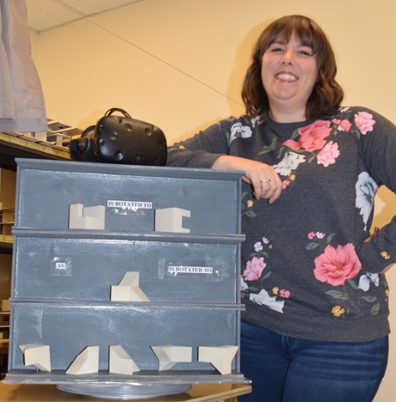
Dr. Mikaela Priest tested whether gender differences in a difficult mental rotation task could be reduced using 3 dimensional objects compared to traditional 2D paper and pencil measures. Participants were randomly assigned to one of three presentation conditions: 1) 2D presentation of drawn 3D objects, 2) 3D presentation of the same objects rendered in virtual reality using a head mounted display (HTC Vive) and 3) 3D presentation of real world objects created using 3D printing.
Developing Individual Calibration in an Omnidirectional VR treadmill

The University of Wyoming has earned its Research Level 1 (R1) status from the Carnegie Classification of Institutions of Higher Education, placing Wyoming's only four-year university with the top research universities in the United States.