Community guides

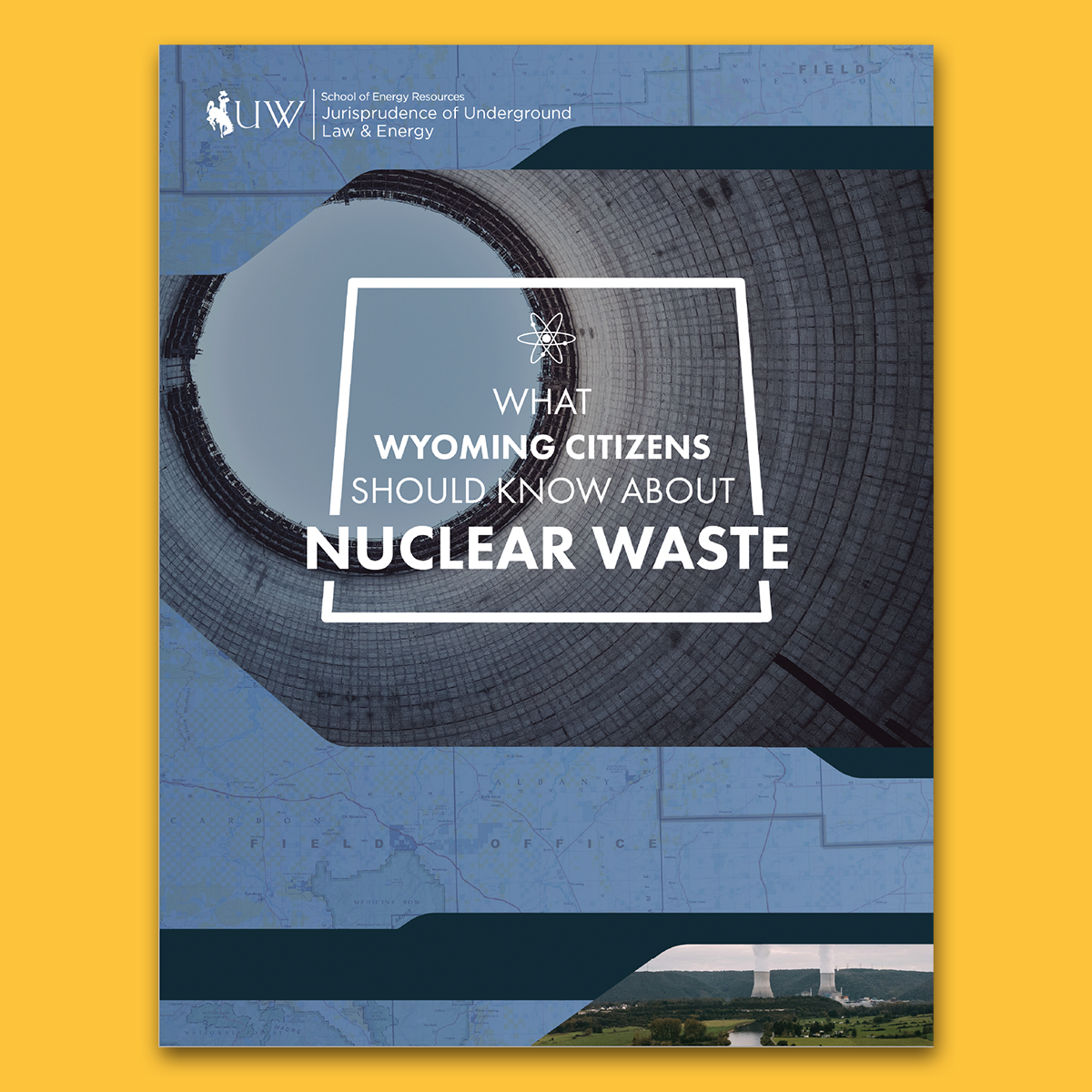
This guide aims to demystify waste from the nuclear sector by providing clear, credible, and locally relevant information about nuclear waste and its management in Wyoming.
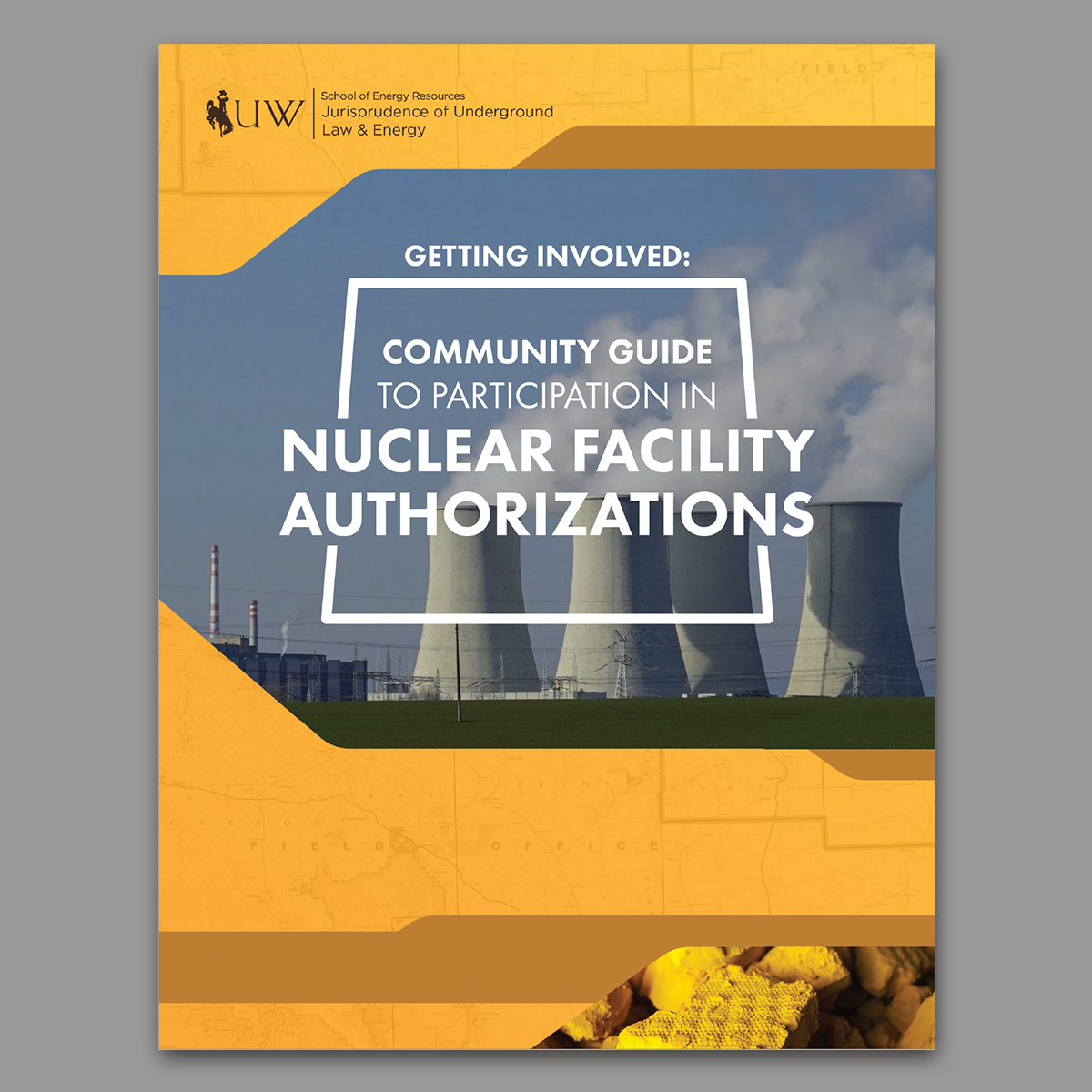
This user friendly guide helps Wyoming citizens navigate nuclear developments in the state with recommendations on how to stay informed and involved.
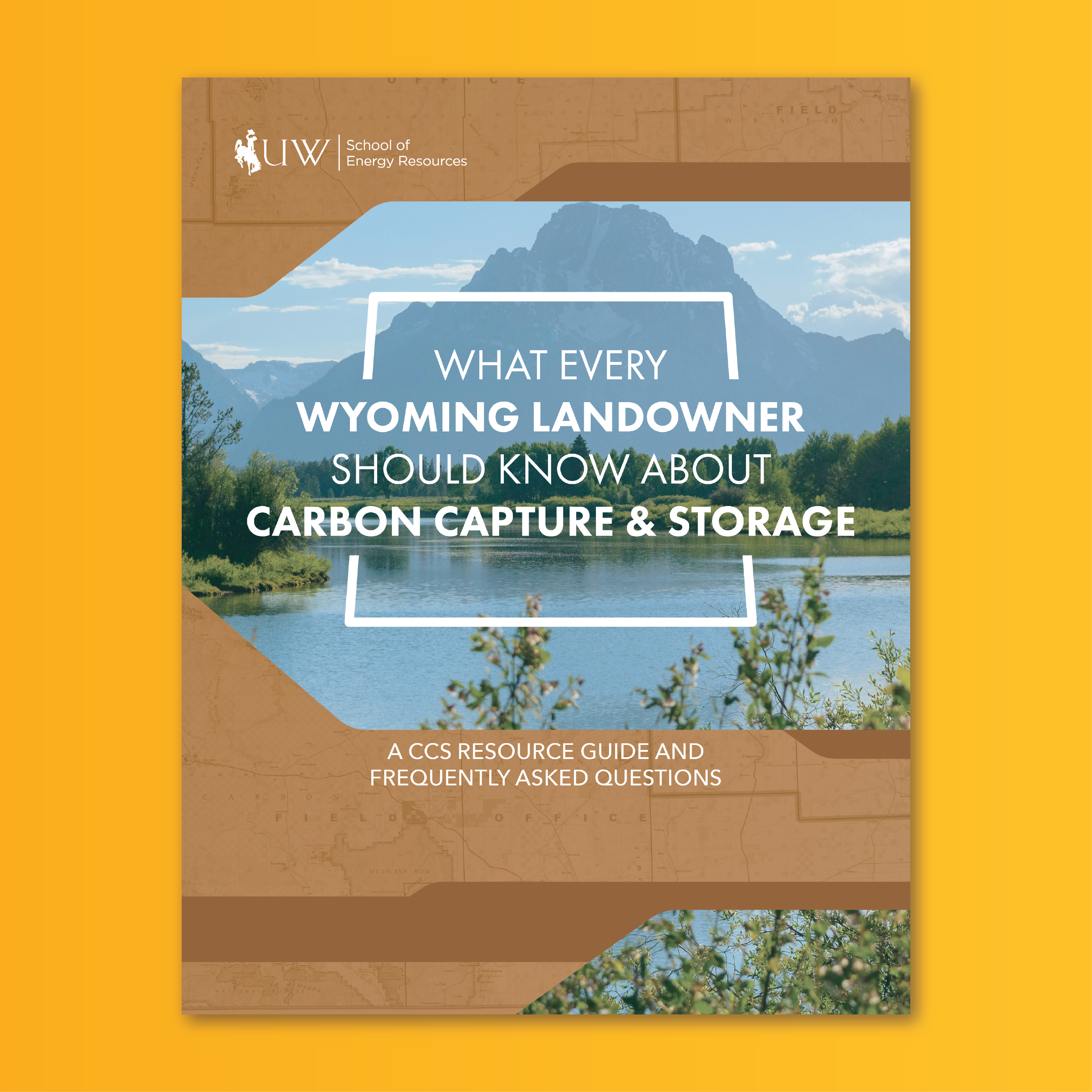 Learn the answers to the most frequently asked questions from the community regarding
Carbon Capture & Storage.
Learn the answers to the most frequently asked questions from the community regarding
Carbon Capture & Storage.
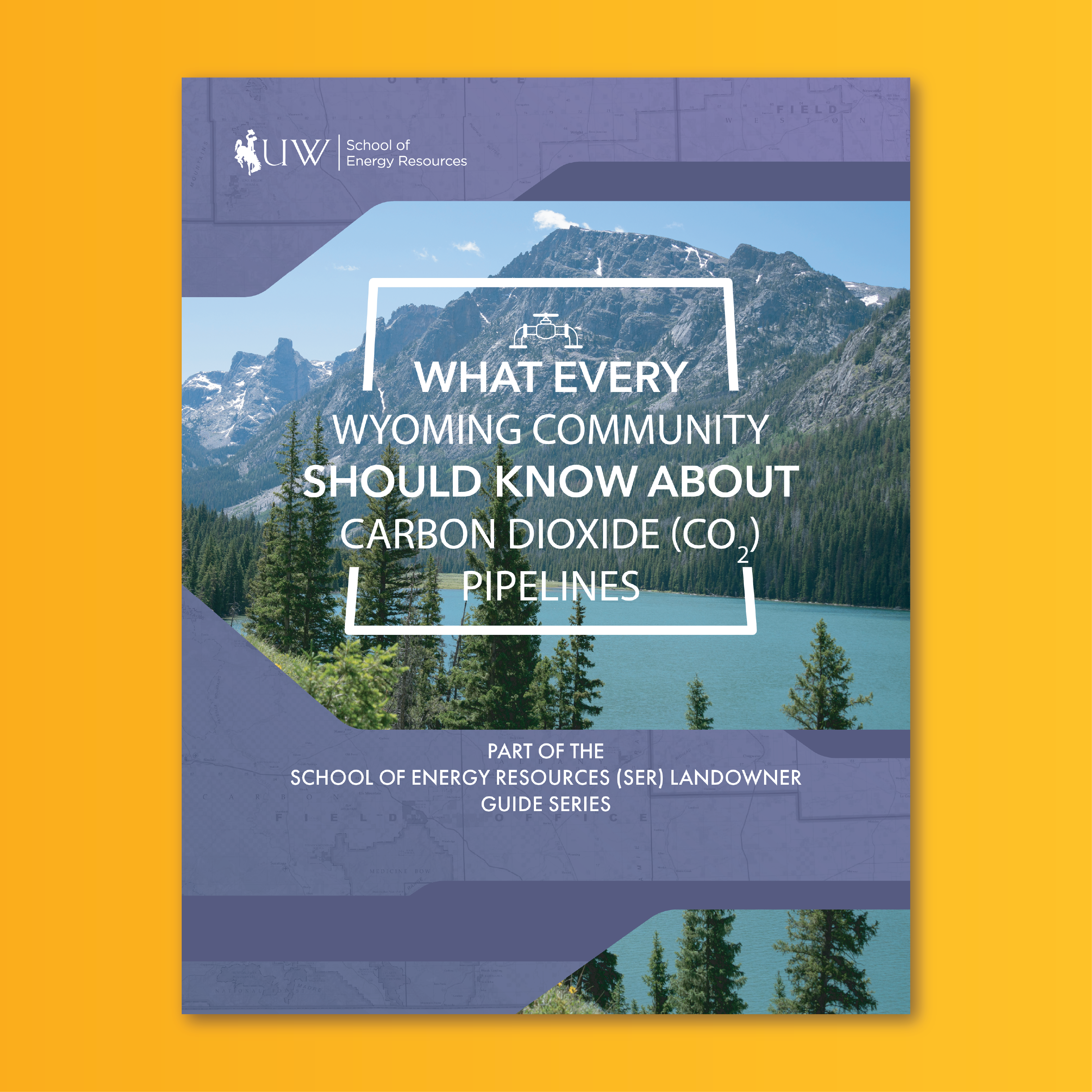 Learn the answers to the most frequently asked questions from the community regarding
CO2 pipelines in Wyoming.
Learn the answers to the most frequently asked questions from the community regarding
CO2 pipelines in Wyoming.
Published Research
Journals, Law Review Articles and Book Chapters
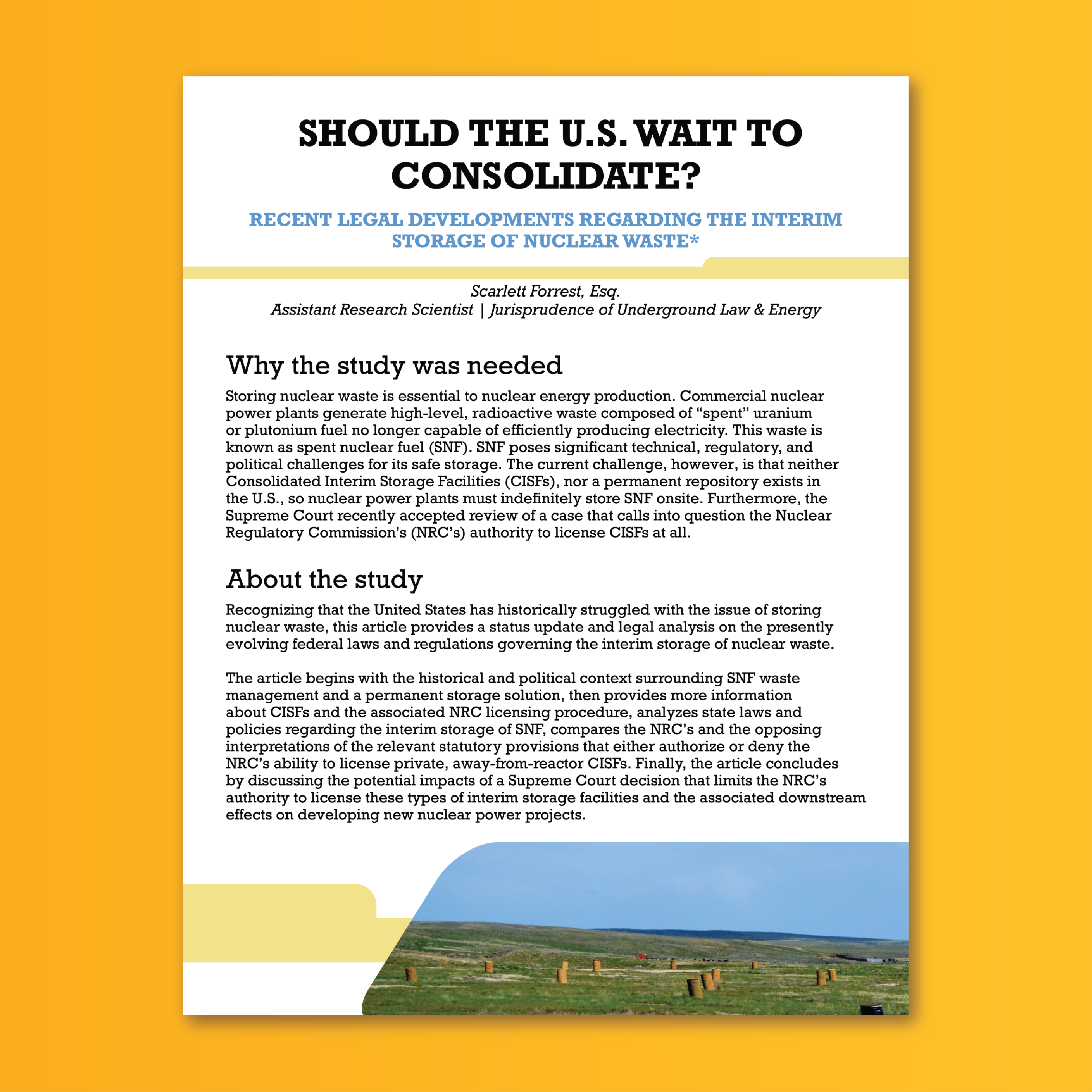 Storing nuclear waste is essential to nuclear energy production. Commercial nuclear
power plants generate high-level, radioactive waste composed of “spent” uranium or
plutonium fuel no longer capable of efficiently producing electricity. This waste
is known as spent nuclear fuel (SNF). SNF poses significant technical, regulatory,
and political challenges for its safe storage. The current challenge, however, is
that neither Consolidated Interim Storage Facilities nor a permanent repository exists
in the U.S., so nuclear power plants must indefinitely store SNF onsite.
Storing nuclear waste is essential to nuclear energy production. Commercial nuclear
power plants generate high-level, radioactive waste composed of “spent” uranium or
plutonium fuel no longer capable of efficiently producing electricity. This waste
is known as spent nuclear fuel (SNF). SNF poses significant technical, regulatory,
and political challenges for its safe storage. The current challenge, however, is
that neither Consolidated Interim Storage Facilities nor a permanent repository exists
in the U.S., so nuclear power plants must indefinitely store SNF onsite.
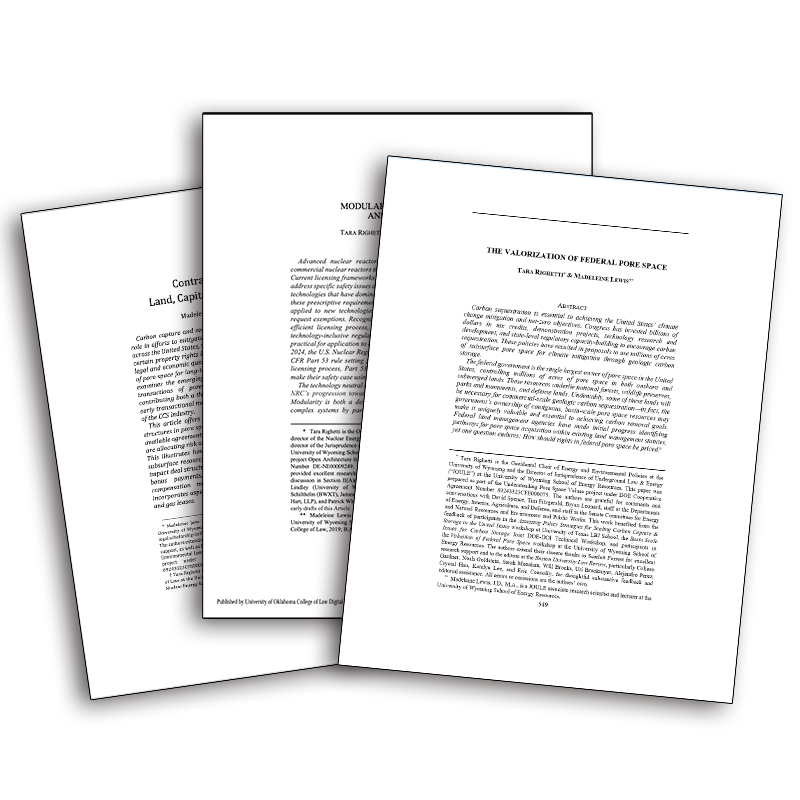
This article evaluates the theoretical bases for the imposition of common carrier requirements in the context of a burgeoning industry: the transport of carbon dioxide (CO2) for geologic carbon sequestration as an emissions mitigation technology.
This Article includes a comprehensive evaluation of the NRC and its processes for licensing nuclear facilities. It includes an overview of NRC jurisdiction, authority, and administrative processes, reviews the NRC’s licensing frameworks for reactors and its processes for design approvals, and builds on this discussion with a detailed analysis of the NRC’s current Part 53 rulemaking efforts related to advanced reactors. The latter half of this article explores the concept of modularity in the licensing process.
This Article is the first to provide a comprehensive look at the federal subsurface. Taking an inclusive and interagency approach, it delves into a labyrinth of federal agency manuals, guidance, and precedents transecting federal agencies and the fossil and renewable sectors. These examples illuminate commonalities among principles and methodologies that can be applied to the conceptually unique challenge of valuing property grants for sequestration. This Article develops and evaluates these alternatives and explores the implications of valuation choices for land management and climate policy.
This article offers the first empirical assessment of compensation structures in pore space contracts. Analyzing structures from publicly available agreements, it reveals how project developers and landowners are allocating risk and value at different stages of project development.
Research Products
Regualtory Plans, and final research products
Coming soon!
Coming soon!
Interactive Maps
The new, interactive tool provides a comprehensive, easy-to-use view of hydrogen-related laws, regulations, and incentives across the United States. Research for the project was led by the Jurisprudence of Underground Law and Energy (JOULE) research group incollaboration with the Great Plains Institute. THe project was funded by the Center for Energy Regulation and Policy Analysis.
Coming soon!