
- Events are out of the blue
- "We never saw this coming"
- Warning signs are always predictive
- Mass violence is random, spontaneous, and unpredictable
how to stay safe in an active shooter event
In the event of an active shooter, how you respond can make all the difference. This is why it is vital to mentally prepare yourself for the challenges you may face during such an event. By familiarizing yourself with your surroundings and considering all possible escape routes, you can ready yourself to react quickly and efficiently.
The most important thing to remember during an active shooter event is that you have three options: Run, Hide, or Fight. By envisioning how you respond in advance you can empower yourself to act quickly should the situation call for it.
Below are guidelines we recommend for staying as safe as possible.
If you would like to speak with a member of the University Police Department regarding anything below, you can reach us at 766-5179 or at uwpd@uwyo.edu.
What to know right now
Content Warning
If you’ve been the victim of violence or anticipate a strong reaction to the below content, please consider reading at your own pace and comfort. If you would like further support, please see below for mental health resources.
Be Prepared
- Save UWPD’s emergency and non-emergency number on your phone: 766-5179
- Ensure you are signed up for UW Alert. You can check your status here.
- Familiarize yourself with Shelter in Place and Evacuation protocols
- Review the content of this page in depth
- Download our Active Shooter Pocket Guide or pick one up at our department.
Be Vigilent
- Maintain situational awareness at all times
- Know your nearest exit, stairwells, windows, locks, equipment, etc
- Consider the best evacuation routes or hiding spots wherever you are
- Watch for warning signs, if you see something say something
- Remember, you are directly responsible for your own safety
RUN, HIDE, FIGHT Emergency Protocol
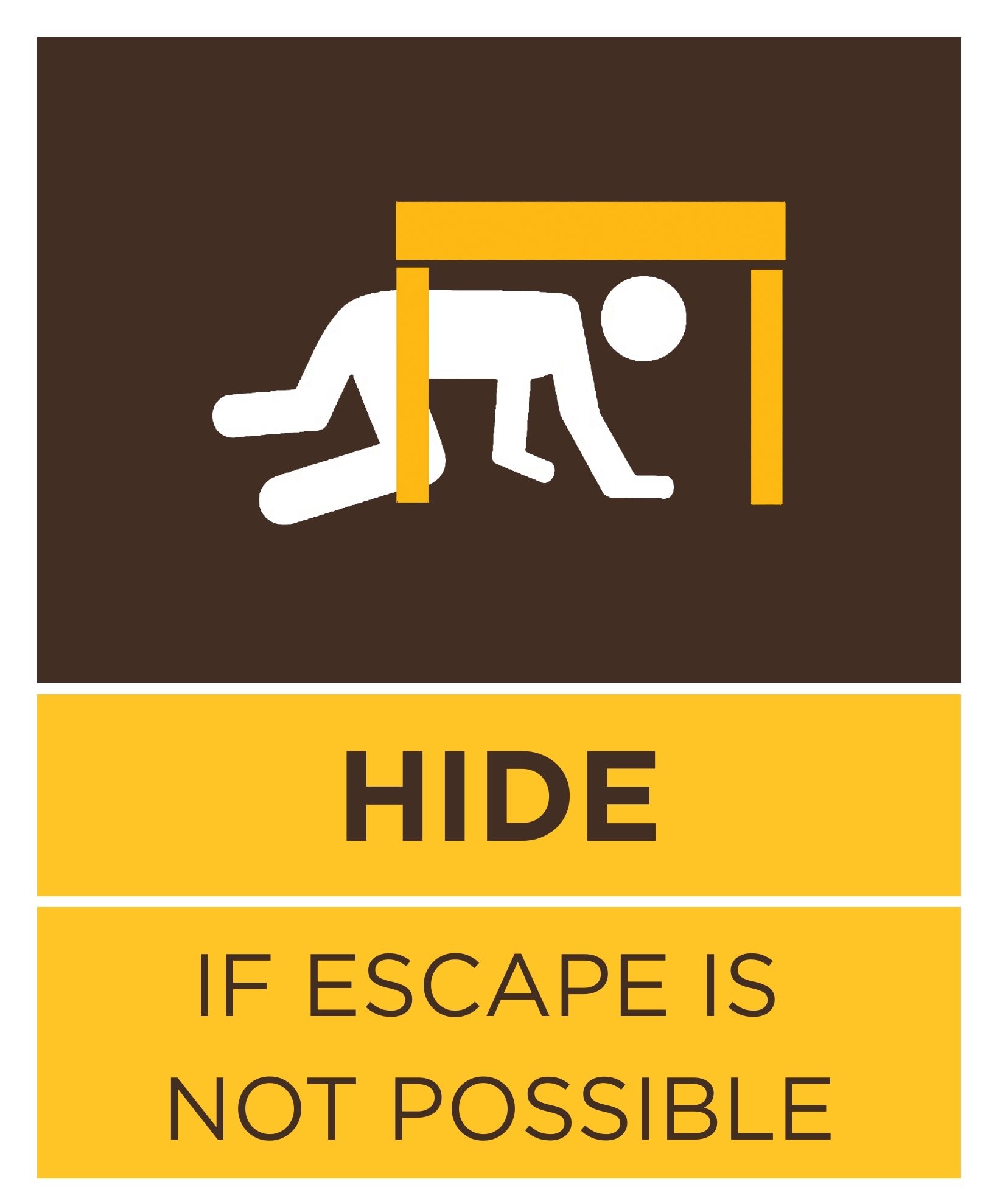
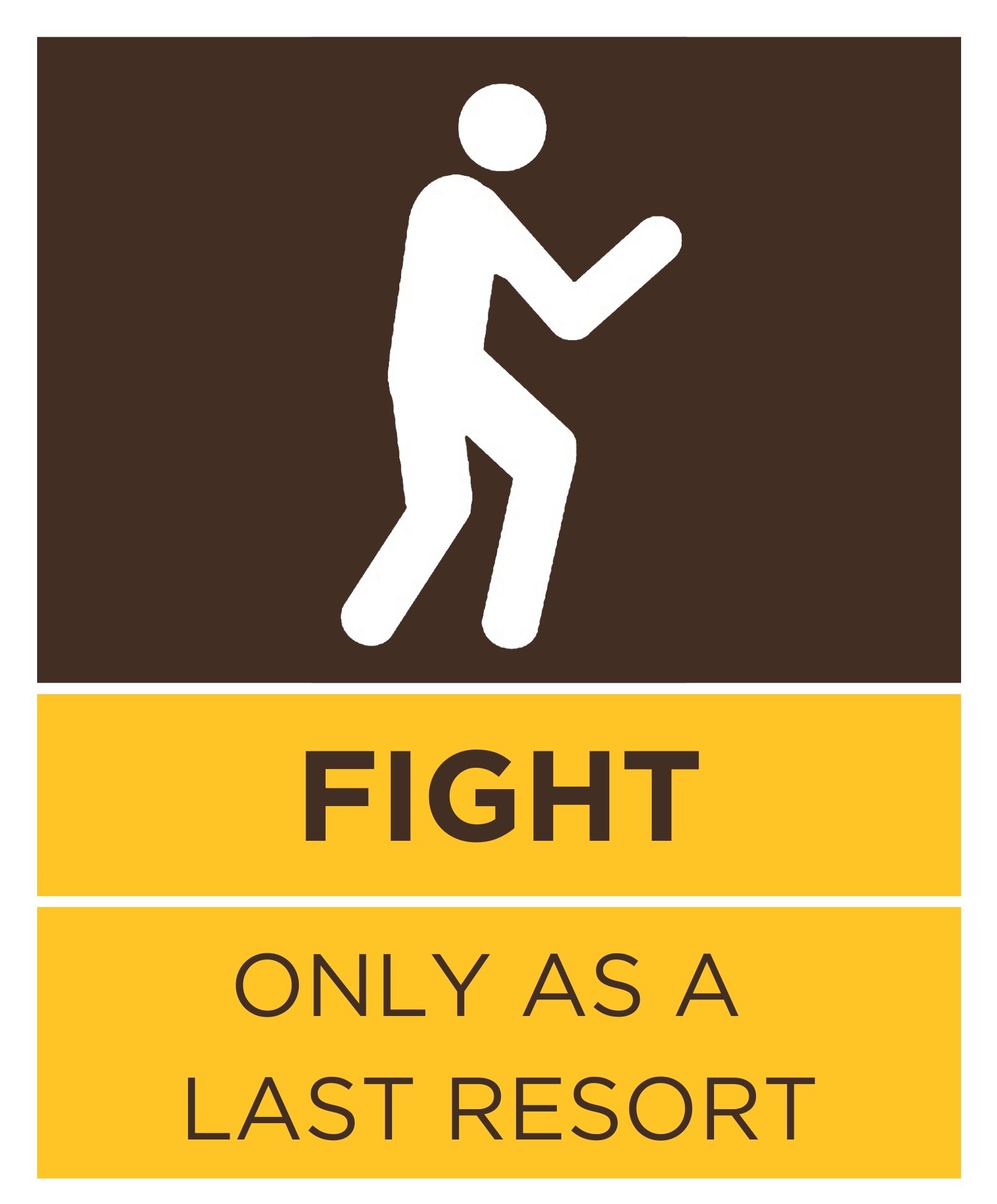
The University of Wyoming Police Department teaches the RUN, HIDE, FIGHT model. RUN, HIDE, FIGHT is a nationally recognized safety protocol designed to help individuals survive an active shooter situation. The concept emphasizes quick decision-making and adapting based on the circumstances. RUN means evacuate immediately if there is a safe path—leave belongings behind and help others escape if possible. If escape isn’t safe, HIDE in a secure place, lock or barricade doors, silence phones, and remain quiet. As a last resort, if confronted directly, FIGHT using aggressive force and improvised weapons to stop the threat. The goal is to empower people to act decisively and increase their chances of survival until law enforcement arrives.
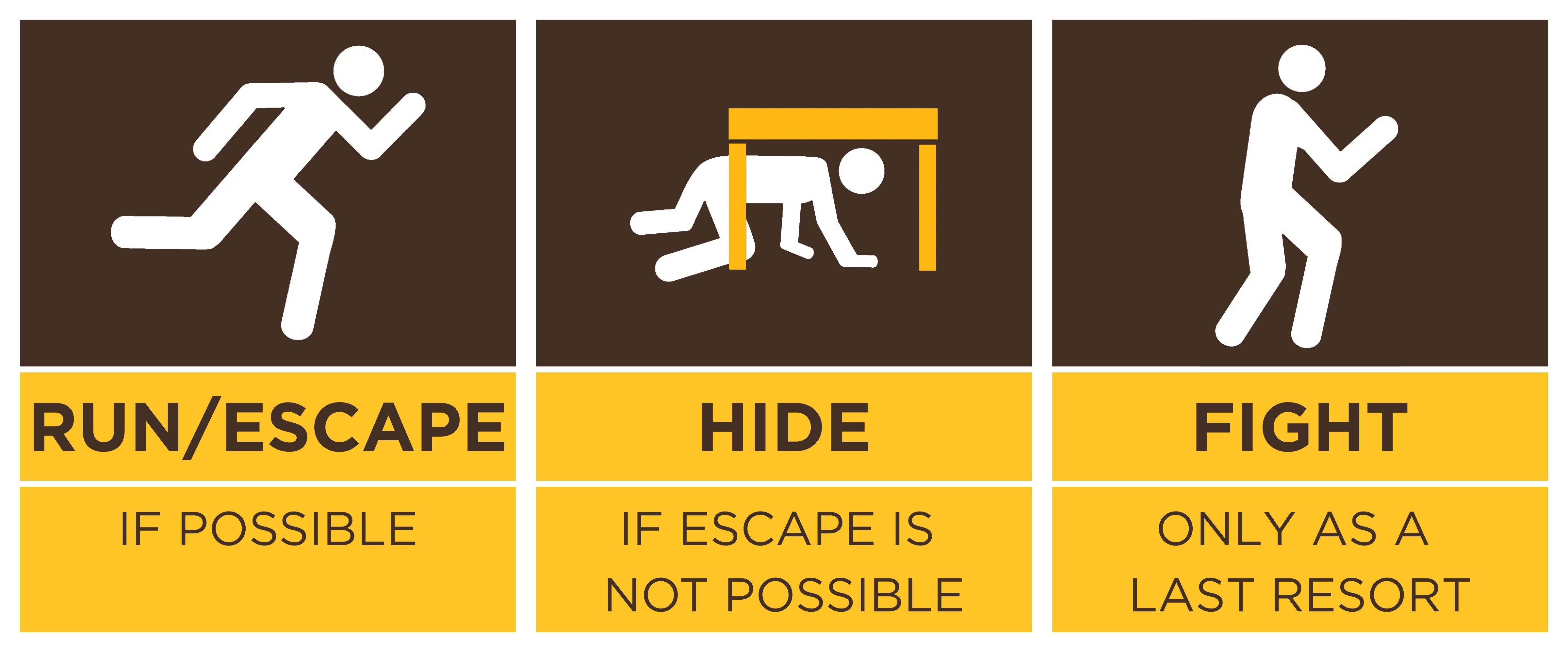
What to do during an Active Shooter Event
The following measures and guidelines can significantly increase your chances of staying safe during an active shooter event. Please review them thoroughly.
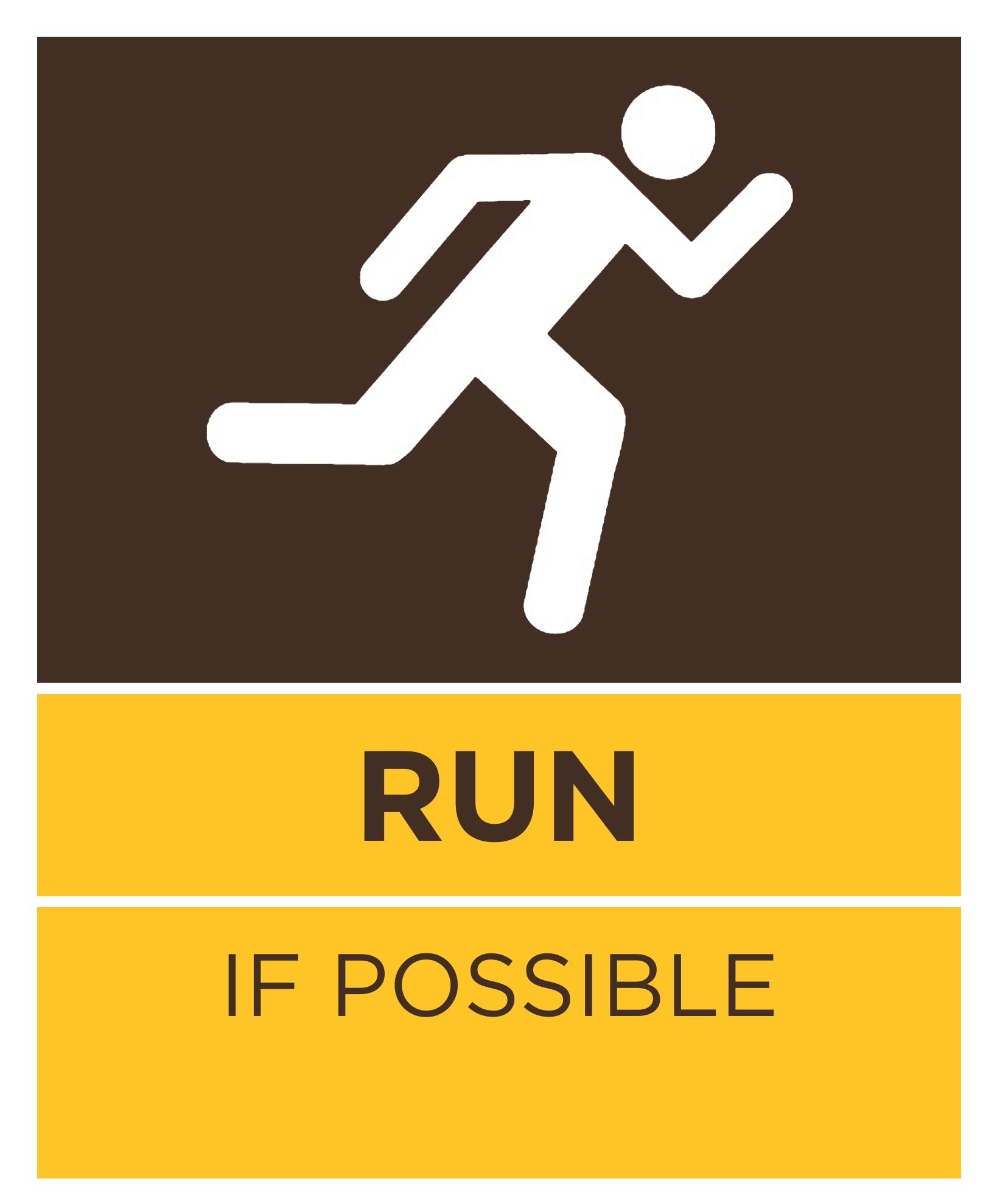
If there is a way to escape the threat and you are reasonably sure you can do so without
being harmed, do it.
1. Plan your escape route
- Consider a clear escape route
- Prepare yourself to active quickly and decisively
2. Evacuate promptly:
- Regardless of others’ decisions, evacuate immediately if you assess it is safe to do so
- Leave belongings behind, keep only your cell phone in your pocket
3. Assist others:
- When you are able, try and help others to escape safely (especially those with special needs)
4. Warn others:
- Inform people not to enter the area where the active shooter may be
5. Maintain visibility
- Keep your hands visible at all times to avoid confusion or suspicions
6. Cooperate with authorities:
- Follow instructions provided by law enforcement promptly and without hesitation
7. Prioritize safety
- Do not attempt to move injured individuals unless absolutely necessary
8. Contact emergency services:
- When it is safe to do so, call 911 or 766-5179 and provide the following essential
information:
- Your name and location
- Specific location of the incident
- Number of shooters (if known)
- Estimate the number of individuals involved
If evacuation is not possible, the second best thing to do is to Shelter in Place,
meaning find a safe place to hide wherever you are.
-
- Select your hiding place
- Choose the best space that is available quickly
- Ensure you are out of the shooter’s view
- Opt for a location that provides protection from gunfire
- Avoid spaces that may trap you or limit your movement
- Prevent access:
- Turn off lights to make your location less visible
- Lock all doors and windows if possible
- Use heavy furniture to block entry points
- If you have time, consider securing the doors with a belt or electrical cord to prevent them from opening
- Stay safe while hiding:
- Maintain silence to avoid drawing suspicion
- Conceal yourself behind large items like cabinets or desks
- Silence your cell phone and turn off any noise sources
- Refrain from responding to voice commands or moving barricades until you are certain they come from law enforcement
- Make a plan of action for if you are found
- Talk to authorities:
- If possible, discreetly call 911 or 766-5179 to alert authorities to the situation
- If unable to speak, leave the line open for dispatchers to listen
- Text 847411 and utilize UWYO at the start of your message to text dispatchers information
- If you are caught outside:
- Move or crawl away from gunfire, using any available obstacles for cover
- Once in a relatively safe position, remain still and avoid any unnecessary movement
- Leave only when safe to do so
- Wait for further instructions from law enforcement personnel
- Select your hiding place
If escape or hiding is not possible, or if you’ve been discovered, you should be prepared
to fight.
-
- Before the confrontation
- If you have the time to do so, consider what items are close by that could be used as a weapon or distraction
- Consider which areas the assailants might enter from, and if you can gain any strategic upper hand through more advantageous positioning
- Prepare yourself mentally for the possibility of a confrontation.
- Within the confrontation:
- Act as aggressively as possible towards the shooter
- Utilize any available objects as improvised weapons to distract and incapacity the attacker. Things such as books, backpacks, nearby furniture, or fire extinguishers can be good improvised weapons
- Fully commit to your actions and do whatever is necessary to protect yourself and others around you
- Before the confrontation

What to do after the event is over
In the aftermath of an active shooter event, the chaos can leave people feeling overwhelmed, confused, and unsure of what just happened. Adrenaline and fear blur memories, making it difficult to process details or recall clear timelines. Because of this disorientation, it is important to know how to respond when law enforcement arrives and follow their instructions carefully.
Once You've Reached the Evacuation Point
If you are directed to a designated assembly or safety area, it is critical that you remain there until instructed otherwise. These areas are chosen to provide protection and to help law enforcement and emergency responders account for everyone. Leaving too soon or without permission could place you at risk, interfere with ongoing safety operations, or create confusion during a crisis response. Law enforcement and emergency personnel will manage the situation, communicate updates, and determine when it is safe to leave. For your safety and the safety of others, please wait patiently at the evacuation point until the proper authorities give the official all-clear.
How Law Enforcement Will Respond
Law enforcement’s primary objective during an active shooter event is to neutralize the threat quickly. It is important to know that once they arrive, officers will secure the area before attending to injured individuals or help facilitate evacuations. They will not know who represents a threat and who does not, so it is important for you to quickly and effectively follow orders when prompted by law enforcement personnel.
Expect to see officers equipped with tactical gear. This may include vests, helmets, and rifles. They will take command of the scene and issue clear directives, possibly pushing individuals to the ground for safety.
What You Should Do
Stay calm and composed
Follow instructions promptly and without hesitation
Drop any items you are holding, including backpacks, jackets, and sweaters
Raise your hands above your head with your fingers spread to show you are unarmed
Keep your hands visible at all times
Avoid sudden movements or gestures
Refrain from seeking assistance or asking questions. Simply comply with directives
Proceed in the direction indicated by law enforcement without delay
Once You Have Been Released
Follow Official Guidance – Pay attention to instructions from law enforcement or campus/emergency officials about where to go and what resources are available.
Contact Loved Ones – Let family or close friends know you are safe, but avoid sharing unverified information about the incident.
Access Support Services – Utilize counseling or crisis resources. It’s normal to feel shock, confusion, or fear after such an event.
Rest and Recover – Give yourself time to process. Trauma responses can surface later, so monitor your wellbeing and seek help if needed.
how different university of wyoming groups can help
The above safety guidelines apply across the University of Wyoming community, however specific groups are expected to take extra precautions or seek guidance from designated individuals.
Each group within the UW community helps play a vital role in ensuring overall safety and preparedness. For example, faculty members will be expected to step into a leadership role while students are expected to follow instructions from them.
By understanding your respective role and responsibilities, each group helps contribute to creating and maintaining a safer environment for everyone at the University of Wyoming. Please review specific guidelines for your group and get in touch with your immediate supervisor or the University Police Department if you have any questions.

Click below to see how each UW group can help during an active shooter event.
During active shooter events, designated managers serve as crucial leaders, setting the tone for the entire group and guiding them to safety. As a manager it is important for you to know the following things:
- Stay vigilant and aware of your surroundings at all times
- Familiarize yourself with room and floor layouts, including all marked exits and alternate routes
- Identify Shelter in Place areas and understand how to report incidents effectively
- Determine how doors can be secured and/or barricaded
- Identify objects that can be used for protection and defense
- Ensure all people in your area and individuals with special needs or disabilities receive assistance and guidance
- Keep contact information updated for receiving notifications from UW Alert
- After an active shooter event, inform your supervisor of your whereabouts to help facilitate accountability for staff
- Obtain departmental approval before leaving campus during or after such an incident
Managers who have questions or need assistance with planning ahead for their primary area should contact UWPD at uwpd@uwyo.edu
Students and visitors will look to you for help as you play a crucial role in providing assistance during emergencies. As a result, it is important to be prepared. Here are some important steps to take:
- Familiarize yourself with evacuation procedures
- Stay alert to your surroundings and be proactive in ensuring safety
- Know the layout of your workplace, including room configurations and exit locations
- Identify alternative routes to exits and areas where you can shelter in place
- Understand how to report incidents effectively based on your location
- Determine methods to secure and/or barricade doors if necessary
- Identify objects that can serve as shields or weapons in case of an emergency
- Ensure all people in your area and individuals with special needs or disabilities receive assistance and guidance
- Keep contact information updated for receiving notifications from UW Alert
- After an active shooter event, inform your department manager of your location to help facilitate accountability for staff
- Refrain from leaving campus during or after an active shooter event without prior approval from department management
Managers who have questions or need assistance with planning ahead for their specific area should contact UWPD at uwpd@uwyo.edu
In an active shooter event taking place during or outside your class, students are likely to rely on your leadership. They will look to you to know what to do if an emergency arises, which is why it is crucial for you to be familiar and comfortable with established protocols.
At the beginning of each semester it is vital to provide students with essential information regarding evacuation and Shelter in Place procedures. Please remind students to update their emergency contact information and ensure they are signed up for UW Alert. You should also ensure that your UW Alert contact details are current.
As a faculty member, your responsibility is as follows:
- Stay attentive to your surroundings at all times
- Familiarize yourself with the layout of your classroom or lab and know exits and alternative routes
- Know where to shelter in place and how to report an incident
- Determine methods to secure and/or barricade doors
- Identify objects that can serve as shields or weapons in case of an emergency
- Ensure all people in your area and individuals with special needs or disabilities receive assistance and guidance
- After an active shooter event, inform your department manager of your location to help facilitate accountability
Faculty members who have questions or need assistance with planning ahead for their specific building or classroom should contact UWPD at uwpd@uwyo.edu
As a student it is crucial for you to be prepared for an emergency situation in all buildings and areas that you frequent. This includes classrooms, dining facilities, and gathering hubs. Here is what you can do to ensure your safety:
- Stay aware and be mindful of your surroundings at all times
- Familiarize yourself with room layouts and exit locations as well as primary exits and alternate routes to leave buildings
- Know where to shelter in place and how to report an incident
- Determine methods to secure and/or barricade doors
- Identify objects that can serve as shields or weapons in case of an emergency
- Make it a habit to observe these safety measures in new environments
- Ensure you are signed up for UW Alert
- If required after an incident, cooperate with police investigations by remaining in the area for interviews until you are released
- Get in touch with your family and friends to assure them of your safety
If you evacuated or witnessed the incident, email uwpd@uwyo.edu to provide information crucial to the investigation.
RESOURCES AVAILABLE TO THE COMMUNITY

For UW Faculty and Staff Members
UW Human Resources has partnered with MINES & Associates as their EAP provider. MINES provides EAP services to all benefited employees and their household members.
Call (800) 873-7138 or visit their website and complete an EAP form.

For UW Students
The UCC is a free campus clinic dedicated to supporting the mental health and well-being of University of Wyoming students. UCC offers a range of services year round with no waitlist. Most appointments are scheduled within 24-48 hours.
Call (307) 766-2187 or visit their office at Knight Hall 341.

For Members of the Laramie Community
The VOA offers counseling and psychiatry services across eastern Wyoming. Their continuum of care covers a wide variety of mental health services. Clients of any age are welcome and they offer familyi therapy as well as youth and geriatric mental health services.
Call them at (307) 745-8915 or start the admissions application here.

For All Community Members
The Laramie SAFE Project offers free and confidential crisis services for the Laramie and UW communities. The provide resources, emergency shelter, support, and victims compensation services.
Call them at (307) 745-3556 at their 24-hour crisis line.
active shooter awareness: myths, realities, and prevention
Understanding the truth about active shooter incidents is the first step in prevention. By separating myths from realities, recognizing warning signs, and knowing what to watch for, we can all play a role in reducing risk and keeping our communities safe.
- There are indicators present
- There usually are warnings, manifestos, fantasties, and planning
- Builds up over time
- Behavioral symptoms can be hard to identify
- They exhibit angry, argumentative behavior
- Fails to take responsiblity for their own problems, blames others
- Harsh retaliation against perceived injustice
- Hypersensitive reactions
- Sudden change in personality, i.e. "closed off"
- Unusual fascination or talking about weapons
- Suicidal Behavior
- If you see something, say something
- Have a conversaion with the individual
- Use campus resources for help
- Sometimes people just want to be heard or seen
- Never assume it will pass, offenders often attempt to be dissuaded from action
An Ounce of Prevention Can Go a Long Way
You can help prevent active shooter incidents by staying aware of concerning behaviors. Pay attention to warning signs or drastic changes in behavior. Knowing these tendencies and reporting them early to the proper authorities can make a critical difference in stopping violence before it happens.
still have questions?
For more guidance in case of an active shooter event:
- Download our Active Shooter Pocket Guide, or pick one up at the University of Wyoming Police Department
- For the official guidance, please review the Homeland Security Active Shooter resource guide.
- If you still have unanswered questions, please contact the University of Wyoming Police Department at 766-5179 or at uwpd@uwyo.edu. You can also ask questions in person at our office at 1010 E Ivinson St.

The University of Wyoming has earned its Research Level 1 (R1) status from the Carnegie Classification of Institutions of Higher Education, placing Wyoming's only four-year university with the top research universities in the United States.