
CGS Faculty International Research Funding Awards for 2026
Published January 05, 2026
Twelve members of the UW faculty and staff were awarded funding during the CGS International Research Funding for research to be undertaken in 2026. Funding is provided through the Center for Global Studies.
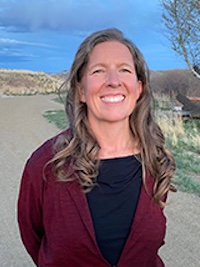
"Nuclear Energy Community Engagement: Lessons from Australian Municipalities for the US and Wyoming"
As demand for energy increases and nuclear industries step in to meet that demand, Wyoming faces critical questions about developing nuclear energy across the supply chain. It is increasingly apparent that the United States lacks proven frameworks to engage communities in nuclear facility siting and development decisions. Around the globe, however, many places have developed sophisticated engagement processes that respond to wide-ranging governing structures and cultural norms. This research investigates decision making processes abroad to understand how community engagement around nuclear siting operates in diverse social and political frameworks. We aim to identify transferable lessons to inform US contexts where nuclear discussions are resurging.
This research brings together scholars from different fields to explore shared questions about community engagement and collective decision making. We see a critical need for cross-disciplinary scholarship that produces a nuanced understanding of how policymaking can respond to and shape collective decision making about nuclear energy development. Visiting sites where community-engaged processes have advanced decision-making around nuclear projects will afford a broad and deep perspective on how these engagement processes took shape and their local outcomes. For this component of the project, research will be conducted in Australia, site of the world’s largest “Citizens’ Jury” on nuclear waste siting. Additionally, Australia is a global leader in community engagement processes, with such mandated by law in Victoria since 2020. Scholars and practitioners alike are advancing “Deliberative Democracy” as a tool for engaging citizens in local decision making—but how does this play out in the nuclear context, where scope and scale exceed traditional bounds of time and space? Finally, Australia is the site of the world’s largest known uranium deposit and, like Wyoming, has been supplying this commodity for nearly a century. This trip to Australia will expand knowledge of consensus building approaches and the role of facilitation in a context similar to our state, where mining and uranium exports are a well-established industry, but energy generation and storage are just now being explored. The research integrates interviews with planners and participants in community engagement, meetings with leading thinkings about how to apply principles of deliberation to contentious topics, site visits to nuclear facilities and proposed sites, meetings with Indigenous nations, and exploration of policy documents and local historical records.
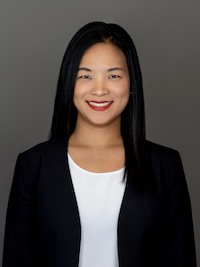
“Global Managerial Control Systems in the Age of AI: Insights from TSMC and Its Suppliers”
This project examines how artificial intelligence (AI) and related technologies influence global managerial control and incentive systems, with research sites in Taiwan and a focus on Taiwan Semiconductor Manufacturing Company (TSMC) and its key suppliers. Using a managerial accounting research lens, the project studies how managerial control and incentive systems are implemented and explores how AI and related technologies are integrated, or planned to be integrated, into performance evaluation, monitoring, and organizational decision making across international operations. Through collaboration with industry partners and scholars in Taiwan, the project aims to generate insights into how AI-enabled control systems support coordination, maintain quality, and align employees with organizational goals in complex global environments.
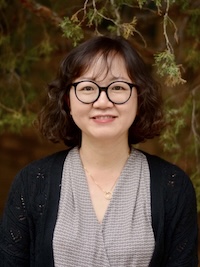
“Housing Crises in Post-Growth East Asia: A South Korean Case Study”
Housing affordability has become a growing challenge in cities around the world, affecting how young people build their lives, form families, and participate in their communities. This project examines housing crises in East Asia—focusing on South Korea, Japan, and Taiwan—to better understand how rising housing costs, unstable jobs, population decline, and weakened social safety nets are reshaping everyday life.
Through an international collaboration involving scholars from East Asia and the University of Wyoming, the project explores how people experience housing insecurity, how families and communities adapt to these pressures, and how governments and nonprofit organizations respond. Rather than focusing only on economic indicators or policy design, the research centers on lived experiences, community voices, and the social consequences of housing instability.
My portion of the project focuses on South Korea, where housing prices are among the highest in the world relative to income. Using interviews, field observations, and policy analysis, the research examines how young adults navigate housing decisions amid job insecurity, how families support or struggle to support younger generations, and how public agencies and civil society organizations shape housing policy debates.
Findings from this research will contribute to an edited scholarly volume and an international workshop in Taipei in 2026. Importantly, insights from East Asia will also inform discussions of housing challenges in the United States, including in Wyoming communities such as Jackson Hole. By linking global experiences to local concerns, this project aims to support more people-centered and equitable approaches to housing policy.
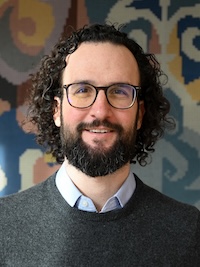
“Deepening the UW-Cardiff Partnership for impactful collaborations in the humanities and social sciences”
I received support from the Center for Global Studies to deepen the UW-Cardiff Partnership. I will be a Visiting Scholar at Cardiff (February-August 2026), accompanying another UW faculty member, Dr. Zoe Pearson, during her UK-based Fulbright work at Durham University. As a Visiting Scholar with Cardiff University's School of Geography and Planning, I will write a high-impact journal article with Dr. Ant Ince, examining “commonsense” responses to apparent crises, and related productions of political space (e.g., ideas of territory and locality), as symptomatic of shifts in norms of politicking across multiple world regions. This will facilitate an application for external funding (ESRC). I will also contribute to a Cardiff-based seminar series, give guest lectures from a book project, and contribute to discussions about interdisciplinarity. This work will prepare the ground for Ant Ince’s visit to UW, and for future efforts to harness our institutional partnership for the humanities and social sciences.
“Witnessing the Unwitnessed: AIDS Memory, Global Fieldwork, and the Future of the American AIDS Play”
This project supports the completion of Reacquired: I, Thou, and the American AIDS Play, a book that explores how theatre has shaped public memory of the HIV/AIDS epidemic. To write the book’s final chapter, I will travel to Brazil to attend the 2026 International AIDS Conference—the most important global gathering of HIV researchers, clinicians, activists, artists, and people living with HIV.
The biennial gathering offers a rare, time-sensitive opportunity to witness how HIV is being understood now: medically, politically, and culturally. As someone living with HIV and as a scholar of AIDS theatre, I approach this research through both lived experience and critical inquiry. This personal vantage point allows the project to examine how stories of illness, survival, and care are told when scientific advances, global inequities, and community memory collide in the present moment.
While American AIDS plays have powerfully documented the crisis years of the epidemic, they are often shaped by national and historical limits. By engaging with global voices at the International AIDS Conference—and with Brazil’s rich traditions of HIV activism and socially engaged performance—this research places the American AIDS dramatic canon into conversation with contemporary global perspectives. The result is a deeper understanding of how theatre continues to bear witness to HIV not only as history, but as a living, evolving human experience.
“The role of metabolism in moderating range-expansion in a thermally limited fish”
Invasive species entering new environments often face challenges they were not accustomed to in their native range. In these populations, differences between individual invaders may explain why some individuals succeed, reproduce, and spread, whereas others do not. Temperature may limit spread into new environments and variation in metabolism may be an important determinant of individual success at this boundary. To investigate the role of metabolism in determining success of aquatic invasive species (AIS) of concern to Wyoming I am visiting the lab of Dr. Shaun Killen at University of Glasgow where I will acquire training to carry out intermittent-flow respirometry, a technique used to measure metabolism in aquatic wildlife. Building on this foundation, Dr. Killen and I are eager to establish an ongoing collaboration through which both universities will benefit in terms of peer-reviewed publications, pursuit of external research funding, and unique international training opportunities for students.
“Wyoming and Australia Sharing Science to Tackle Shared Challenges: Methane and Wildfire Emissions”
This project focuses on enhancing my research team’s capabilities to quantify and characterize methane and wildfire emissions. Wyoming and Australia both face critical challenges to air quality, climate, and human health posed by these emissions. Interaction with the world-leading experts in Australia will enhance the capabilities of my research team, increase international collaboration, and enhance the reputation of UW in these critical areas of research. I will be traveling to Wollongong Australia work with researchers at the Center for Atmospheric Chemistry at the University of Wollongong who specialize in remote-sensing of methane and in-situ measurements of particulate emissions from wildfires. I will also travel to Melbourne to meet with researchers at the Commonwealth Scientific and Industrial Research Organization (CSIRO) who are world leaders in the measurement of aerosol particles. I direct the School of Energy Resources Center of Excellence in Air Quality (CAQ) at the University of Wyoming and this project will significantly enhance our future work at the CAQ.
“Visiting Professor at Hanken School of Economics”
Commerce and investment are fundamental drivers of economic development. When making investments, market participants assess both the value of their commitments and their willingness to invest based on expected returns. Corporate governance (formal controls) and culture (informal controls) play an important role in shaping these expectations by providing assurance that investments will be protected and not diverted through poor executive decision-making or excessive personal benefits. In this project, I will collaborate with faculty at the Centre for Accounting, Finance, and Governance at the Hanken School of Economics in Helsinki, Finland to examine how corporate governance and culture interact. Using archival data and empirical methods, the research will investigate whether governance structures and organizational culture act as substitutes or complements in influencing firm behavior and investment outcomes.
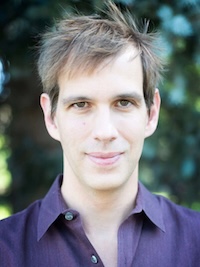
“Research for a Novel entitled The Interior Castle”
My novel, The Interior Castle, contrasts the life of a modern-day Carmelite hermit vying for Divine Union with that of his worldly, agnostic cousin who walks the Camino de Santiago as part of his own journey of self-discovery. Because the themes of this novel connect with the life and work of Teresa of Avila, I’m eager to visit the Museo Carmelitano Teresa de Jesús in Alba de Tormes, site of that saint’s burial and also a museum featuring an archive of her papers. Access to this site will offer the chance to peruse writing of hers that does not appear elsewhere. Secondly, as much of this novel is set on a monthlong pilgrimage across the Camino, it will be invaluable, for the sake of realism, for me to experience this pilgrimage myself.
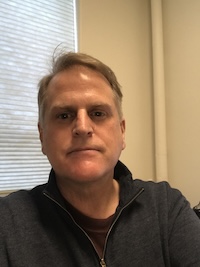
“Active Aging in Italy—Promoting Policy Practices to Manage Population Aging”
In general, populations around the globe are becoming older on average, and issues related to population aging are of concern to policy makers and those who manage and administer programs that target growing numbers of older people. As of the 2020 U.S. Census, 1 in 6 Americans were aged 65 and older, equating to about 17% of the population. Also, unprecedented growth in the numbers of older adults is expected to continue for several decades
to come. Globally, the U.S. ranks 34th among countries with the largest percentage of people aged 65 and over. Japan has the highest percentage of older adults (29%) followed by Italy, where about 23% of the population is aged 65 or older.
Of course, longer life expectancies, in general, are a positive development for humanity. Longer lives may afford individuals with increased years to develop and enjoy relationships with loved ones, fulfill personal goals, and to experience life milestones that are important in self-actualization. At the same time, longer life expectancies may also place strain on individuals and their families, when health and functioning, and financial status may begin to decline, and can over-burden societies where governing bodies are charged with enacting policy and programs to promote the safety and wellbeing of older adults.
Today, there is broader awareness of the practical need for keeping older adults engaged as productive contributors to their communities, and to the broader society. To facilitate optimal aging many communities worldwide have sought to promote “active aging” by focusing greater resources on factors that are known to support older people to live independently, and to remain socially engaged, fulfilled contributors in their physical and social environments. Indeed, the concept of “active aging” is a growing movement (particularly in European countries) that provides a framework for ensuring that greater longevity does not lead only to greater time living socially isolated, with chronic disease and associated impairments and disabilities that can financially encumber individual and public coffers.
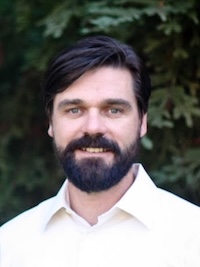
“International Collaborative Field Course: Arctic Tundra Ecosystems and Sustainability”
This project will establish a collaborative international research field course linking the University of Wyoming (UW) and the University Centre in Svalbard (UNIS) to advance Arctic tundra ecosystem research and provide high-impact experiential learning for UW students. Travel this May-June 2026 will secure and prepare institutional collaboration, facilities, and logistics for faculty and students to travel across northern Norway and Svalbard Island in Spring–Summer 2027 to conduct integrated research in marine, glacial, and tundra/permafrost environments with UNIS scientists and citizen science initiatives such as the PermaMeteo Community Project. Research activities will include biodiversity surveys, environmental sampling, participation in active UNIS projects, and interviews with Arctic community members to investigate species adaptations, climate–system linkages, conservation policy, and community sustainability strategies. Outcomes include co-authored publications, shared Arctic datasets, external grant proposals, and a new curriculum embedding experiential field research into UW and UNIS programs. This project aims to strengthen UW’s international research footprint, expand Arctic research and education opportunities linking Wyoming’s alpine tundra environments with those of the polar north, while preparing students for leadership in conservation and sustainability.
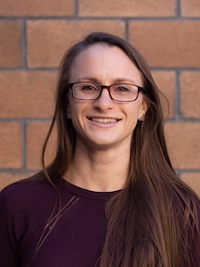
High elevations push organisms to their physiological limits; yet we know surprisingly little about how populations of the same species cope with temperature and oxygen stress, particularly in mountain regions where environmental conditions change rapidly over short distances. In this project, my team will collect genetic samples from populations of the world’s largest hummingbird species, the Northern Giant Hummingbird (Patagona peruviana), in Cusco and Puno Departments of Peru and use whole-genome sequencing to examine how elevation, temperature, and oxygen availability shape genetic diversity and resilience to climate change at the population level. This work will expand UW’s international research partnerships in Peru, generate new genetic material for the UW Museum of Vertebrates and Centro de Ornitología y Biodiversidad (CORBIDI) in Peru, and provide hands-on training for UW graduate students in field ecology, eco-physiology, and evolutionary genomics.

Global Engagement Office | Center for Global Studies | Education Abroad | International Students & Scholars | English Language Center