
water at the intersection of what it means to be human
A cornerstone of the course was a series of student-driven group projects focused on local water issues of their choosing. Through these projects, students developed and executed interdisciplinary initiatives that integrated scientific evidence, community context, and actionable strategies. The experiential learning projects emphasized applying integrative thinking to real-world challenges, connecting scientific inquiry with community engagement and creative communication.
Guided by their individual interests and areas of expertise, students explored a diverse range of water-related topics. Check them out below!
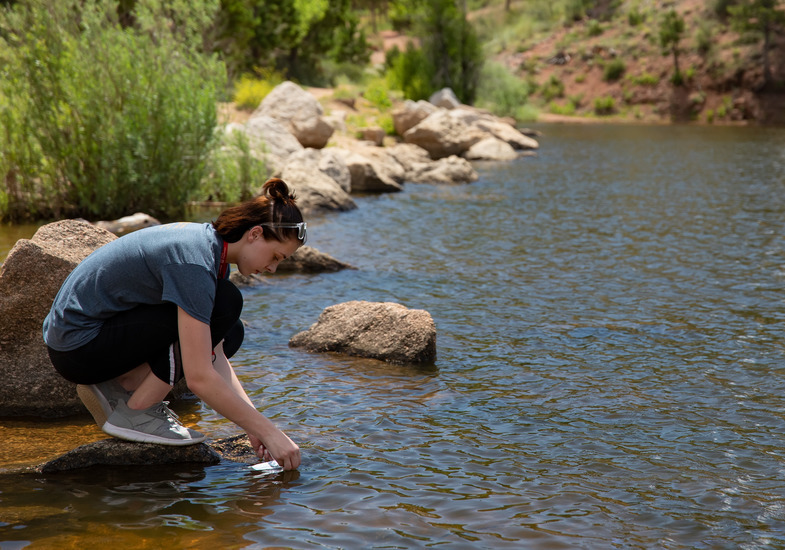
Students examining real-world water issues
Microplastics
By Isabelle Wasseen, Carlie Niemitalo, Felecia Graff
Microplastics are quickly becoming a concern due to environmental and public health impacts. Microplastics are typically described as any plastic less than 1mm in size and are created when larger plastics degrade due to erosion-like factors (Jessieleena et al., 2023; Kukkola et al., 2024). A major contributor to this plastic pollution includes municipalities; places where people reside and spend most of their time. A large portion of this is due to the concentrated number of plastics used in homes; this includes things like take-out containers, product packaging, cosmetics and so many more.
READ MOREPerception and Impacts of Glade Reservoir
By William John Rose II and Aiden R Roth
The Glade reservoir and the ramifications it may leave in its wake are jarring. The economic and geologic studies in addition to public opinion of the reservoir have provided evidence to point to a less fortunate future for water resources in Northern Colorado. Our conservation and preservation efforts in our communities must be foremost in our pursuit of natural beauty instead of man-made disaster.
The Great Mystery of UW's Sprinklers
By Moriah Anderson, Elizabeth Linse and Grace Peters
Part of better managing our water is looking into areas of water usage that may be inefficient, such as the University of Wyoming sprinkler system. The biggest roadblock of the sprinkler system was how massive the entire system is. The irrigation system stretches from the classroom building to the golf course and is connected the entire way. This project speaks to the importance of open-minded collaboration.
Water and Well-Being
By Eli Hough, Allie Robert, and Wyatt Yeigh
Every community has places that define it, and for Laramie, the river is one of them. Our project began by looking at the Laramie River in a way people don’t usually consider. Our topic was unique because we weren’t addressing any specific issue, but rather identifying the broader impacts of the river, and exploring the positive and negative implications for our community. Our project focused on identifying the relationship between the Laramie River and individuals’ well-being within the community. We also explored whether the Laramie River provided a sense of community identity, which equates to a sense of belonging.
Wyoming's Waters and Harmful Algal Blooms
By Lilly McGever, Kathryn McCarty, and Mo Amelott
When you hear the terms “eutrophication” and “harmful algal blooms,” what comes to mind? We found out that for many of the members of our community, these words spark anxiety, confusion, and concern. Moreover, many of our peers don’t even have an understanding of these phenomena. We wanted to change that.

The University of Wyoming has earned its Research Level 1 (R1) status from the Carnegie Classification of Institutions of Higher Education, placing Wyoming's only four-year university with the top research universities in the United States.