
Water in the West: A Ripple of Reflection and Connection
Ashleigh Pilkerton | Visiting Assistant Professor
Published November 10, 2025
Stirring a swirl of emotions, much like the current in an eddy, our relationship with water evokes wonder, responsibility, and belonging.
It reminds us that the most essential things are also the most shared.
Celebrating water-inspired inquiry across disciplines, the Wyoming Institute for Humanities Research’s Water in the West Colloquium, on September 26, 2025, brought together a diverse audience of community members, university students, staff, and faculty, to explore pressing topics surrounding water in the west.
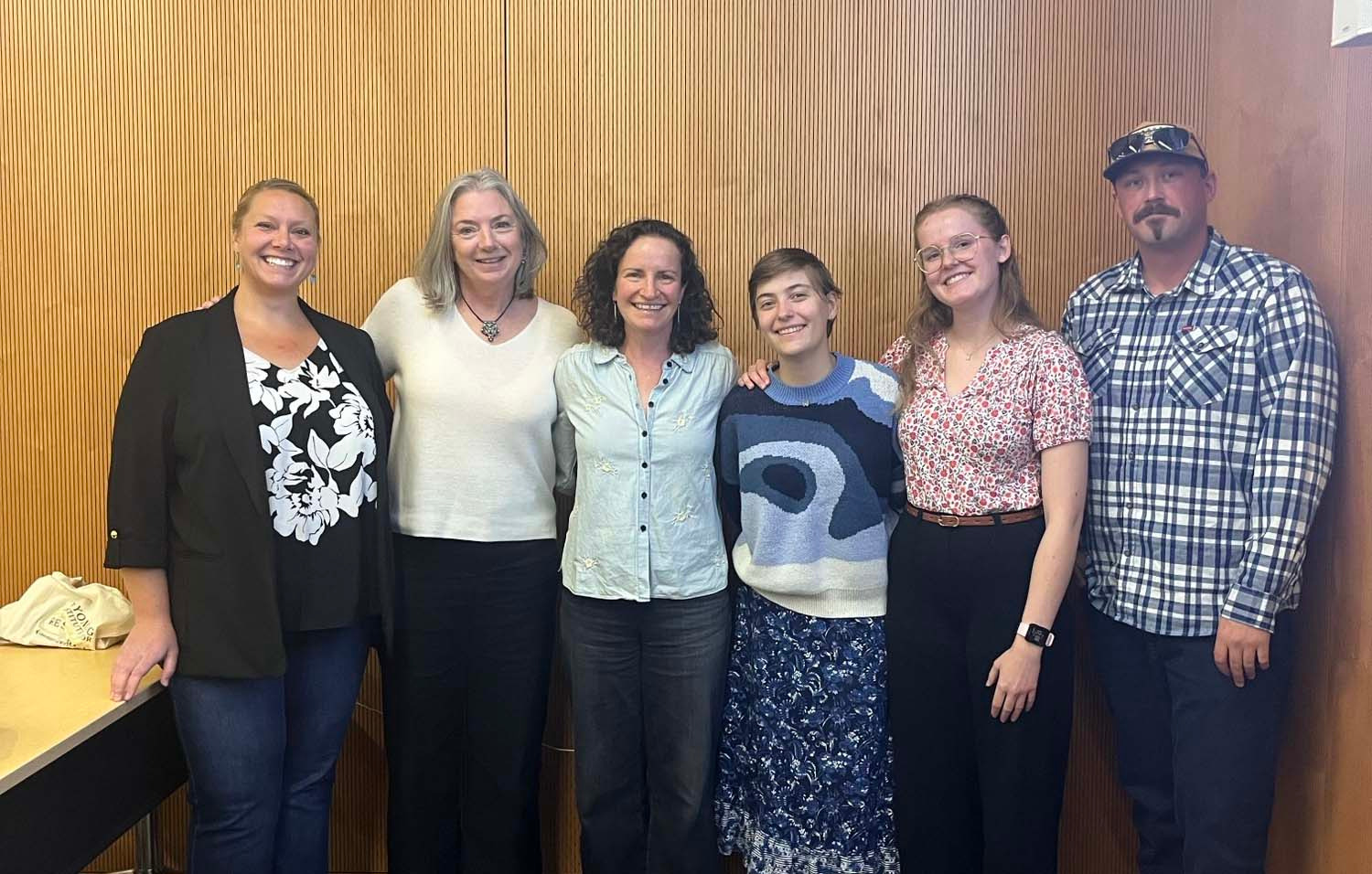
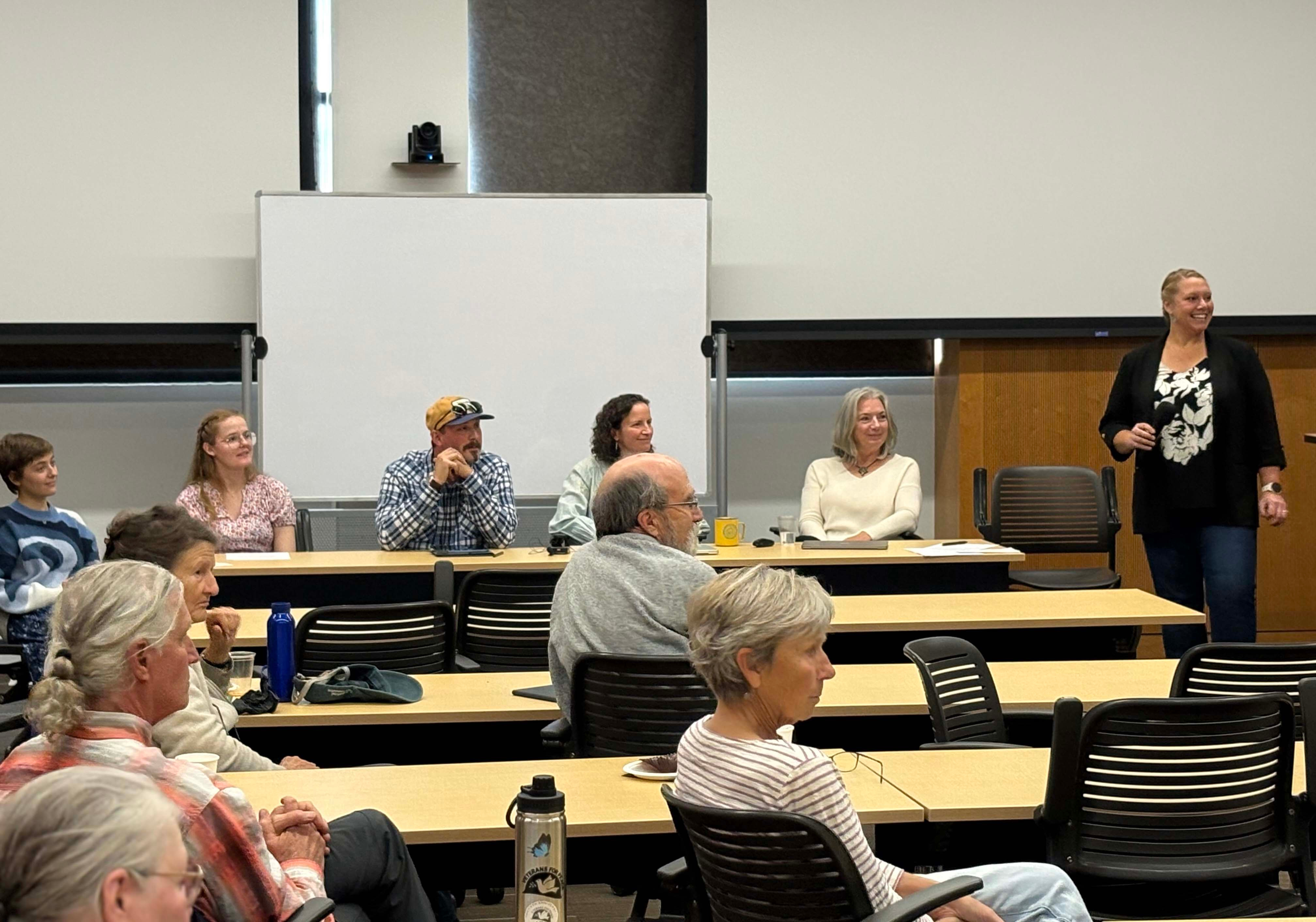
Honors College faculty member Ashleigh Pilkerton facilitated a roundtable discussion, Engaging Classrooms & Communities about Water in the West, that invited participants to consider how students and communities navigate and engage with the complexities and nuances of water.
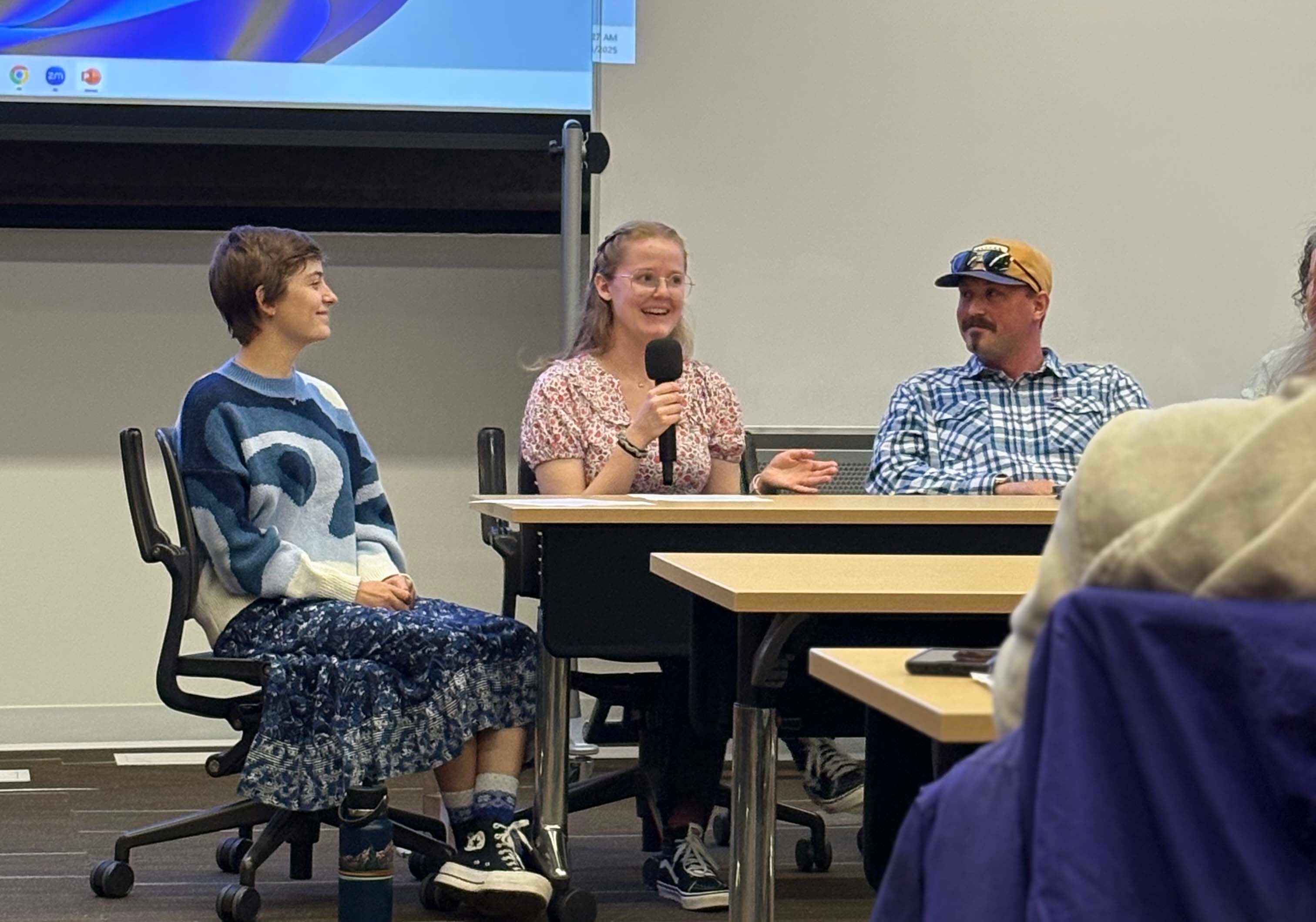
The roundtable celebrating the insights of of five panelists, Beth Venn, Executive Director of the UW Neljte Center; Caitlin Ryan, Post-doctoral researcher with WyGISC and WyACT; and three students from Honors College course, Water: Kathryn McCarty, a junior majoring in Anthropology and Music with a minor in Honors; Lilly McGever, a junior majoring in Geology and Environmental Systems Science, with minors in Biology, Mathematics, and Honors; and Wyatt Yeigh, a senior Psychology major.
Together, the panel explored how individuals and communities engage around an awareness of water, fostering inter- and transdisciplinary connections to explore humans’ relationship with the landscape through the lens of water. Through discussions of the complexities and tensions that emerge from growing awareness of water-related issues, the audience was invited into the panelists' reflections on lessons learned through their engagement with students and communities in Wyoming and beyond.
Uniquely, the panel featured three undergraduate Honors students whose contributions offered meaningful insight into the opportunities and challenges surrounding local and global water-related issues. Their participation highlighted how diverse academic backgrounds can deepen our collective understanding of, and response to, such a vital resource.
“I had such a fun time!"
Kathryn shared, “I had such a fun time! I thought it was so cool how we were able to bring in all these different perspectives into one room and discuss something that we were all passionate about, as well as something that needs our attention now before it becomes too late. I think everyone listening also appreciated that. It is not every day you have a museum director, a human geographer, a professor whose focus is aquatic ecology, and three of her students that are just as diverse come in and discuss all things water. It offered great insight into this need for an interdisciplinary approach for the solution to our water related problems. We cannot just take it from a scientific stance, and we desperately need the community in on it too. Once we have that, I believe we could do most anything we set our minds to.”
Lilly reflected on the experience of sharing her perspective in an interdisciplinary setting: “It was exciting to be a student panelist for the Water in the West Colloquium… I was listening not just to learn about water, but to learn about communication in an interdisciplinary and professional setting.” She added, “Conferences such as this one are incredibly important, since they serve as a place for people of all education levels and community roles to discuss an important issue or topic that is central to all of us. However, their usefulness is stunted if no action arises out of them.” Her insights remind us that civic engagement and collective action are essential to the health and future of our waters.
Wyatt eloquently noted, “As water moves through the land via streams, rivers, and into lakes and reservoirs, it creates lasting impacts on the land and the communities.” He continued, “I really enjoyed the Colloquium and listening to both the community and specialists talking together about local issues that they cared about. I think it was still important to show that the University and younger generations do care about our ecology as well. [Talking] about the diversity of our class helped put into perspective the many ways water affects us and how we can impact water. Overall, it was a great experience… and I came out of it with a better understanding of how important our connection to water is to those who want to make a difference.”
While the topic of water in the West will continue to pose complex challenges for communities, integrating these lessons into the classroom can empower students to actualize change in their future careers. Just as a river meanders across golden plains, water has a way of moving us, not just through landscapes but through memory and meaning, reminding us of our shared connection to place and to each other.

The University of Wyoming has earned its Research Level 1 (R1) status from the Carnegie Classification of Institutions of Higher Education, placing Wyoming's only four-year university with the top research universities in the United States.