
Computing in Action
Published September 02, 2026
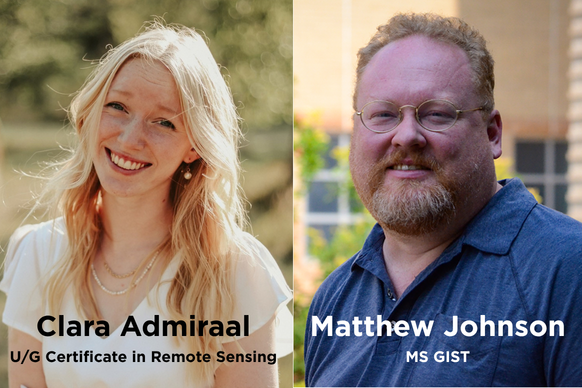
UW Geospatial Information Science and Technology students present at the 2026 ASPRS International Technology Symposium.
From UW to the World: Students Showcase Geospatial Research on an International Stage
Two University of Wyoming students brought their geospatial research to an international audience at the virtual 2026 ASPRS International Technical Symposium, October 5–8.
Matthew Johnson, a full-time UW employee pursuing his MS in Geospatial Information Science and Technology, presented research exploring satellite imagery for estimating waterbody surface area. His work reflects the dedication required to balance professional responsibilities with graduate thesis research. See his presentation.
Clara Admiraal, an Environment and Natural Resources major pursuing an undergraduate remote sensing certificate, presented an uncertainty analysis of lake area estimates derived from satellite datasets. After taking GIST 3140 last fall, Clara expanded her geospatial studies and will complete her certificate in December 2026.
Their accomplishments demonstrate how UW’s geospatial programs connect classroom learning with research and professional engagement. Congratulations to Matthew and Clara for sharing their work with the broader geospatial community and showcasing the talent, curiosity, and commitment of UW students on an international stage. See her presentation.
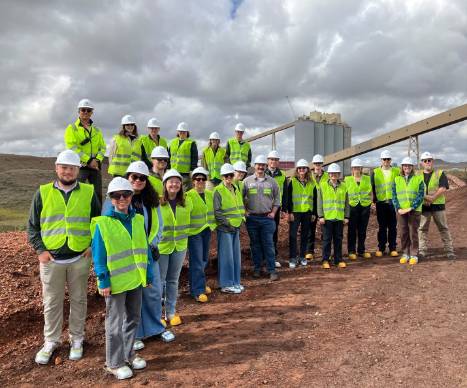
Critical Mineral Leadership Academy (CMLA) at the Dry Fork Coal Mine outside of Gillette WY.
Connecting Computing & Critical Minerals: Ali Davies Joins National Leadership Cohort
Ali Davies, SoC Research Scientist, was part of the 2026 cohort for the Critical Mineral Leadership Academy (CMLA) hosted by the School of Energy Resources. This week-long program, sponsored by the Department of Energy, featured lectures, workshops and field excursions to showcase conventional and unconventional critical minerals development, and the complexity of the supply chain. The program specifically recruits graduate students and early career professionals from across the country who are invested in critical minerals research and development, including anthropologists, sociologists, geologists, policy and law experts, business, economists, chemists, and engineers. Rare Element Resources, a company advancing the Bear Lodge Critical Rare Earth Project in Crook County WY, sponsored the cohort to have dinner with District 01 State Senator Ogden Driskill at his ranch at the base of Devil’s Tower. The group also visited the Dry Fork Coal Mine outside of Gillette WY to contextualize mining operations, permitting, and regulations.
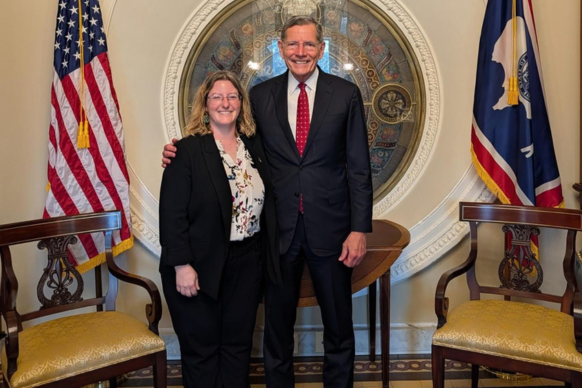
Raya Hegeman-Davis and WY Senator John Barrasso
Bringing Wyoming’s Computing Story to Capitol Hill
Raya Hegeman-Davis, the School of Computing’s Director of Engagement, traveled to Washington, D.C., for the Computing Research Association’s Congressional Visit Day. She met with staff from Representative Harriet Hageman’s and Senator Cynthia Lummis’s offices and spoke directly with Senator John Barrasso.
In those meetings, Raya shared the work underway at the School of Computing and discussed why sustained funding for the National Science Foundation and other federal agencies matters. That support helps universities pursue research, prepare students and bring computing expertise to challenges that affect communities across the country.
For Wyoming’s only four-year land-grant university, these conversations are especially valuable. Computing and AI are shaping every field, and UW has an important perspective to bring to national discussions: students in every major need opportunities to build the skills to use these tools and apply them in their own disciplines.
Our partnership with CRA helps make those conversations possible. Raya’s visit strengthened relationships with Wyoming’s congressional offices and gave the School another opportunity to share its programs and priorities on the national stage. It was an exciting, productive day for UW computing.
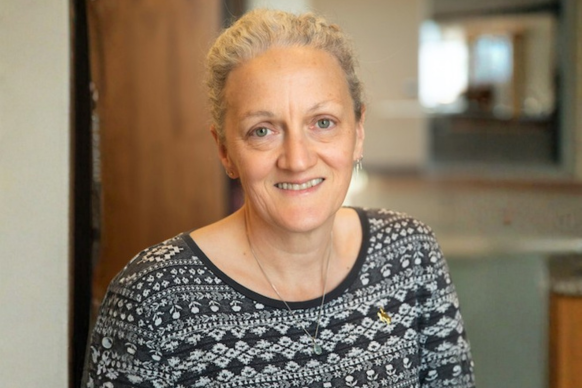
School of Computing Founding Directorty & Professor Gabrielle Allen.
Gabrielle Allen Helps Shape the Future of AI Software
As artificial intelligence changes how software is built, University of Wyoming School of Computing founding director and professor Gabrielle Allen is helping guide a national conversation about what comes next.
Allen helped organize Beyond Code: Engineering Trustworthy Software Systems with AI at Scale, a workshop convened by the Computing Community Consortium, a program of the Computing Research Association, and co-sponsored by the IEEE Computer Society. The gathering brought together experts from academia, industry and government to consider how AI can help build complex software systems that people can trust.
Allen also co-authored the resulting Beyond Code report with seven computing leaders from institutions across the United States and Germany. The report examines challenges that extend well beyond generating code: understanding what users need, protecting security, checking system quality and preparing future developers to work effectively with AI.
Allen’s role brings a Wyoming voice to decisions shaping computing research and education nationally. It also reflects the School of Computing’s commitment to giving students across disciplines the skills to use AI and computational thinking responsibly—and to contribute to the systems their communities will depend on.
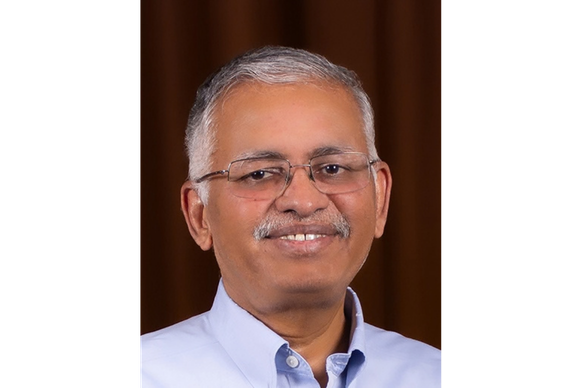
Ramesh Sivanpillai, Instructional Professor, Wyoming Geographic Information Science Center
UW Instructional Professor Provides Disaster Mapping Assistance After Nepal Flood
Computing in Action—expertise applied where it matters most. School of Computing and WyGISC Professor Ramesh Sivanpillai is putting geospatial science and computing to work in response to devastating flooding in Nepal. Through his work with the International Charter Space and Major Disasters, Sivanpillai is using satellite imagery to help map flood damage and provide critical information supporting response efforts and the search for survivors. His contribution demonstrates how specialized computing, remote sensing, and data expertise can extend far beyond the university—connecting UW knowledge and research capabilities with urgent challenges around the world and helping communities when timely, reliable information matters most. Read the full UW story.
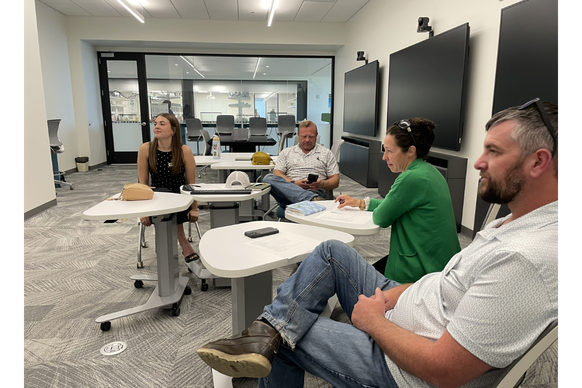
Session hosted in SoC's Data X Studio--a space specifically designed for modern collaboration.
SoC's McMillan & Hamerlinck co-facilitate AI session for Leadership Wyoming
Beth McMillan and Jeff Hamerlinck, along with Sam Kiser and Ashlyn Elwood, brought Computing in Action to last week’s UW Education Infusion Sessions through “Artificial Intelligence: What It Means for Higher Education & Wyoming.”
During this session, participants explored how AI is reshaping education, research, workplaces, and economic development. A computational-thinking activity challenged them to classify technologies according to whether they clearly, possibly, or probably do not use AI. Participants then examined each system’s purpose, inputs, and outputs; considered who might benefit or be harmed; questioned their assumptions; and developed ethical questions for further discussion. By setting aside computers and AI tools, the exercise emphasized the importance of human observation, reasoning, collaboration, and judgment.
Beth and Jeff’s leadership reflects the School of Computing’s role as a university-wide hub for computing knowledge and collaboration. The School helps students, faculty, staff, industry partners, and communities understand and responsibly apply artificial intelligence, data analytics, and computational thinking. Efforts like this make emerging technologies more accessible while preparing people across disciplines to evaluate complex systems, ask better questions, and use computing to address Wyoming’s most consequential opportunities and challenges.
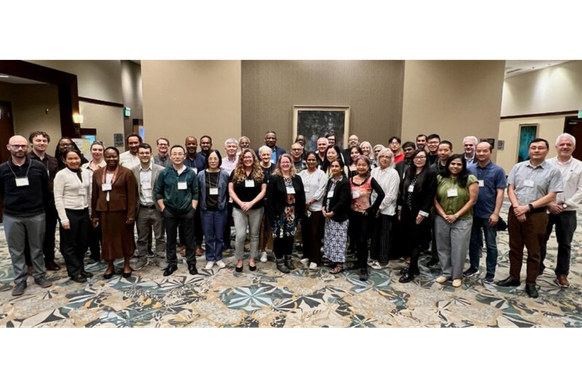
2026 NAIR Conference Group Photo
Gabrielle Allen attended NAIR Pilot Classroom Expansion Conference
by Gabriel Allen
June 2026 — We had an energizing two days last week at the NAIRR Pilot Classroom Expansion
Conference for Research-Emerging Institutions with Small-to-Medium Computing Programs
in Denver! Some fifty faculty, administrators, and educators from across the country
came together to share ideas, challenges, and opportunities around AI education, workforce
development, research, and community building.
The conversations were thoughtful, practical, and forward-looking, covering everything
from AI literacy and curriculum design to assessment, accessibility, and building
sustainable communities of practice. Most importantly, the workshop highlighted the
tremendous innovation already happening at institutions of all sizes and the value
of learning from one another.
Thank you to the Computing Research Association (CRA) for coordinating this effort
as part of their NAIRR Education Hub, and to the outstanding team whose hard work
made the conference so successful: Raya Hegeman-Davis, PhD, Renée McCauley, George K. Thiruvathukal, Dr. Stephanie T. "DJ" Jones. A special thank you to Shelley Knuth and David Hart for their talks and sessions on NAIRR and explaining NAIRR resources and the allocation
proposal process.
I am particularly excited by the enthusiasm participants showed for continued collaboration
and the growing community focused on expanding AI education opportunities across research-emerging
and smaller computing programs. The ideas, partnerships, and momentum generated this
week will continue beyond the workshop itself.
Thank you to everyone who participated, shared experiences, and helped make this such
a successful event.
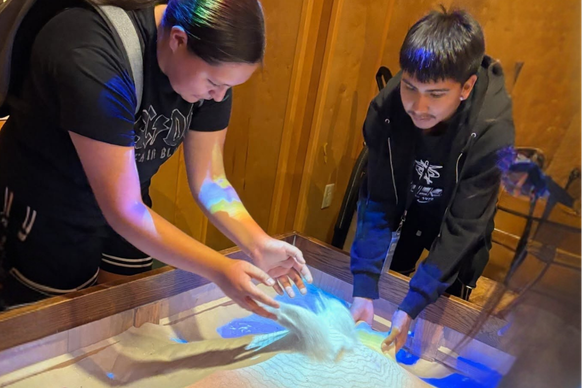
2026 NASI Students engaging with the exhibit at the interactive geospatial sand box.
School of Computing Supports Native American Summer Institute
The University of Wyoming School of Computing was pleased to support UW’s Native American Summer Institute (NASI), a six-day residential pre-college program that introduces Native American high school students to the college experience while strengthening leadership, community, and cultural connections.
School of Computing faculty Dr. Raya Hegeman-Davis and Dr. Ramesh Sivanpillai, along with students Tyler Gallagher, Anais Canto Samudio, William Colin Maloy, and Korrin Sutherburg, hosted two interactive sessions featuring hands-on activities, including a giant interactive floor puzzle.
Through academic workshops and engagement with UW faculty, staff, and students, NASI helps participants explore higher education and future opportunities. The School of Computing is proud to contribute to this important UW initiative and help create welcoming pathways for Native American students to discover computing and its applications.
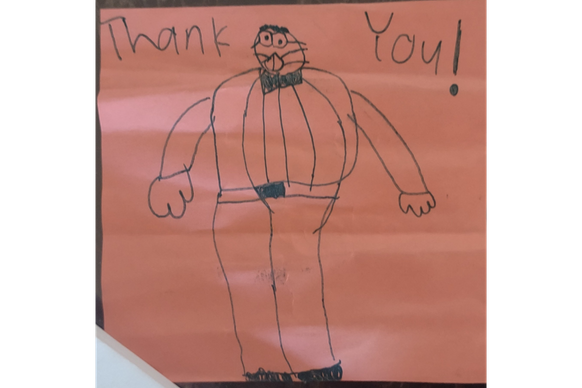
Thank you note from 3rd graders at Indian Paintbrush School.
Computing Curiosity Starts Early
School of Computing faculty member Ramesh Sivanpillai recently visited third-grade students at Indian Paintbrush Elementary School for a hands-on lesson exploring how satellite images help us track changes on Earth. The students’ enthusiasm was unmistakable—and one student even sent Ramesh home with a memorable hand-drawn thank-you note.
These visits are a favorite way for Ramesh to close each academic year. Second- and third-graders bring tremendous curiosity, asking questions and eagerly exploring how technology helps us understand the world around us. Years later, when he encounters some of these students again in middle school, they have grown and changed remarkably.
For the School of Computing, outreach like this matters. Early experiences help students see that computing is fun, approachable, and already part of their everyday lives. Introducing computational thinking, data, satellite technology, and AI at a young age can demystify computing—and encourage students to keep asking, exploring, and discovering.
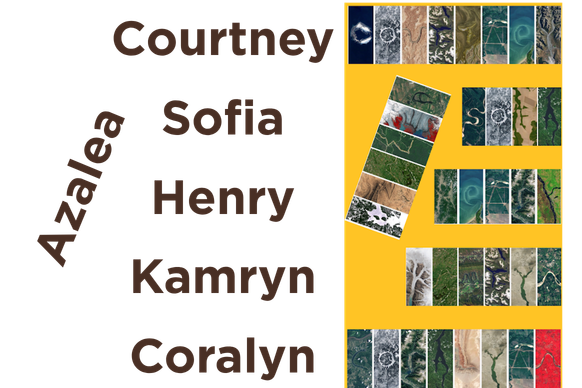
Write your name in Landsat Images using NASA's website.
Bringing Computing Down to Earth
School of Computing faculty member Ramesh Sivanpillai recently introduced Wyoming middle and high school students to the power of satellite imagery and Earth observation. Students from nine schools learned about geostationary and polar-orbiting satellites—and how the data they collect help track hurricanes, floods, wildfires, crop growth, and forest health.
Ramesh brought the lesson down to Earth with an interactive activity allowing students to write their names using Landsat images through NASA’s website, connecting sophisticated technology with something personal, visual, and fun.
Middle school outreach is an important part of the School of Computing’s commitment to building curiosity early. Students may not yet describe what they are doing as computing, data science, or computational thinking, but they understand what captures their imagination. Age-appropriate, hands-on experiences help demystify computing and show young learners that it is already everywhere—helping us explore our planet, understand change, solve problems, and discover what’s possible. Ramesh keeps an comprehensive account of his outreach on his Wyoming View blog.

The University of Wyoming has earned its Research Level 1 (R1) status from the Carnegie Classification of Institutions of Higher Education, placing Wyoming's only four-year university with the top research universities in the United States.