
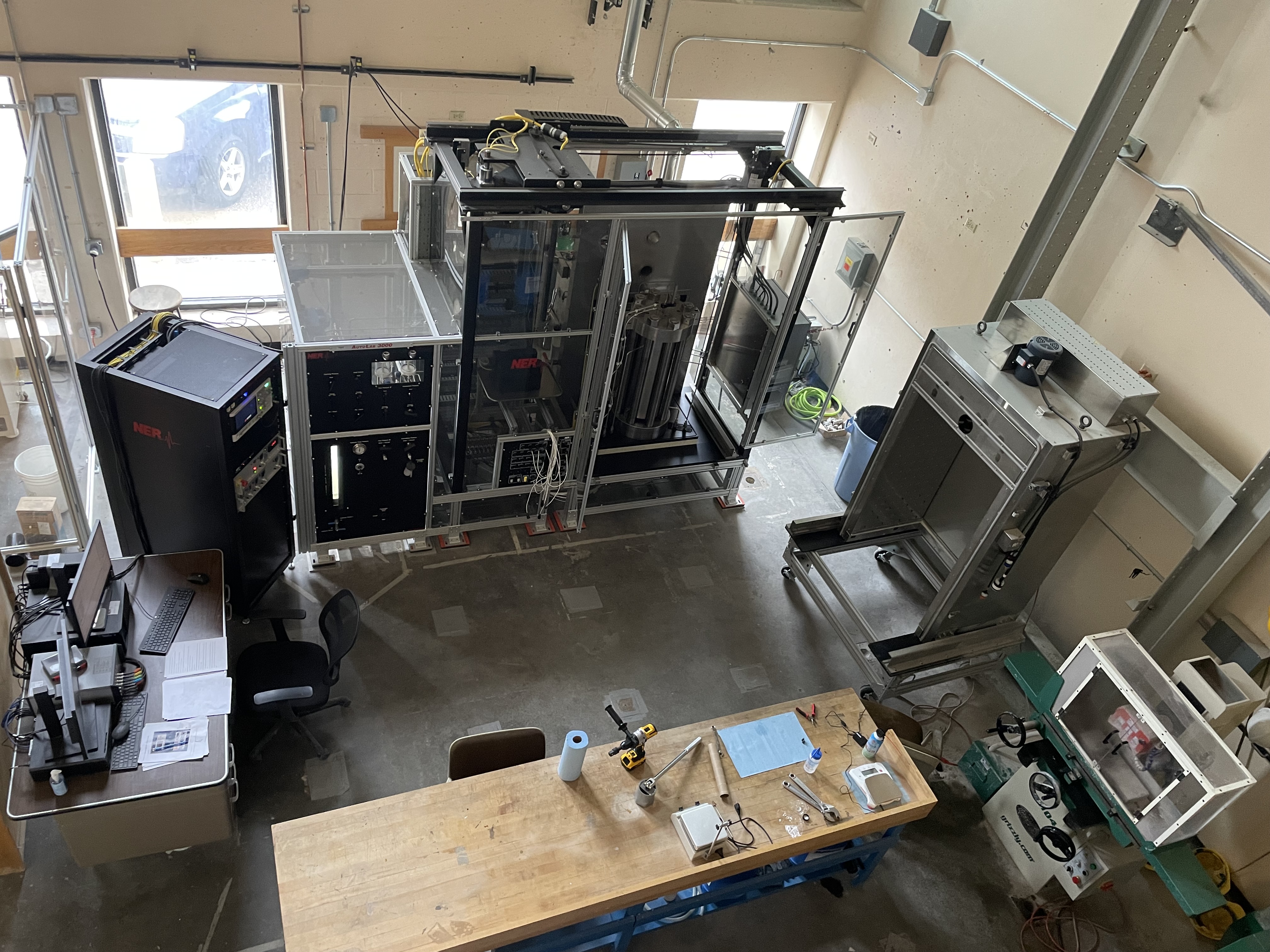
Multiscale Geomaterials & Infrastructure Systems Engineering
Multiscale Geomaterials Science
We uncover how microstructure governs the strength, durability, and transport behavior of geomaterials across scales.
Research themes include:
- Carbon-integrated and coal-derived geomaterial systems
- Stabilized soils, engineered aggregates, and cementitious composites
- Phase transformation and pore-network evolution
- Transport processes and moisture–temperature coupling
- Durability degradation under environmental cycling
GEOMATERIALS INNOVATION & SYSTEMS ENGINEERING
Advanced Geomechanics & Infrastructure Systems Engineering
We translate laboratory material behavior into predictive infrastructure-scale performance models.
Core research components include:
- Nonlinear triaxial characterization
- Multiphysis constitutive modeling
- Reliability-based calibration
- Infrastructure-scale simulation
Experimental & Validation Platform
We quantify geomaterial behavior under controlled thermo–hydro–mechanical loading to validate predictive models.
- High-pressure and true triaxial geomechanical testing
- Soil–water characteristic curve and unsaturated flow systems
- Freeze–thaw durability cycling and environmental conditioning
- Thermal analysis and coupled transport characterization
- X-ray microtomography and advanced microstructural imaging
Lifecycle, Reliability & Deployment Integration
We integrate reliability, sustainability, and techno-economic constraints into infrastructure-scale performance modeling.
- Reliability & uncertainty analysis
- Life-cycle & carbon assessment
- Degradation prediction
- Scalability optimization
Research & Publications
Our peer-reviewed research advances multiscale modeling, durability science, and carbon-integrated infrastructure systems.
Geomaterials Research Lab at the University of Wyoming
The Geomaterials Research Laboratory operates as an integrated, deployment-driven engineering platform advancing multiscale geomaterial science and infrastructure systems engineering. We couple high-fidelity experimental validation, constitutive modeling, and infrastructure-scale performance simulation to translate laboratory discovery into deployable solutions.
Our research addresses coupled thermo–hydro–mechanical processes governing carbon-based materials, transportation infrastructure, subsurface energy storage, and resilient construction systems. By embedding lifecycle reliability and techno-economic constraints into material design, we ensure solutions are technically robust, economically viable, and scalable for real-world deployment.

INTEGRATED MULTISCALE GEOMATERIALS & INFRASTRUCTURE SYSTEMS PLATFORM
The Geomaterials Research Laboratory advances a national-scale, deployment-driven multiscale engineering framework integrating microstructure-informed geomaterial design, coupled thermo–hydro–mechanical–chemical constitutive modeling, high-fidelity experimental validation, infrastructure-scale simulation, and lifecycle-reliability optimization into a unified performance architecture. By explicitly linking material structure to system-level response and long-term reliability under uncertainty, we define predictive, carbon-aware, and economically scalable geomaterial solutions for transportation resilience, subsurface energy storage, carbon sequestration, and next-generation infrastructure systems.
Materials Engineering & Formulation
We investigate the microstructural, mineralogical, and chemo–thermo–hydro–mechanical mechanisms governing the performance and durability of geomaterials across scales.
Research establishes predictive structure–property–performance relationships through:
- Carbon-integrated and coal-derived geomaterial systems
- Stabilized soils, structural units, aggregates, and composites
- Phase transformation and pore-network evolution
- Transport processes and environmental coupling
- Durability degradation under cyclic and extreme conditions
Material development is guided by mechanistic insight and calibrated against infrastructure-scale performance requirements.
Experimental Validation & Advanced Testing
Our experimental platform enables high-fidelity quantification of geomaterial behavior under controlled thermo–hydro–mechanical boundary conditions representative of transportation and energy infrastructure systems.
Capabilities include:
- High-pressure and true triaxial characterization of nonlinear material behavior
- Soil–water characteristic curve systems and unsaturated flow testing
- Freeze–thaw durability cycling and environmental conditioning
- Thermal analysis and coupled transport characterization
- X-ray microtomography and advanced microstructural imaging
Experimental datasets directly parameterize, calibrate, and validate predictive constitutive and infrastructure performance models.
Infrastructure Systems & Deployment Engineering
We develop predictive and reliability-calibrated frameworks that translate laboratory-derived constitutive behavior into infrastructure-scale response models. Analytical, computational, and probabilistic mechanics are integrated to evaluate system performance under realistic service conditions.
Applications include:
- Transportation foundations and load-bearing systems
- Carbon sequestration reservoirs
- Underground hydrogen storage infrastructure
- Resilient structural and subsurface materials
Infrastructure design is informed by coupled multiphysics modeling, uncertainty quantification, and field-scale validation.
Techno-Economic & Life-Cycle Integration
We embed lifecycle reliability, environmental impact quantification, and techno-economic constraints directly into material and infrastructure performance modeling.
Engineering decisions are guided by:
- Reliability-based performance modeling and uncertainty analysis
- Coupled environmental–mechanical degradation forecasting
- Life-cycle assessment and carbon intensity evaluation
- Scalability and techno-economic optimization
- Deployment-informed design calibration
This systems-level integration ensures that material innovation and infrastructure design are evaluated within a unified performance, sustainability, and economic framework.
End-to-End Engineering Innovation & Impact
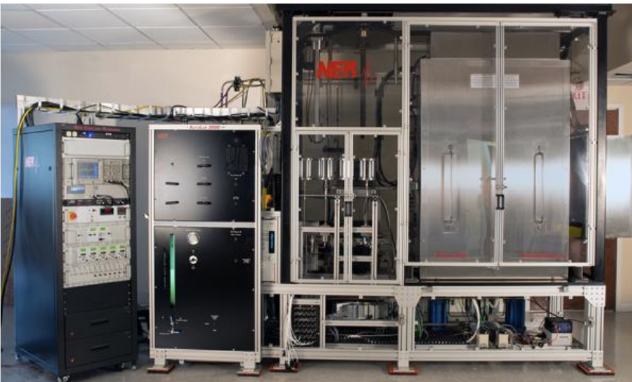
We conduct rigorous laboratory testing to quantify the mechanical, hydraulic, and durability performance of engineered geomaterials. Experimental setups simulate real loading and environmental conditions to validate field readiness.
Capabilities include:
- Triaxial compression and shear testing
- Freeze–thaw and wet–dry durability evaluation
- Hydraulic conductivity and permeability analysis
- Microstructure-performance correlation studies
Our validation framework ensures materials meet structural, environmental, and infrastructure performance requirements before deployment.
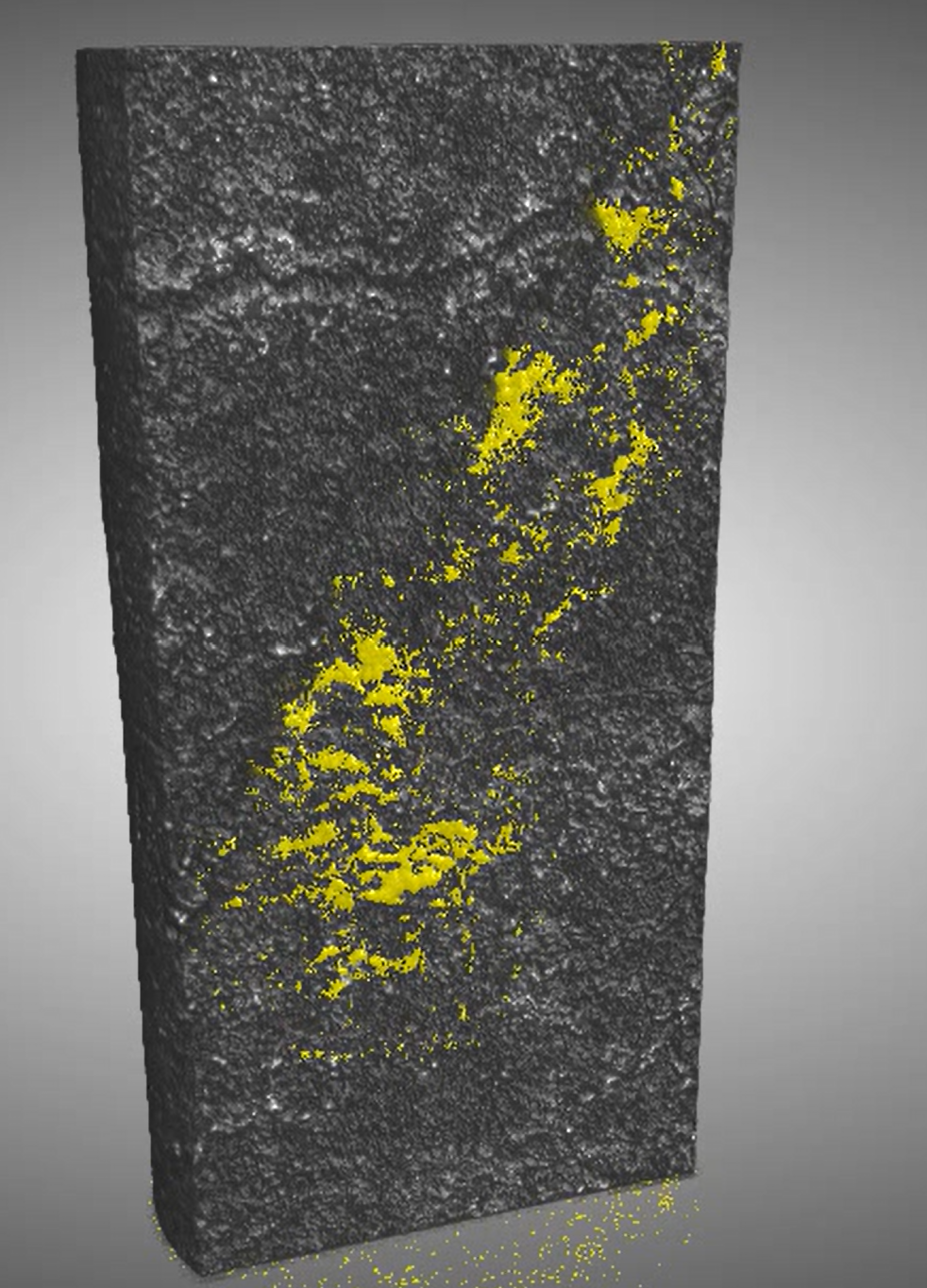
Understanding material behavior begins at the microstructural level. We investigate particle composition, bonding mechanisms, porosity evolution, and reaction kinetics to establish performance relationships.
Through controlled formulation and laboratory characterization, we transform raw geomaterials into engineered systems optimized for strength, durability, and long-term reliability.
This scientific foundation drives innovation in:
- Coal-derived construction materials
- Soil stabilization systems
- Carbon-based aggregates and structural units
- Energy and storage applications

We train students to understand real-world industry needs before developing engineering solutions. Through field visits, stakeholder interviews, and techno-economic assessments, students evaluate market demands, performance requirements, and cost constraints prior to product innovation.
This process ensures that research is driven by practical challenges — not assumptions — preparing students to design solutions that are technically sound, economically viable, and industry-ready.
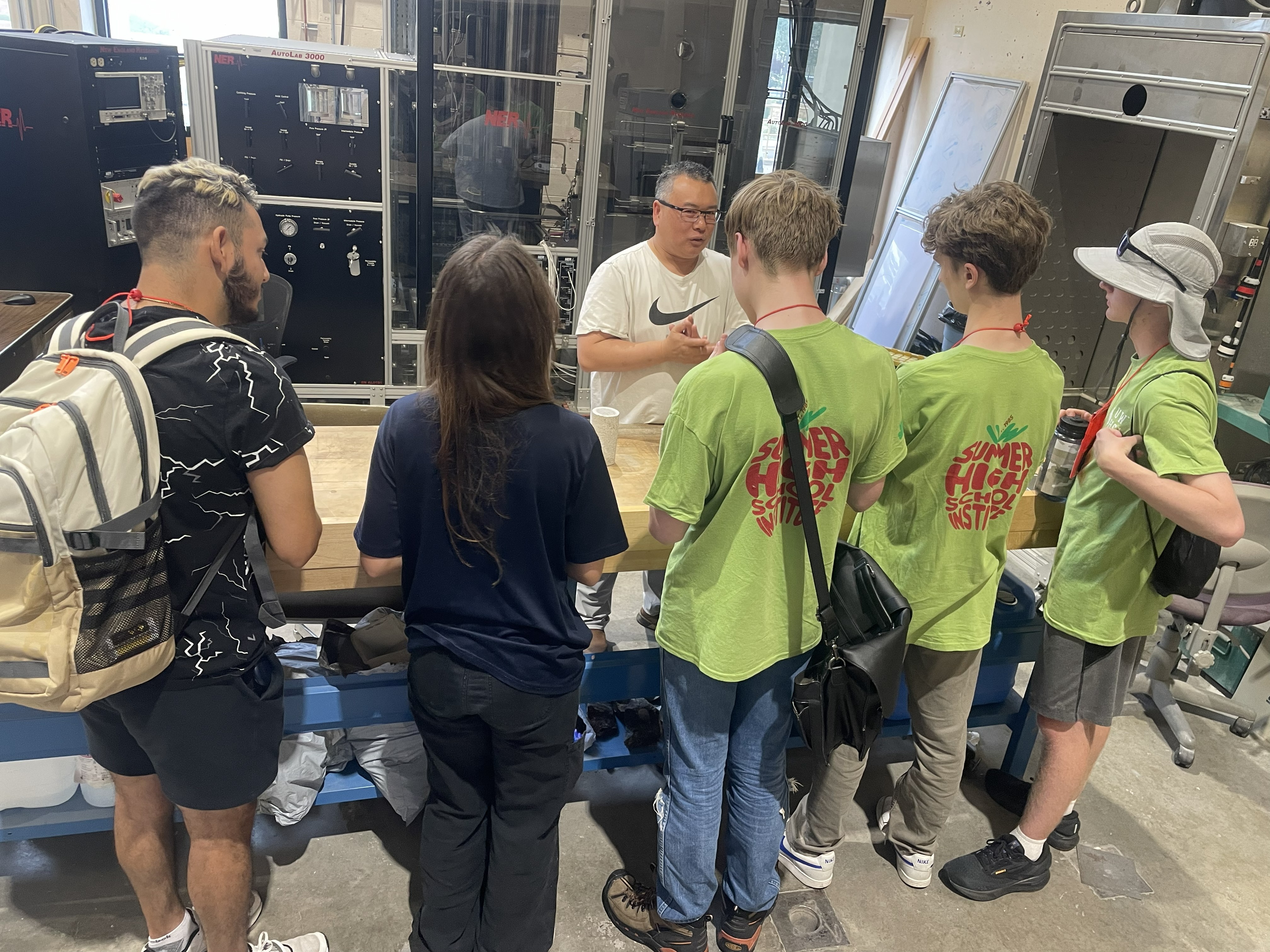
We engage K-12 students through hands-on laboratory demonstrations, materials science workshops, and infrastructure engineering showcases. Our outreach programs introduce students to sustainable construction materials, carbon innovation, and geotechnical engineering through real laboratory experiences.
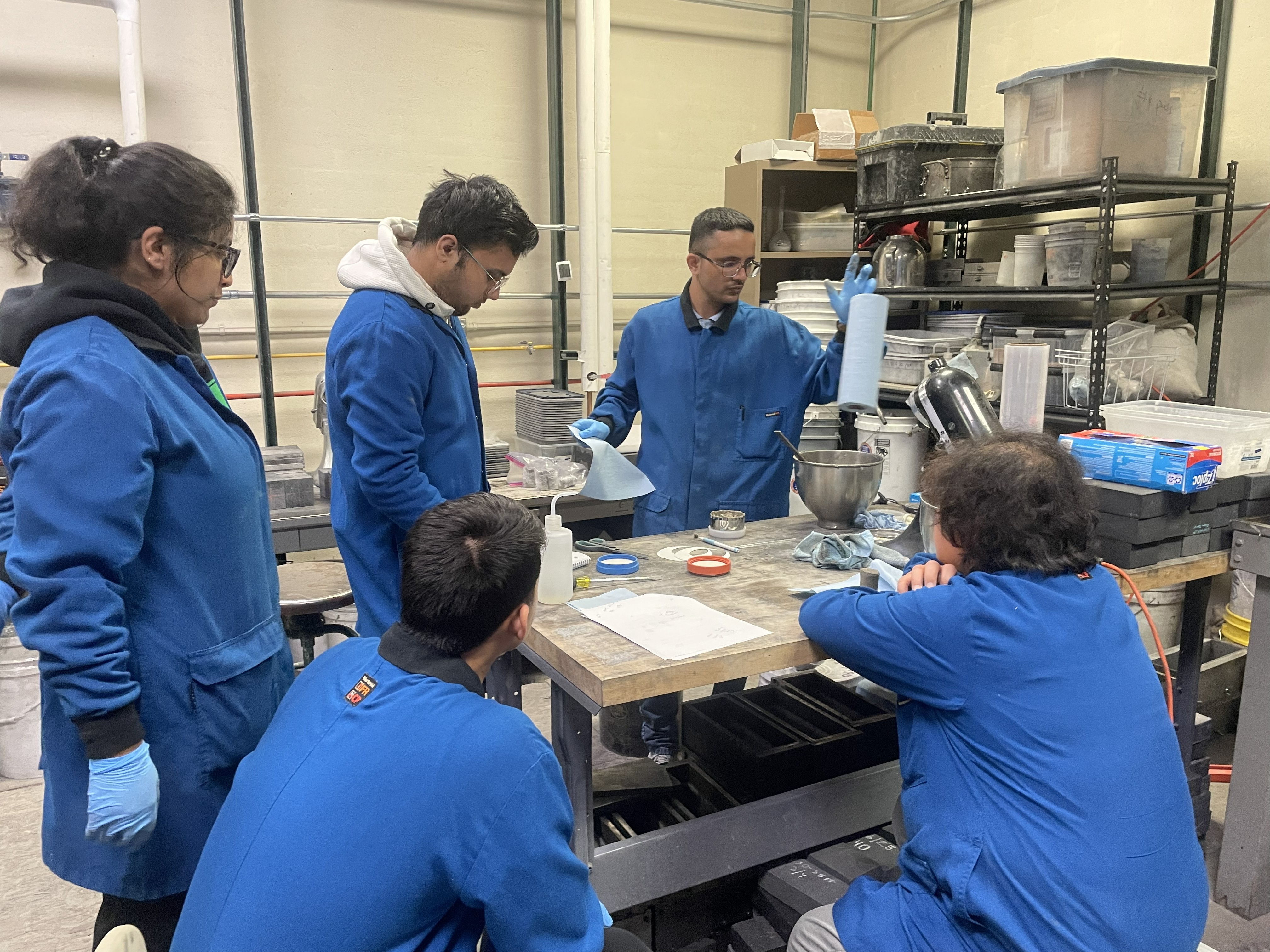
We empower students to lead research, mentor peers, and manage laboratory projects as professional engineers. Through hands-on experimentation and industry-facing collaboration, students graduate prepared for real-world engineering careers.
University of Wyoming Geomaterials Research Laboratory
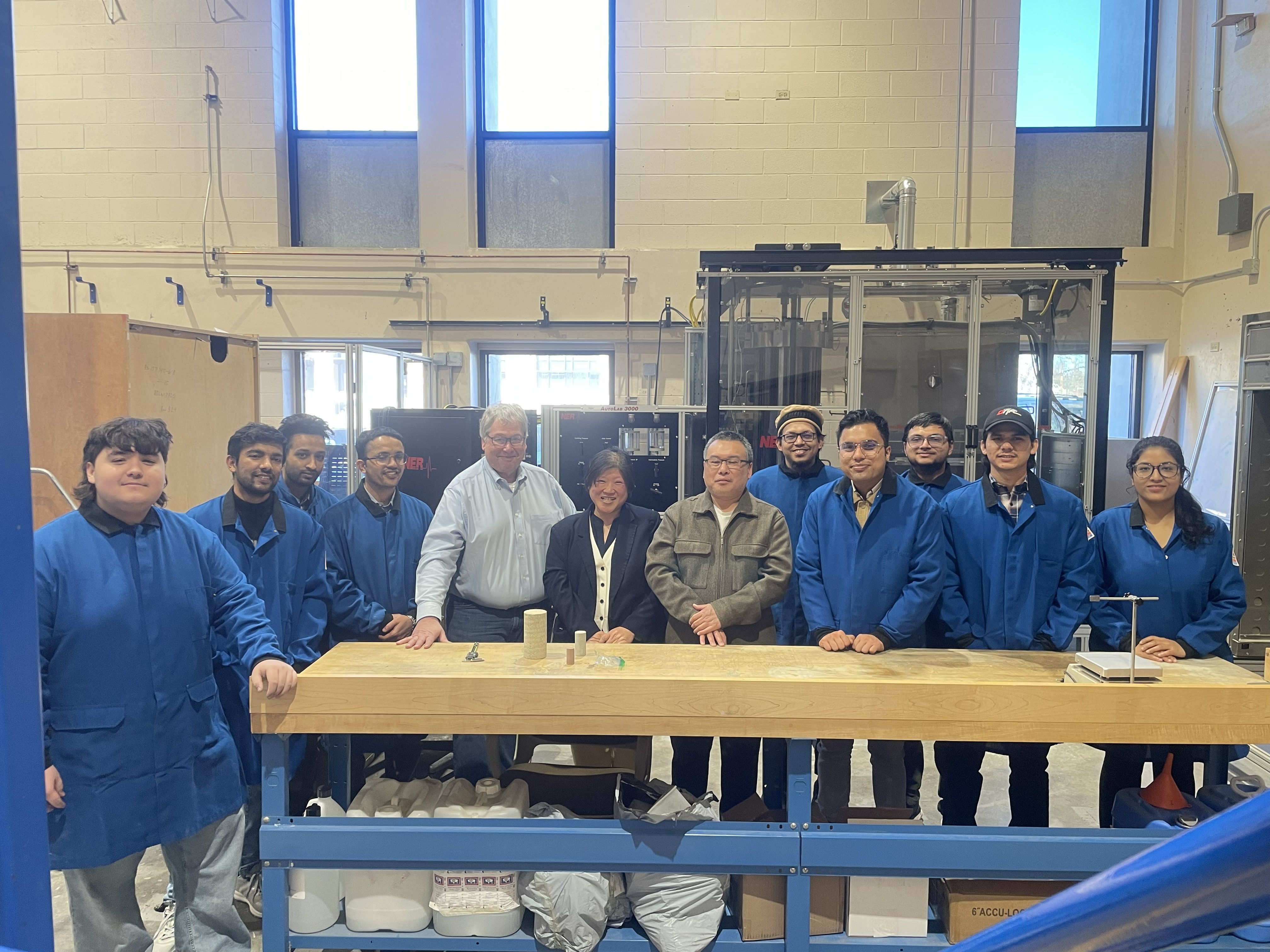
The Geomaterials Research Laboratory provides state-of-the-art experimental infrastructure for performance validation of engineered geomaterials, carbon-based systems, and next-generation infrastructure materials. The laboratory serves as a training platform for graduate researchers while supporting federal, state, and industry-sponsored research initiatives.
CONTACT US
Kim Lau
(She/Her/Hers)
Research Scientist
University of Wyoming
Department of Civil and Architectural Engineering and Construction Management
L40 Engineering Building EN3050
Laramie, WY 82071
Research, Workforce & Innovation Impact (2023–Present)
Since 2023, the Geomaterials Research Laboratory has accelerated research productivity, graduate training, and intellectual property development in carbon-derived materials and infrastructure systems engineering.