
The GROW Model in Coaching
The purpose of GROW is not to lead students to the "right" answer. The purpose is to help students think critically, discover their own solutions, and take ownership of their success. As a coach, your role is not to solve problems for students. Your role is to create a conversation that increases awareness, encourages reflection, and empowers action. You are shifting the conversation from "What went wrong?" to "Where do you want to go next, and how can you get there?"
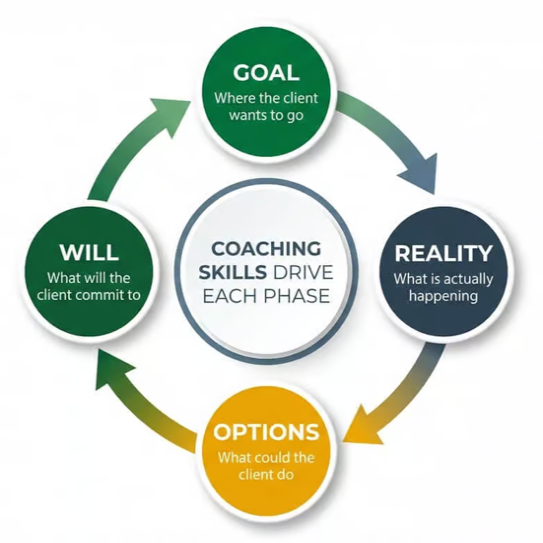
What does the student want to achieve?
The conversation begins by helping the student identify a meaningful goal. Goals may be academic, personal, or related to their overall college experience.
Examples:
- Improve semester GPA
- Attend class consistently
- Feel more connected on campus
- Develop better time-management habits
Sample Questions:
- What would success look like for you this semester?
- What would you like to be different a month from now?
- What is most important for us to focus on today?
What is happening right now?
Students explore their current circumstances, successes, challenges, and perceptions. This stage focuses on understanding rather than judging.
Sample Questions:
- What has been working well?
- What challenges are getting in your way?
- What patterns have you noticed?
- What resources are you currently using?
What could the student do?
Students brainstorm possible strategies, resources, and approaches. The coach's role is to encourage exploration rather than provide solutions.
Sample Questions:
- What ideas have you considered?
- What has worked for you in the past?
- Who or what could support you?
- If anything were possible, what would you try?
What will the student do next?
Traditionally, the final step is called "Will." Many coaches now refer to it as the "Way Forward" because it emphasizes action and commitment. This stage helps students identify specific next steps and determine how they will hold themselves accountable.
Sample Questions:
- What action will you take before we meet again?
- What is your first step?
- How confident are you that you will follow through?
- What support do you need to be successful?

The University of Wyoming has earned its Research Level 1 (R1) status from the Carnegie Classification of Institutions of Higher Education, placing Wyoming's only four-year university with the top research universities in the United States.