
Entomology
University of Wyoming Extension
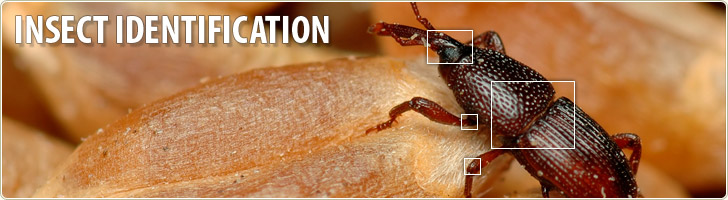
Know Your Bugs
Most people lump all arthropods, or animals with an exoskeleton, together as "bugs". But there are major differences between types of arthropods.
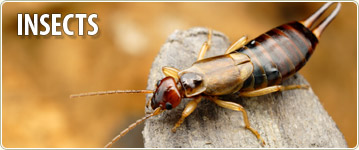
Insects are the most diverse class of animals, but a few physical characteristics
define all insects. Insects have a segmented body with 3 regions: head, thorax, and
abdomen. They have 6 legs and antennae.
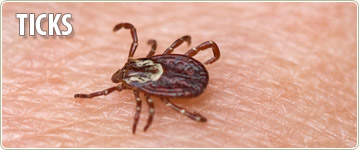
Ticks are parasites of vertebrates, or animals with backbones, like us, dogs, deer,
and birds. Ticks have 2 body regions: an unsegmented abdomen and a cephalothorax.
Their body is oval and minute, and they have 8 legs but no antennae.
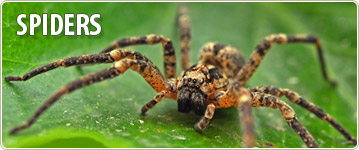
Spiders are predatory arthropods of insects. Unlike the horror movies, spiders do
not attack humans unless provoked to bite by handling, whether intentionally or not.
All spiders have 2 body regions like ticks: an unsegmented abdomen and a cephalothorax.
Unlike ticks, a spider's abdomen is constricted at the base, but, like ticks, spiders
have 8 legs and no antennae. So, if your bug has 8 legs and a constricted abdomen,
it's a spider.
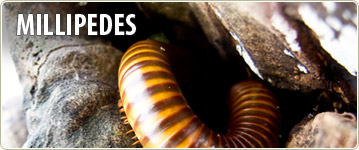
Millipedes are wormlike, cylindrical arthropods with many legs. They look like centipedes,
but centipedes have 1 pair of legs per body segment, whereas millipedes have 2 pairs
of legs per body segment. A centipede's legs also stick out to the side, whereas a
millipede's legs are somewhat hidden by their body. This is important because centipedes
are predatory and have a painful bite, whereas millipedes won't hurt you.

The University of Wyoming has earned its Research Level 1 (R1) status from the Carnegie Classification of Institutions of Higher Education, placing Wyoming's only four-year university with the top research universities in the United States.