
about Open Access
There are a number of benefits from either publishing your work Open Access or archiving it:
- Open Access publications have demonstrated the potential for greater citation
- Research is more discoverable
- Rapid publication
- Authors keep their copyright
- Taxpayers get access to tax-funded research
- Helps to eliminate inequalities in access to research
- Federal funders may require your publication to be Open Access
There are two ways to make your research Open Access. You can publish it in an Open Access journal. We recommend searching for an appropriate journal in the Directory of Open Access Journals, or making a consultation with a librarian to find a suitable journal for your research. You can also archive your work in a repository. Explore the publishing and archiving tabs in this guide to learn more.
You can participate in Open Access by archiving your research in a repository or publishing in an Open Access journal. You can archive your research in WyoScholar or a disciplinary repository for free - without changing how, where, and why you publish. By publishing in an Open Access journal, your research will become freely available immediately and typically you'll retain your full copyright.
Open Access + Publishing Services
Open Educational Resources

Open Educational Resources (OER) are teaching and learning materials that are published under an open copyright license, frequently a Creative Commons license, that permits others to freely use, adapt, and share the material.
University of Wyoming Open Journals

UW Open Journals is a service provided by the University of Wyoming Libraries at no cost to our faculty, students, and staff. UW Open Journals is part of the larger Open Access movement and as such, all content found within our journals is freely accessible without paywalls.
University of Wyoming Press
The University of Wyoming Press publishes peer-reviewed works of scholarly, cultural, and social importance that are relevant to our state, region, nation, and world. As an imprint of the University Press of Colorado, we aim to advance and disseminate knowledge globally by publishing significant scholarly works and making them accessible.
University of Wyoming Pressbooks

The UW Pressbooks Network is a user-friendly web-based publishing tool that allows authors to import content and export the resulting publication to various formats, including EPUB and PDF.
Wyoming Data Repository
The Wyoming Data Repository (WDR) is a research data management system for the University of Wyoming and all Wyoming Community Colleges. WDR is a completely open access research data repository offered by the UW Libraries in collaboration with the Advanced Research Computing Center (ARCC).
WyoScholar Digital Repository
 WyoScholar is an open-access repository of student publications, open educational
resources, open-access faculty publications, and other forms of gray literature.
WyoScholar is an open-access repository of student publications, open educational
resources, open-access faculty publications, and other forms of gray literature.
Digital Policies & Agreements
Open access myths
You can participate in Open Access in two ways: publishing Open Access or archiving your research.
Open Access journals operate on a different funding model. It is not vanity publishing. The "article processing charge" business model shifts the cost and makes the content available to everyone.
The majority of Open Access journals do not charge fees. 60% of journals in the Directory of Open Access Journals do not charge an article processing charge to the author.
Open Access journals have the same standards of peer review, copyright, quality, prestige, and research impact.
Terms to Know
Open Access: academic publications that are free to read and often have various re-use rights
Article Processing Charge (APC): A fee charged to the author, institution, or funder to cover the cost of an article. This fee is in lieu of charging subscriptions to read the article.
Transformative Agreements: Transformative Agreements, also called "Read and Publish" Agreements, are when a library works with publishers to help cover article process charges (APCs) for their users. This results in discounted or waived APCS from university affiliated authors if they publish in agreed upon open access journals/publishers.
Hybrid Journal: A type of journal in which some articles are published Open Access and others articles or not. Hybrid journals are typically longstanding journals that provide an Open Access option, and charge subscription fees.
Toll access journal: A journal that requires payment to access the scholarly content
Gold Open Access: Journals or articles that are Open Access at the time of publication whether with or without an APC
Article Processing Charges
Open Access journals do not charge subscriptions to libraries or individuals, instead, any associated fees are charged to authors publishing with them. These charges are known as Article Processing Charges, or APC's.
Not all Open Access journals or publishers will charge APC's, but researching beforehand can be critical. You will most commonly find article processing charges when publishing in a scientific journal or a hybrid journal. Transformative Agreements are a unique option for Open Access publishing available to UW faculty, staff, and students.
Planning ahead for APCs is critical to successfully publishing open access, and preventing authors from being on the hook for paying these out of pocket.
Recommendations for addressing APCs:
- Consider your chosen publisher carefully and weigh the benefits of a higher cost, higher impact journal over a lower cost option
- If you are applying for a grant, you must include your estimated APC in the grant application itself!
- Most grants will not allow you to use extra funding to cover APCs unless they were outlined in the original documentation
- Some traditional publishers allow you to also publish open access in a secondary resource such as a repository like WyoScholar
If you have any concerns or want personalized assistance, please contact us for a consultation.


The University of Wyoming has earned its Research Level 1 (R1) status from the Carnegie
Classification of Institutions of Higher Education, placing Wyoming's only four-year
university among the top research universities in the United States.
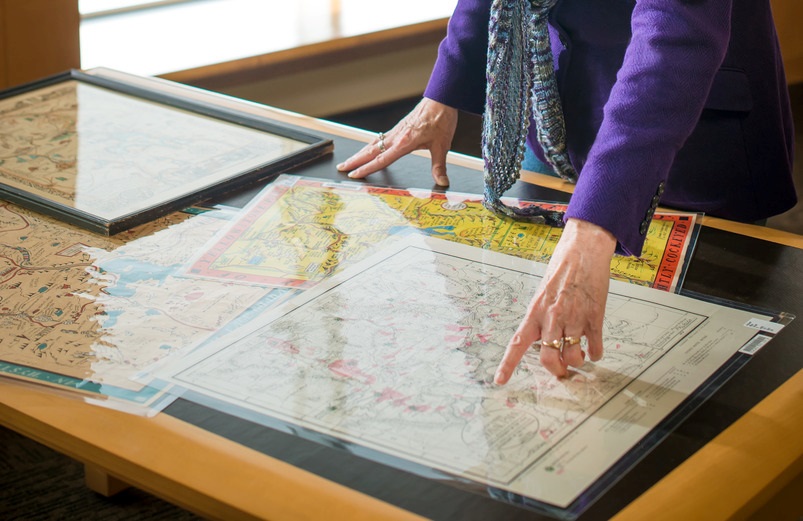
The University of Wyoming Libraries has been a Federal Depository Library since 1907. The collection comprises approximately 1.5 million print and microfiche
items in Coe Library and Library Annex, as well as maps, aerial and infrared photographs,
and geological publications housed in the Brinkerhoff Geology Library. The Federal
Document Library Program is changing from physical to digital distribution of government
information; UW Libraries provides access to online publications available from the
Federal Depository Library Program through the library catalog.