
Applied Sovereignty: Dialogues in Indigenous Data
Kendra Cowley
Published June 01, 2026
6 Minute Read
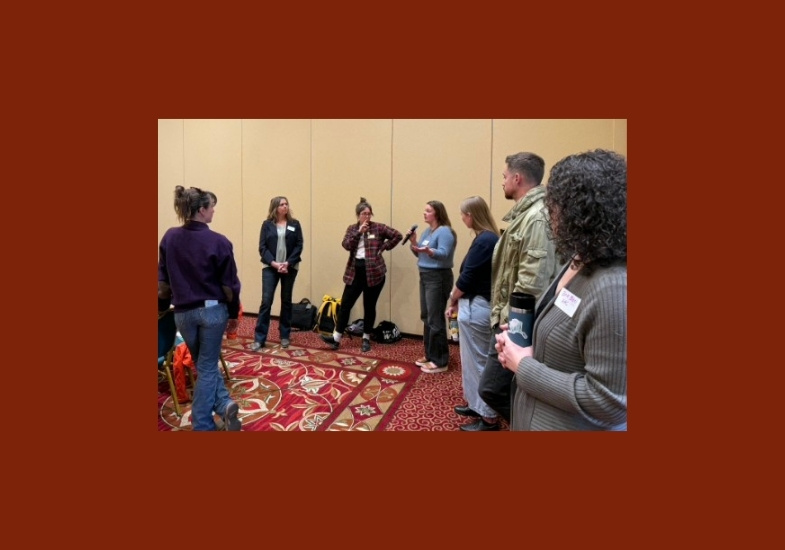
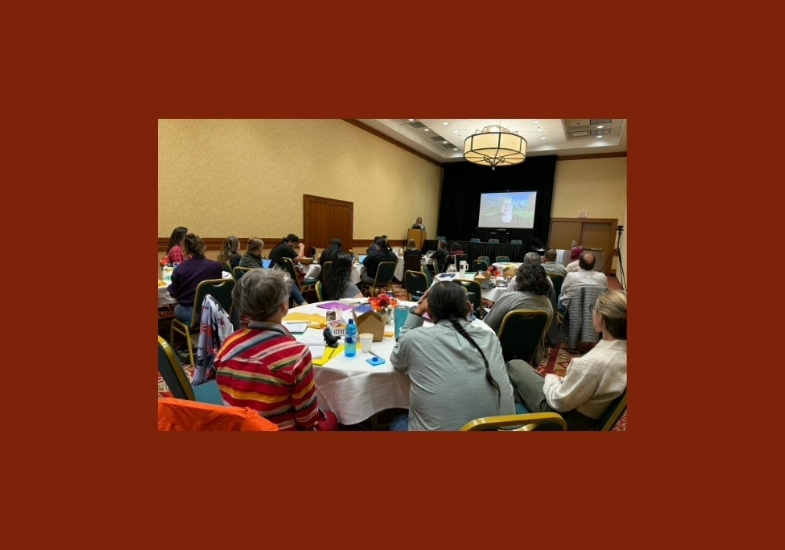
In April, UW Libraries helped sponsor Applied Sovereignty: Dialogues in Indigenous Data, a two-day workshop hosted by the UW High Plains American Indian Research Institute (HIPARI). The program brought together Tribal members, community researchers, and UW faculty, staff, and students to discuss the principles and practices of Indigenous Data Sovereignty and Governance.
Indigenous Data Sovereignty (IDSov) "upholds the rights of Indigenous Peoples, communities, and Nations to govern the collection, ownership, and application of data created with or about Indigenous communities, Indigenous Lands, and the community’s non-human relations” (Carroll, Duarte, and Liboiron, 2024: 207-208). Indigenous Data Governance puts IDSov into action, ensuring Indigenous rights and interests guide data collection, management, and use (US Indigenous Data Sovereignty Network, 2020). Applied Sovereignty provided an intentional space to learn about IDSov and to nurture relationships and skills that foreground Indigenous self-determination in research projects and partnerships.
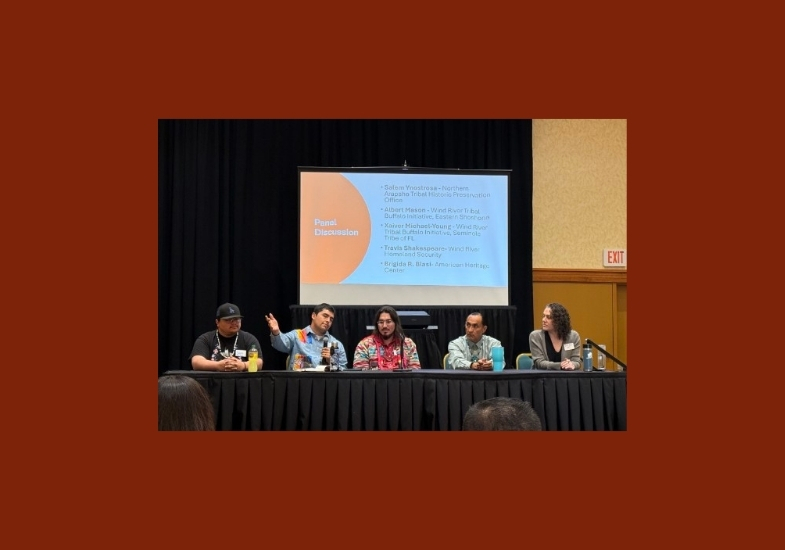
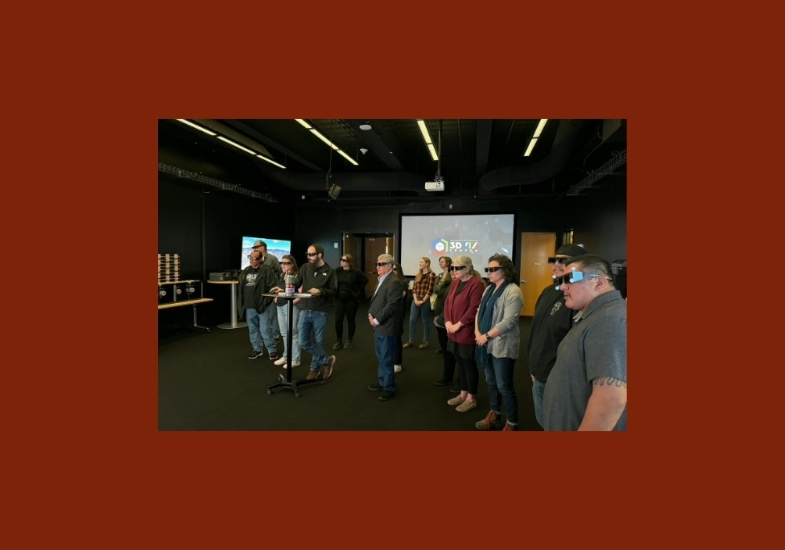
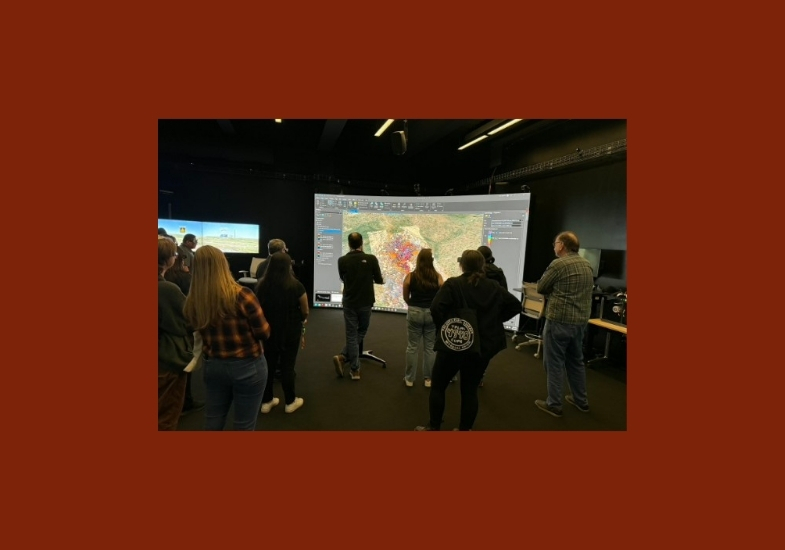
The program included a tour of campus data centers and an incredible lineup of speakers
and panels featuring: Emily Hagle (Kern River Indian Community, Southern Paiute),
from the Native American Fish and Wildlife Society, Salem Ynostrosa (Northern Arapaho) from the Northern Arapaho Tribal Historic Preservation
Office, Albert Mason (Eastern Shoshone) and Xaiver Michael-Young (Seminole Tribe of
FL) from the Wind River Tribal Buffalo Initiative, Travis Shakespeare (Northern Arapaho) from UW Ecosystem Science & Management, Brigida
R. Blasi from the American Heritage Center, Karen Driver (Fond du Lac Band of Lake
Superior Chippewa), Senior Advisor to the President for Native American Affairs at
the University of Minnesota, and Andrew Martinez (Salt River Pima-Maricopa Indian
Community) from the Collaboratory for Indigenous Data Governance.
The speakers covered topics like data sharing agreements and MOUs, Indigenous owned data repositories, the CARE Principles, IRB protocols and IDSov informed research guidelines, highlighting the importance of infrastructures and relationships rooted in the collective benefit and authority of Indigenous communities.
Five representatives from UW Libraries were able to attend the vibrant convergence,
read some of their thoughts below:
Kendall Lowe, Library Specialist, Digital Scholarship Center
The Applied Sovereignty event challenged a common assumption in library science: that
data is neutral. It isn’t -- data is shaped by decisions about what gets collected,
how it’s categorized, and who gets access to it. In a state shaped by a long history
of settler colonialism, Indigenous data sovereignty is a present responsibility for
libraries, universities, and other institutions that hold and manage data. Libraries
are part of systems that have too often excluded, extracted from, and misrepresented
Indigenous communities, and responding to that can’t stop at passive support for Indigenous-led
governance. It requires resourcing tribal data governance, closely following community
protocols, and deferring to Indigenous leadership in decisions about use and access.
The Applied Sovereignty workshop offered important insight into concrete practices
already challenging these institutional norms.
Jordan Hemingway, Data Services Librarian
While often discussed as if it were disembodied, objective, and perhaps even a commodity,
data is relational. Data has context, and is further (re)contextualized as individuals,
communities, governments, and institutions interact with it (and with one another).
Sound data management practices rely on nurturing good relationships across communities;
there is no good practice without good relationships. Good relationships require honest,
ongoing communication, and Applied Sovereignty: Dialogues in Indigenous Data offered
a beautiful way to engage in this work locally.
Frameworks like the CARE principles, describing central elements of Indigenous data
stewardship, suggest one way to honor IDSov in our day-to-day work with existing and
future data. Like data, principles don’t exist in a vacuum. Their application requires
ongoing reflection and re-consideration of habits and assumptions. Integrating the
principles calls for us to make a sustained commitment to learning about Indigenous
data protocols and to continue having local conversations about putting these approaches
into action. The respect, intentionality, and transparency needed for this process
contribute not only to more meaningful insights through data, but can also be a step
towards connection, repair, and honorable partnerships with Tribal nations, which
precede collaborative research and affirm Indigenous sovereignty in how research is
conducted, communicated and applied.
Esther Perez, STEM Digital Scholarship Librarian
The Dialogues in Indigenous Data event made me aware of the need for continued conversation
and relationship building between Native Nations and those of us at the University
for the sake of stopping the perpetuation of harm that stems from the historical erasure
and robbing of their culture and resources. Additionally, that any projects undertaken
toward reparation should always include Indigenous voices, involve tribal leaders
at some level, and respect Indigenous folks' sovereignty as a nation and people.
Amber Lotspeich, Electronic Resources Librarian
As someone new to Wyoming with an interest in Indigenous Data Sovereignty, I really
appreciated the workshop as an opportunity to learn more about the Wind River Reservation
and its relationship with the University of Wyoming. I enjoyed meeting people from
across the campus and state and hearing about both the challenges and opportunities
they’re facing around data management. The speaker lineup was incredible and I was
happy that the workshop attendance was more than double the initial projections. I
tried to approach the workshop with my Collections Management hat on and identify
resources that the Libraries do not provide but potentially could. My hope for the
Libraries is that all of us who attended can take what we learned as a jumping off
point to improve our collections and services.
Kendra Cowley, Graduate Research and Engagement Librarian
Indigenous Data Sovereignty is a practice of disengaging from colonial enclosure and
capture, including the ontological imperative of the University (and other sites of
colonial research) to know, and assume one has the right to know, about Indigenous
life. For centuries, research done about Indigenous people, without Indigenous people,
has been used to uphold colonial structures of dispossession and extraction. IDSov
recognizes that Indigenous communities have the right to govern their own data, including
the right to refuse access to outside parties. This is not, as Xaiver Michael-Young
from the Wind River Tribal Buffalo Initiative (WRTBI) told us, about ownership but
about sovereignty – the ability to make decisions about how, when, and for what purpose
data is collected and used.
Importantly, Albert Mason, also from WRTBI, illuminated the connection between data
sovereignty and land stewardship. Data is material and has material consequences.
Indigenous knowledge is central to how Tribal land is both governed and cared for.
How communities live on and with the land shapes and is shaped by data stewarded by
individual nations. IDSov affirms the right of these nations to make decisions that
prioritize collective benefit for generations to come.
This requires those of us in the library, who often curate and manage data, to audit our own processes and policies to see how they might better align with principles of IDSov. Applied Sovereignty has given us the tools to start this conversation, and I am excited to be a part of a community foregrounding Indigenous sovereignty in our work.
If you want to learn more about Indigenous Data Sovereignty and Governance, please visit the UW Libraries Research Data Management & Sharing Guide. Additionally, visit Coe Library this June to see our Celebrating Indigenous Knowledge and History book display.
Photos provided by Nichole Lamadue from HIPARI


The University of Wyoming has earned its Research Level 1 (R1) status from the Carnegie
Classification of Institutions of Higher Education, placing Wyoming's only four-year
university among the top research universities in the United States.
The University of Wyoming Libraries has been a Federal Depository Library since 1907. The collection comprises approximately 1.5 million print and microfiche
items in Coe Library and Library Annex, as well as maps, aerial and infrared photographs,
and geological publications housed in the Brinkerhoff Geology Library. The Federal
Document Library Program is changing from physical to digital distribution of government
information; UW Libraries provides access to online publications available from the
Federal Depository Library Program through the library catalog.