
Symposium agenda
Ed Seidel - President, University of Wyoming (UW)
Parag Chitnis- Vice President for Research and Economic Development, University of Wyoming (UW)
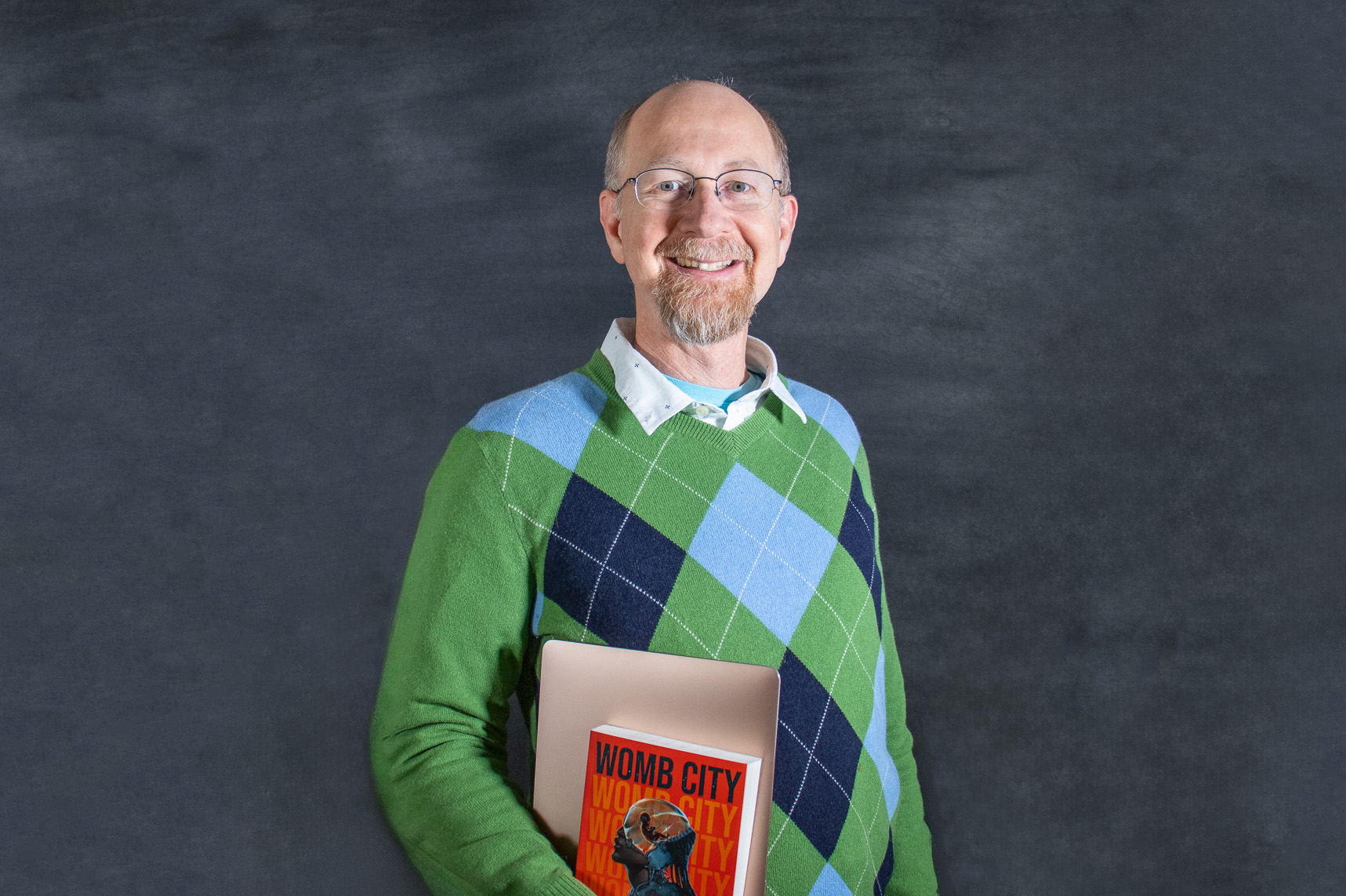
Adrian Wisnicki, Co-Director of the Artificial Intelligence Institute, University of Nebraska-Lincoln
"Generative AI, Every Day"
9:15 - 9:25 AM - C-EM Introduction - Jing Zhou, C-EM Co-Director
9:25 - 10:10 AM - Invited Speaker: Hongliang Xin, Professor of Chemical Engineering, Virginia Tech
"Advancing Interfacial Electrocatalysis for Sustainability with Artificial Intelligence"
Catalysis underpins a wide variety of industrial applications, including energy production, pollution control, and chemical manufacturing. However, traditional catalyst discovery, driven by empirical intuition and trial-and-error experimentation, struggles to efficiently explore the vast parameter space. Meanwhile, escalating global challenges such as extreme weather events, waste accumulation, and rising energy demands underscore the urgent need for innovative technologies that transform our society toward a sustainable economy. In this talk, we present an artificial intelligence (AI) framework that redefines our strategic thinking of catalytic processes at complex interfaces. Specifically, we integrate deep learning algorithms with domain knowledge for mechanistically interpretable materials design and optimization. We demonstrate this approach with sustainable carbon, nitrogen, oxygen, and hydrogen cycles, particularly focusing on ammonia electrooxidation for fuel cells, water oxidation for clean hydrogen, and nitrate electrolysis for green ammonia synthesis. I will further discuss the emerging paradigm of agentic science, where AI systems autonomously generate hypotheses, design experiments, and refine models in closed-loop workflows. This approach points toward self-improving platforms for energy materials discovery, offering a pathway to more rapid and sustainable innovation across chemical and materials sciences.
Lightning Talks
10:10 - 10:20 AM - "Computational Discovery and Design of Materials for Energy-Relevant Applications" - Laura de Sousa Oliveira, Chemistry
10:20 - 10:30 AM - "From Lab to Launch: a 2D Material Inching to the Market" - John Hoberg, Chemistry
15 minute break
10:45 AM - C-CEA Introduction- Carmela Rosaria Guadagno, C-CEA Director
Lightning Talks
11:00 AM - "Groceries in the Wild and Unsolvable Problem Detection" - Michael Elgin, Geometric Intelligence Research Lab
11:05 AM - "Plant Performance in Monoculture vs. Intercropping Under Different Watering Regimes" - Courtney Ray, Botany
11:10 AM - "The Industrial Ecology of Controlled Environment Agriculture in the Rocky Mountain West" - Jake Hawes, School of Computing
11:20 AM - "Improved Hydrogel-based Plant Growth Substrates for Stabilization of Plant Growth Promoting Microbes in Controlled Environment Agriculture" - Cynthia Weinig (Botany) and John Oakey (Chemical and Biomedical Engineering)
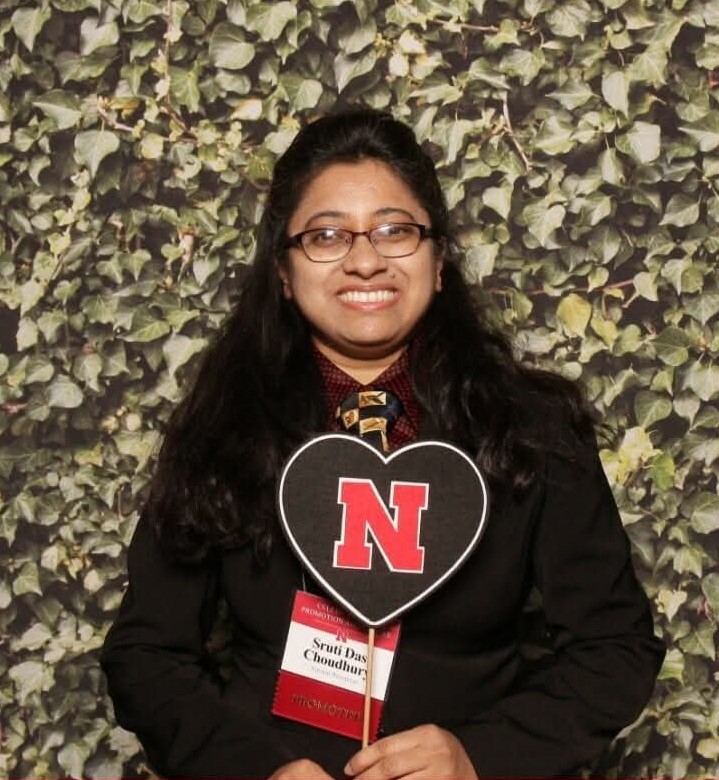
11:30 AM - 12:00 PM - Invited Speaker: Sruti Das Choudhury, Research Associate Professor, School of Natural Resources & School of Computing, University of Nebraska-Lincoln
"From Pixels to Phenotypes: AI-Driven Temporal Analysis and Visual Storytelling in Plant Phenotyping"
Advancements in imaging technologies and data acquisition systems have transformed plant phenotyping into a data-intensive discipline, generating multimodal, multi-view, and time-series datasets. Extracting meaningful insights from such complex data requires the integration of computer vision, artificial intelligence, data analytics, and visualization techniques—key enablers for improving crop resilience, yield, and adaptability.
This talk presents computational approaches for detecting critical developmental events in plant life cycles, including coleoptile emergence, leaf development, flowering, and fruiting. By leveraging AI-driven image analysis, we quantify growth dynamics influenced by genotype and environmental conditions, providing robust indicators of plant vigor.
We further explore the role of Vision-Language Models (VLMs), which integrate visual understanding with natural language generation. In the context of plant phenotyping, we investigate temporal visual storytelling, where sequences of daily images form coherent narratives of plant growth. Accurate storytelling, however, requires grounding these narratives in quantitative phenotypic traits to faithfully capture biological progression.
In addition, we introduce HyperProbe Insight, an interactive toolbox designed for the exploration and analysis of hyperspectral image sequences. The framework supports end-to-end processing, including dimensionality reduction, automated band selection, image segmentation, and machine learning-based analysis, along with the computation of key temporal phenotypes. We demonstrate its effectiveness using hyperspectral images of plants captured by the LemnaTec Scanalyzer 3D high throughput plant phenotyping system. The graphical user interface (GUI)-based toolbox facilitates the application of advanced machine learning methods, allowing users to perform sophisticated analyses without requiring in-depth knowledge of the underlying algorithms or technologies. Together, this work bridges AI, multimodal imaging, and plant science, offering new pathways for scalable, interpretable, and data-driven phenotyping.
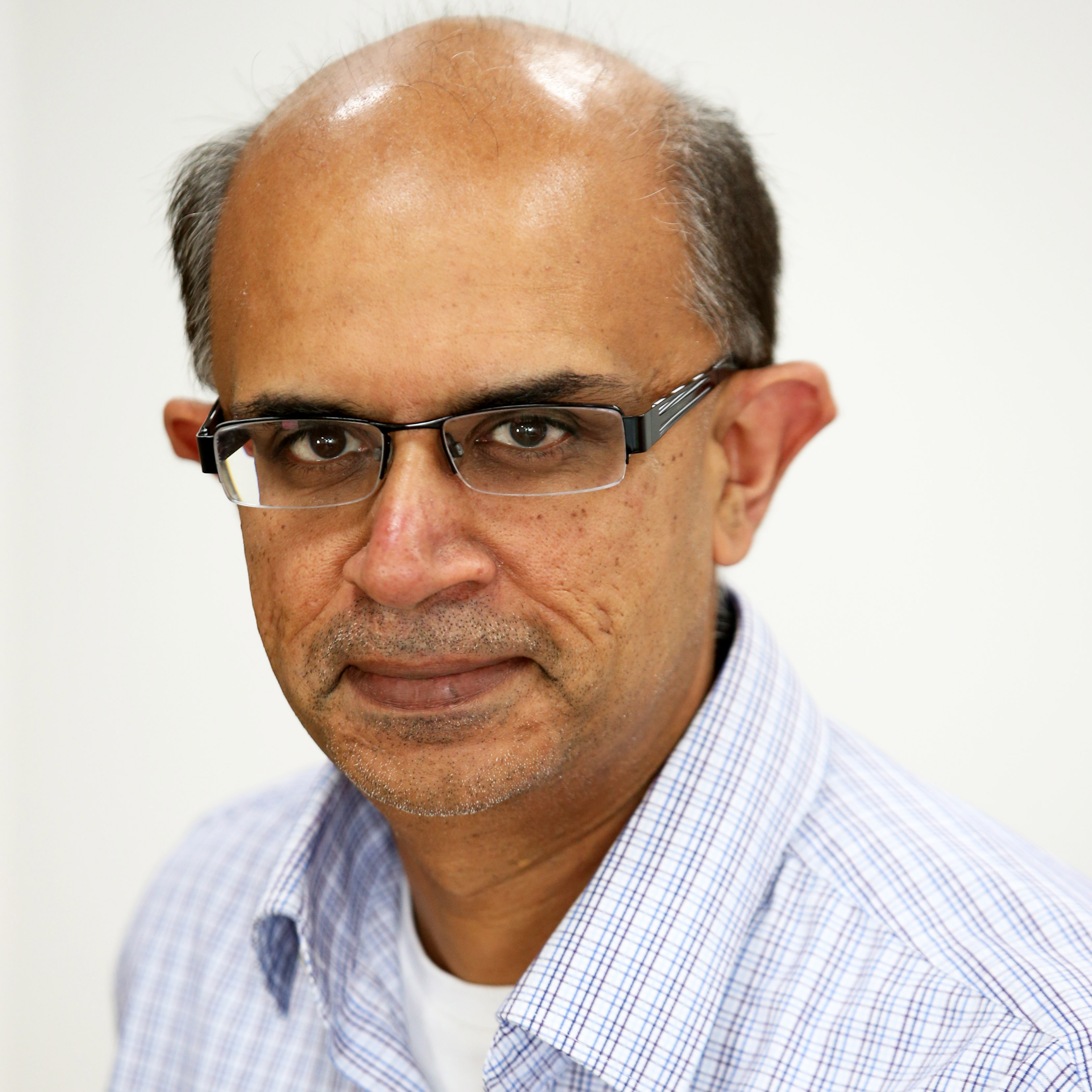
Omer Rana, Professor of Performance Engineering, Cardiff University
"Beyond Digital Humanities: a Path to AI-Inspired Creativity"
This talk explores how artificial intelligence is reshaping cultural interpretation, creativity, and meaning‑making—and argues that the humanities must play a formative role in AI’s future design. Moving beyond the traditional use of AI as a scaling tool for digital humanities, the talk examines generative and multimodal systems that now produce texts, images, voices, and narratives that resemble cultural artefacts rather than computational outputs.
The presentation proposes a shift toward interpretive AI: systems designed to engage
with ambiguity, plurality, and context rather than optimise for a single “correct”
answer. Drawing on sociocultural theory, visual language models, neuro‑symbolic approaches,
and world models, it demonstrates how AI can support provisional interpretation, structured
disagreement, and theory‑conditioned perspectives—core values of humanities scholarship.
Through case studies drawn from historical archives, visual culture, and AI‑generated
media, the talk highlights both opportunities and risks, including cultural homogenisation,
creative displacement, and manipulation at scale. It emphasises the need for transparency,
provenance, traceable human involvement, and community‑centred governance.
The central claim is that as AI systems increasingly operate as cultural actors, their
evaluation, architecture, and ethics must be informed by artists, historians, sociologists,
and critics—positioning the humanities not at the margins, but at the heart of AI
innovation.
1:15 - 1:20 PM - C-RCRI Introduction - Jeff Hamerlinck, C-RCRI Director
1:20 - 2:00 PM - "AI in Rural Places" - a conversation with invited speaker Mike Gutman, Senior Program Manager, Tech Workforce,
Center on Rural Innovation
In this segment of the CRCRI session, Director Jeff Hamerlinck will engage with Mike Gutman from the Center on Rural Innovation about a rural innovation issues generally and more specifically AI pplications in rural places, including infrastructure needs and workforce opportunities and concerns. The audience is encouraged to participate in the follow-up Q&A.
2:00 - 2:25 PM - Lightning Talks
"Localized Climate Narratives: Developing Wyoming-Specific Shared Socioeconomic Pathways"
- Melissa Bukovsky, Haub School of Env. & Natural Resources
"Smart Rural Places Initiative" - Jake Hawes, School of Computing / Haub School of
Env. & Natural Resources
"Spot It, Stop It: Tackling Harmful Algal Blooms in Wyoming" - Katie Li-Oakey, Chemical
& Biomedical Engineering
2:25 - 3:00 PM - Wrap Up - Jeff Hamerlinck
2:30 - 2:40 PM - "Architecting the Quantum Frontier @ UW" - Jifa Tian, C-QISE Director
2:40 - 3:25 PM - Invited Speaker: Lee Spangler, Associate Vice President of Research and Economic Development, Montana State University
"Building a Quantum Innovation Ecosystem in a Rural State"
Since launching the Optical Technology Center (OpTeC) in 1995, Montana State University (MSU) and partners have fostered the growth of a strong photonics innovation ecosystem of over 40 companies, making it the fourth largest photonics cluster in the nation and by far the largest per capita. Several of the cluster companies sell into the quantum supply chain and MSU has successfully acquired significant funding in the areas of quantum materials and quantum networking. This has formed a basis for efforts to build a Quantum Supply Chain Innovation ecosystem which led to a collaborative NSF Engines Development award with University of Wyoming and Boise State University. This presentation will exam lessons learned from the photonics ecosystem growth and measures being taken to apply those learnings to a quantum innovation ecosystem from the speaker’s unique perspective of being a founding member and second director of OpTeC, the lead PI on the NSF Engines Development Award, and a member of the leadership team for MSU’s Quantum Collaborative for Research and Education (QCORE).
3:25 - 3:45 PM - Lightning Talks
"Synthesis of Novel Low Dimensional Materials for Quantum Information Science" - Brian Leonard, Chemistry
"Topological Solitons in Quantum Information" - Alex Petrovic, Physics & Astronomy
"HHL: A Quantum Algorithm for Solving Linear Systems of Equations Faster" - Hasan Iqbal, Electrical Engineering & Computer Science
15 minute break
4:00 - 4:13 PM - Introduction to Wyldtech - Matthew Kauffman (USGS and Department of Zoology & Physiology) and Dane Taylor (School of Computing and Department of Mathematics & Statistics)
Lightning Talks
4:13 - 4:25 PM - "Enhancing Wyoming Toad Recovery with Two-pronged Bd Mitigation Program" - Melanie Murphy, Department of Ecosystem Science & Management
4:25 - 4:38 PM - "Merging Edge Computing, AI-driven Camera Control, and Biologging to Classify Foraging Behaviors in Wild Raptors" - Ellen Aikens (Haub School and School of Computing) and Jian Gong (School of Computing)
4:38 - 4:50 PM - "Advancements in Biophysical Modeling Reveal the Hidden Function of Moose Antlers" - Rebecca Levine, Haub School and Department of Zoology & Physiology
4:50 - 5:15 PM - Invited Speaker: Eric Newkirk, Principal Wildlife Biologist, Wyoming Game & Fish Department
"Why Are We Still Here? Delivering on the Promises of Artificial Intelligence for
Wildlife Conservation"
Wildlife professionals have been exploring the potential to incorporate Artificial
Intelligence (AI) tools in their workflows since long before we could ask ChatGPT
what someone might look like if they were a dog or have github copilot build a mobile
app in a matter of minutes. AI can process more data faster than any human possibly
could, and with the proliferation of non-invasive techniques like camera trapping
and bioacoustic monitoring the need for fast, accurate data processing has never been
greater. But despite incredible recent advances in the AI sphere, many wildlife professionals
have never used AI for anything beyond drafting an email or punching up the language
in their CV, and many AI-based techniques remain stuck in the proof-of-concept phase
years after they were introduced. While adoption of AI techniques in the wildlife
profession has lagged, the need for AI solutions to conservation problems continues
to grow, creating a data-processing deficit that threatens to undermine the adoption
of new technologies. Many of the barriers to adoption of AI-based techniques are well
documented, but solutions remain difficult to identify.
This presentation explores applications of AI in the wildlife profession with examples
from the Wyoming Game and Fish Department (WGFD) and partners, while also examining
the regulatory, procedural, and political headwinds that have caused many of these
innovations to stall before making a long-term impact at the agency. We also discuss
how collaborations with partners such as the Center for Wildlife, Technology, and
Computing have the potential to circumvent those barriers, replacing one-off examples
with persistent, durable solutions that actually change the way that wildlife agencies
operate. Finally, and most importantly, we address why these innovations matter, both
for wildlife and for the professionals who dedicate their lives to conserving them.
Posters from SI research center researchers and students, as well as SI service centers (including the Center for Advanced Scientific Instrumentation (CASI), the Plant Growth & Phenotyping Facility (PGPF), and the Model Organism Research Facility (MORF)) & educational programs (including the Learning Actively Mentoring Program (LAMP), the Wyoming Research Scholars Program (WRSP), the Science Initiative Roadshow, and Course-based Undergraduate Research Experiences (CUREs).

The University of Wyoming has earned its Research Level 1 (R1) status from the Carnegie Classification of Institutions of Higher Education, placing Wyoming's only four-year university with the top research universities in the United States.